Pimpri Chinchwad explores green bonds for sustainable projects
ECONOMY & POLICY

Pimpri Chinchwad explores green bonds for sustainable projects

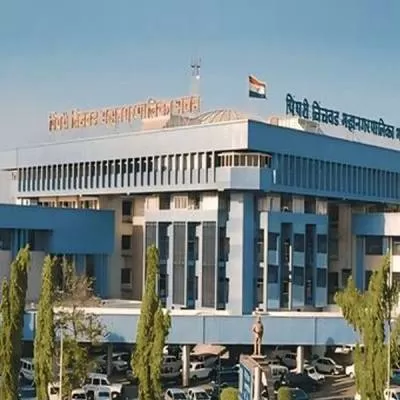
Pimpri Chinchwad Municipal Corporation (PCMC), the governing body of the city on Pune's northwestern fringe, plans to raise Rs 2 billion through Green Bonds to fund key infrastructure projects. Palladium, a global development consultancy, is advising PCMC on this initiative.

The funds will primarily support the development of sustainable mobility infrastructure under the Haritsetu Project and the Telco Road project, which spans from Gawali Matha to Indrayani Nagar Chowk. These projects will include walking pathways, cycling tracks, junction redesigning, and footpath retrofitting.

Anoop Phanse, Associate Director at Palladium India, highlighted the advantages of Green Bonds, stating that they come with a "greenium," or lower borrowing costs, due to investors' focus on ESG (Environmental, Social, and Governance) compliance. “Green Bonds attract investors willing to forgo a small percentage of income in favour of sustainability-focused initiatives,” Phanse explained.

PCMC’s foray into Green Bonds reflects a broader shift towards sustainable urban development. Palladium India has also assisted PCMC in becoming India’s 12th urban local body to issue a Municipal Bond, securing a Rs 26 million grant from the Ministry of Housing and Urban Affairs.

Urban local bodies, traditionally reliant on property taxes and government grants, face challenges in revenue generation. According to a report by the Comptroller and Auditor General of India, urban bodies realize only 56% of property tax demand and generate just 32% of revenue internally. Bonds, such as Municipal and Green Bonds, offer a vital alternative for financing projects sustainably while ensuring robust cash flow for urban development.

(ET)

Pimpri Chinchwad Municipal Corporation (PCMC), the governing body of the city on Pune's northwestern fringe, plans to raise Rs 2 billion through Green Bonds to fund key infrastructure projects. Palladium, a global development consultancy, is advising PCMC on this initiative. The funds will primarily support the development of sustainable mobility infrastructure under the Haritsetu Project and the Telco Road project, which spans from Gawali Matha to Indrayani Nagar Chowk. These projects will include walking pathways, cycling tracks, junction redesigning, and footpath retrofitting. Anoop Phanse, Associate Director at Palladium India, highlighted the advantages of Green Bonds, stating that they come with a greenium, or lower borrowing costs, due to investors' focus on ESG (Environmental, Social, and Governance) compliance. “Green Bonds attract investors willing to forgo a small percentage of income in favour of sustainability-focused initiatives,” Phanse explained. PCMC’s foray into Green Bonds reflects a broader shift towards sustainable urban development. Palladium India has also assisted PCMC in becoming India’s 12th urban local body to issue a Municipal Bond, securing a Rs 26 million grant from the Ministry of Housing and Urban Affairs. Urban local bodies, traditionally reliant on property taxes and government grants, face challenges in revenue generation. According to a report by the Comptroller and Auditor General of India, urban bodies realize only 56% of property tax demand and generate just 32% of revenue internally. Bonds, such as Municipal and Green Bonds, offer a vital alternative for financing projects sustainably while ensuring robust cash flow for urban development. (ET)

Next Story
Infrastructure Urban

Implementation Status of Jal Jeevan Mission

Since August 2019 the Government has implemented Jal Jeevan Mission to provide assured potable water through household tap connections in rural India. At the start of the mission only 32.3 million (mn) rural households, representing 16.7 per cent, were reported to have tap water connections. States and union territories have reported that 125.8 mn additional rural households have since been provided with tap connections. As a result, of about 193.6 mn rural households roughly 158.2 mn, or 81.71 per cent, are reported to have tap water supply at home.\n\nThe State, district and village level st..

Next Story
Infrastructure Urban

Jal Jeevan Mission Reaches Eighty One Per Cent Rural Coverage

The Government reported substantial progress under the Jal Jeevan Mission, launched in August 2019 to provide tap water to every rural household. At launch only 32.3 million (mn) rural households had tap connections and states and Union territories reported provision of 125.8 mn additional households by March 2026. Consequently, out of about 193.6 mn rural households around 158.2 mn, or 81.71 per cent, are reported to have tap water at home. The Finance Minister announced extension of the mission until 2028 in the 2025-26 budget speech. The Swachh Bharat Mission Grameen, launched in October 20..

Next Story
Infrastructure Urban

Empowering Local Governance for Sustainable Rural Water Supply

The Ministry of Jal Shakti has aligned the Jal Jeevan Mission (JJM) with the 73rd Amendment to strengthen village level planning and community ownership of water supply. Gram Panchayats, village water and sanitation committees and Pani Samitis are to plan, implement, manage and maintain piped water systems, with gram sabha processes formalising handover and oversight. Implementation support agencies including non government organisations, community based organisations and self help groups have been empanelled to train local committees and promote women participation. Under JJM, the department ..

Advertisement

Subscribe to Our Newsletter

Get daily newsletters around different themes from Construction world.

STAY CONNECTED

Advertisement

Advertisement

Advertisement