Pricol, Domino Ink Pact for Two-Wheeler Parts Production
ECONOMY & POLICY

Pricol, Domino Ink Pact for Two-Wheeler Parts Production

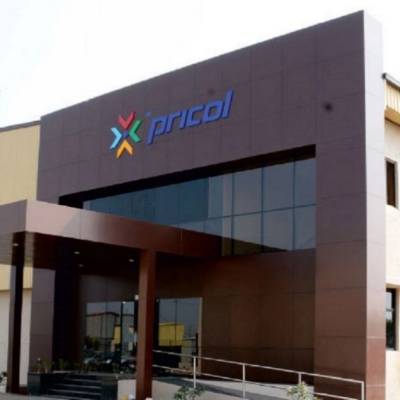
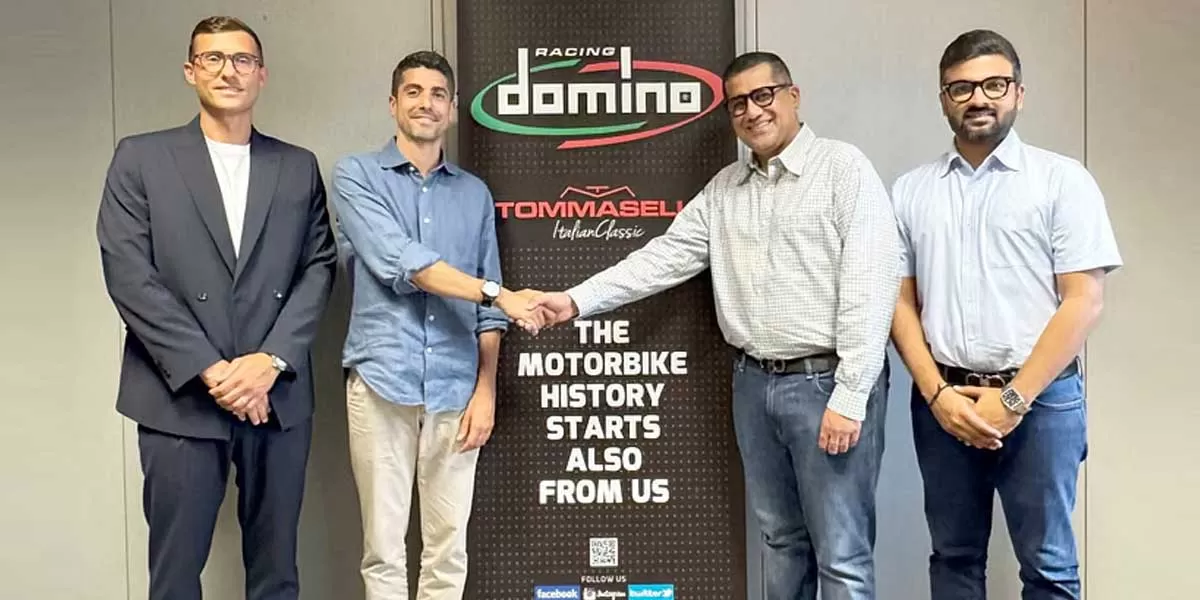
Pricol Limited, an Indian automotive technology firm, has signed a technology licensing agreement with Italy-based Domino S.r.l to manufacture two-wheeler handlebar control components—including switches, throttles, and related parts—for the Indian and Southeast Asian markets.
This collaboration merges Domino’s expertise in motorcycle control systems with Pricol’s robust manufacturing infrastructure and regional market reach. The partnership will focus on developing products tailored to regional needs while potentially capitalising on Domino’s strong aftermarket network in Europe and the United States.
Vikram Mohan, Managing Director of Pricol, described the agreement as a strategic step towards delivering innovative solutions by combining Domino’s advanced technology with Pricol’s deep understanding of local markets.
Federico Bertini, CEO of Domino S.r.l, stated the alliance is aligned with Domino’s global expansion strategy, enabling the brand to penetrate India and Southeast Asia through Pricol’s established operational base.
Siddharth Manoharan, Group Director of Strategy at Pricol, added that the partnership would reinforce the company’s position as a comprehensive provider of two-wheeler handlebar components, complementing its existing Driver Information System offerings.
Headquartered in Coimbatore, Pricol began operations in 1975 and supplies over 5,200 product variants to original equipment manufacturers (OEMs) across two-wheelers, three-wheelers, passenger cars, commercial vehicles, and off-highway segments. It operates 14 manufacturing plants in India, one in Indonesia, and maintains offices in Dubai, Tokyo, and Singapore, employing over 8,500 people.
Domino S.r.l, founded in 1951, has evolved from producing mechanical levers to high-precision electronic systems including ride-by-wire throttles, quick shifters, and handlebar controls. The company supplies OEMs across Europe and participates in top-level motorsport circuits.
The partnership was formally announced on 15 July 2025 in Coimbatore.

Pricol Limited, an Indian automotive technology firm, has signed a technology licensing agreement with Italy-based Domino S.r.l to manufacture two-wheeler handlebar control components—including switches, throttles, and related parts—for the Indian and Southeast Asian markets.This collaboration merges Domino’s expertise in motorcycle control systems with Pricol’s robust manufacturing infrastructure and regional market reach. The partnership will focus on developing products tailored to regional needs while potentially capitalising on Domino’s strong aftermarket network in Europe and the United States.Vikram Mohan, Managing Director of Pricol, described the agreement as a strategic step towards delivering innovative solutions by combining Domino’s advanced technology with Pricol’s deep understanding of local markets.Federico Bertini, CEO of Domino S.r.l, stated the alliance is aligned with Domino’s global expansion strategy, enabling the brand to penetrate India and Southeast Asia through Pricol’s established operational base.Siddharth Manoharan, Group Director of Strategy at Pricol, added that the partnership would reinforce the company’s position as a comprehensive provider of two-wheeler handlebar components, complementing its existing Driver Information System offerings.Headquartered in Coimbatore, Pricol began operations in 1975 and supplies over 5,200 product variants to original equipment manufacturers (OEMs) across two-wheelers, three-wheelers, passenger cars, commercial vehicles, and off-highway segments. It operates 14 manufacturing plants in India, one in Indonesia, and maintains offices in Dubai, Tokyo, and Singapore, employing over 8,500 people.Domino S.r.l, founded in 1951, has evolved from producing mechanical levers to high-precision electronic systems including ride-by-wire throttles, quick shifters, and handlebar controls. The company supplies OEMs across Europe and participates in top-level motorsport circuits.The partnership was formally announced on 15 July 2025 in Coimbatore. 

Next Story
Infrastructure Urban

Centre Clears Power Distribution Upgrade for Uttar Pradesh

The Central Government has approved power distribution projects worth Rs 407.39 billion for Uttar Pradesh under the Revamped Distribution Sector Scheme (RDSS). The investment will be used to modernise the state's electricity distribution infrastructure and strengthen network capacity across urban and rural areas. The package targets one of the country's largest distribution networks as the state experiences rapid urbanisation and rising electricity consumption. Planned interventions include the strengthening of distribution lines, modernisation of substations, replacement of ageing electrical ..

Next Story
Infrastructure Energy

India Data Centres To Consume 191 TWh By 2040 Driving Renewables

A Wood Mackenzie report says India's operational data centre capacity is projected to increase more than fivefold to 12 gigawatt (GW) by 2030 from 2.2 GW in 2025 as artificial intelligence (AI) and cloud computing drive demand. It projects electricity consumption to rise from 10 terawatt-hour (TWh) in 2025 to 191 TWh by 2040. The study forecasts a compound annual growth rate of around 40 per cent and notes AI-dedicated capacity will surge nearly 24-fold from 275 megawatt (MW) in 2025 to 6,546 MW by 2030. The report places India's digital economy at Rs 32 trillion (tn) in 2025 and says it contr..

Next Story
Infrastructure Transport

Hydrogen Train Completes 1,200 Kilometres Of Trials

India's first hydrogen train was flagged off between Jind and Sonipat on July 17 and has travelled over 1,200 kilometres in trials, saving diesel consumption of more than 3,200 litres, a Railway Ministry press release said. The deployment marks the introduction of a zero-emission fuel cell train into route testing and represents a milestone in domestic rail innovation. The train generates electricity onboard through a chemical reaction between hydrogen and oxygen, producing electricity to propel the vehicle while emitting only water vapour as a by-product. There is no smoke and no tailpipe car..

Advertisement

Subscribe to Our Newsletter

Get daily newsletters around different themes from Construction world.

STAY CONNECTED

Advertisement

Advertisement

Advertisement