Rajasthan CM Performs Groundbreaking For Jaipur Metro Phase Two
ECONOMY & POLICY

Rajasthan CM Performs Groundbreaking For Jaipur Metro Phase Two

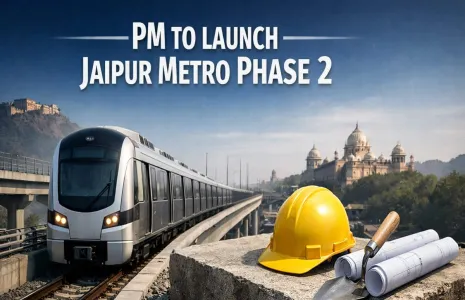
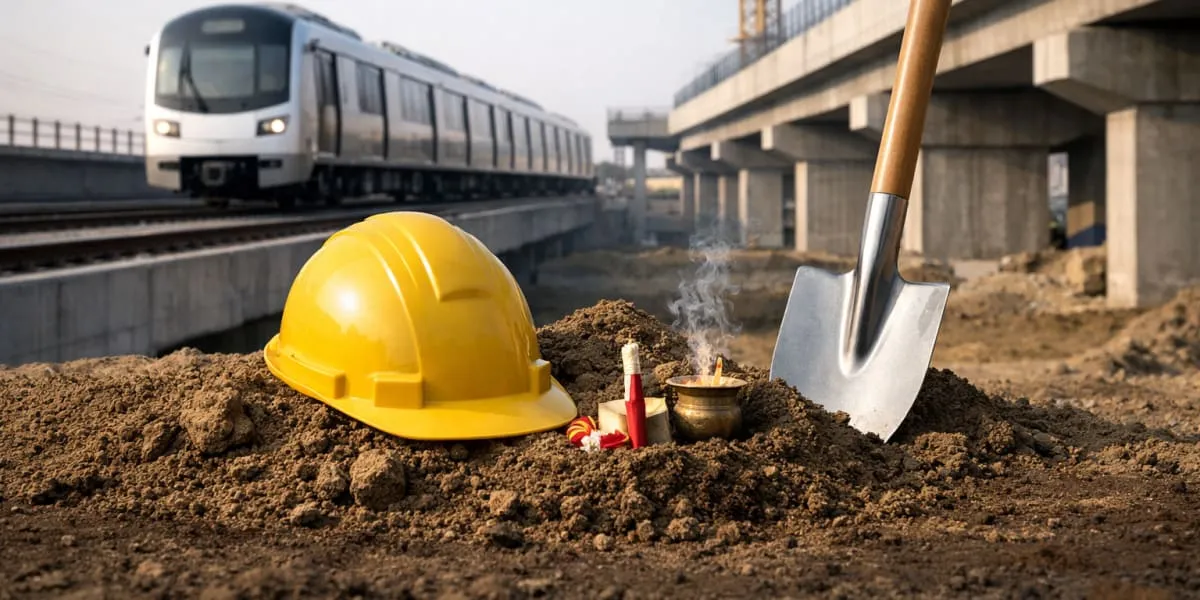
Rajasthan Chief Minister Bhajanlal Sharma performed the groundbreaking ceremony for Jaipur Metro Phase Two in Jaipur, noting that the Prime Minister had laid the foundation stone on July four. He said the project spans over 41 kilometres and is being developed at a cost of Rs 130 billion (Rs 130 bn). He indicated that further expansion in phases three and four is planned for the future.

The chief minister travelled on the existing Jaipur Metro from Mansarovar to Chhoti Chaupar and engaged with passengers to gather feedback on facilities and travel experience. He inspected operational arrangements and viewed the art gallery at Chhoti Chaupar Metro Station as well as the proposed Khassa Kothi intersection for Metro Phase Two. Officials were instructed to prioritise passenger feedback and incorporate observations into operations planning.

He directed that the highest priority be accorded to safety, punctuality and passenger facilities across the network, and asked officials to ensure rigorous standards of cleanliness and maintenance at every station. The administration stressed that service quality must enable a safe, comfortable and hassle free journey for every commuter. Operational readiness and station amenities were to be reviewed continuously ahead of Phase Two commissioning.

The state government reaffirmed its commitment to providing modern, reliable and convenient public transportation and said continued investment in robust transport infrastructure and public amenities would cover the entire state. Expansion of the metro network in the capital was described as central to enhancing urban connectivity and supporting economic activity. Officials were asked to keep timelines under review while maintaining service standards and passenger safety.

Officials said the project will improve urban connectivity, reduce travel times and provide wider benefits for commuters and local businesses. They added that coordination with municipal agencies and transport planners will continue to align ancillary works and urban amenities with Metro Phase Two operations. Regular progress reviews and quality checks were directed to ensure delivery meets the standards set by the state administration.

Rajasthan Chief Minister Bhajanlal Sharma performed the groundbreaking ceremony for Jaipur Metro Phase Two in Jaipur, noting that the Prime Minister had laid the foundation stone on July four. He said the project spans over 41 kilometres and is being developed at a cost of Rs 130 billion (Rs 130 bn). He indicated that further expansion in phases three and four is planned for the future. The chief minister travelled on the existing Jaipur Metro from Mansarovar to Chhoti Chaupar and engaged with passengers to gather feedback on facilities and travel experience. He inspected operational arrangements and viewed the art gallery at Chhoti Chaupar Metro Station as well as the proposed Khassa Kothi intersection for Metro Phase Two. Officials were instructed to prioritise passenger feedback and incorporate observations into operations planning. He directed that the highest priority be accorded to safety, punctuality and passenger facilities across the network, and asked officials to ensure rigorous standards of cleanliness and maintenance at every station. The administration stressed that service quality must enable a safe, comfortable and hassle free journey for every commuter. Operational readiness and station amenities were to be reviewed continuously ahead of Phase Two commissioning. The state government reaffirmed its commitment to providing modern, reliable and convenient public transportation and said continued investment in robust transport infrastructure and public amenities would cover the entire state. Expansion of the metro network in the capital was described as central to enhancing urban connectivity and supporting economic activity. Officials were asked to keep timelines under review while maintaining service standards and passenger safety. Officials said the project will improve urban connectivity, reduce travel times and provide wider benefits for commuters and local businesses. They added that coordination with municipal agencies and transport planners will continue to align ancillary works and urban amenities with Metro Phase Two operations. Regular progress reviews and quality checks were directed to ensure delivery meets the standards set by the state administration.

Related Stories

Gold Stories

Next Story
Infrastructure Urban

KONE Opens India's First Digital Experience Centre in Pune

KONE, a global elevator and escalator manufacturer, has inaugurated its first Digital Experience Centre (DEC) in India, located in Pune. The facility aims to showcase how artificial intelligence (AI), connectivity and data-driven technologies can enhance customer experiences and improve building operations.The centre was inaugurated by Jussi Herlin, Executive Vice Chair, KONE Corporation; Philippe Delorme, President and CEO, KONE; and Nandan Nilekani, Co-founder and Chairman of the Board, Infosys.Designed as an interactive customer environment, the facility demonstrates digital solutions cover..

Next Story
Infrastructure Urban

CII GreenCo Launches Circularity Guidelines for Indian Industry

The Confederation of Indian Industry (CII) GreenCo Council has launched the CII GreenCo Circularity Guidelines – Pilot Version at the 17th CII GreenCo Waste & Resource Management Summit 2026 in Chennai. The initiative aims to strengthen resource efficiency, waste reduction and circular economy practices across Indian manufacturing and process industries.The guidelines introduce a structured framework with circularity indices covering raw materials, consumables, packaging and other resource inputs. These indicators will help industries assess existing practices, identify opportunities to ..

Next Story
Infrastructure Energy

Global Electronics Association Launches IPC-1783-CO2E Standard

The Global Electronics Association has introduced IPC-1783-CO2E, a new international standard aimed at improving consistency, transparency and comparability in product carbon footprint reporting across the electronics manufacturing industry.The standard, titled International Standard for Data Collection and Reporting of CO2 Equivalent (CO2e) Emissions for the Electronics Manufacturing Supply Chain, provides industry-specific guidance for collecting, estimating and reporting carbon emissions data.With increasing regulatory requirements and customer expectations, electronics manufacturers face c..

Advertisement

Subscribe to Our Newsletter

Get daily newsletters around different themes from Construction world.

STAY CONNECTED

Advertisement

SPECIAL OFFER
QR Code