



Rising Packaging Bag Costs Hit UltraTech Cement
ECONOMY & POLICY

Rising Packaging Bag Costs Hit UltraTech Cement

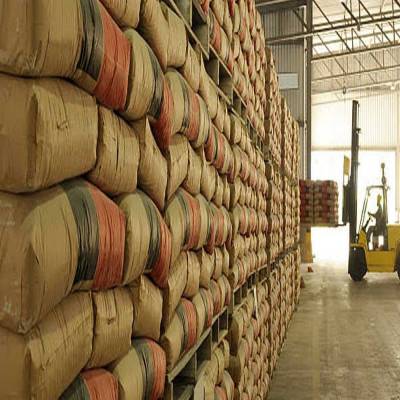
UltraTech Cement has identified rising packaging bag costs as a major headwind for its operations, an official said. Packaging bags represent a key input for finished product distribution and have seen sustained price increases that are squeezing manufacturing margins. The company described the pressure as material to near-term profitability and as complicating pricing decisions across its product portfolio. Management indicated that the cost rise is driven by raw material and logistics factors along the supply chain rather than a single transient event.

To mitigate the impact, the company is reviewing procurement strategies and exploring alternative sourcing arrangements to secure more favourable bag contracts. Operational measures under consideration include tighter inventory management, revised load planning and process efficiencies at plants and depots to reduce per unit packing cost. The official said these steps form part of a broader cost management programme that prioritises sustaining cash generation while preserving market share. Pricing discipline remains central to the approach as the firm balances customer competitiveness with margin protection.

Industry participants noted that packaging input inflation has amplified a wider set of cost pressures facing cement makers, such as fuel and freight, which collectively influence selling realisations. UltraTech's network scale provides some leverage in negotiations but does not fully insulate the firm from commodity volatility in ancillary inputs. The company will therefore align procurement cycles with production planning and seek contractual terms with suppliers that reduce short term exposure. Logistics optimisation and consolidation of vendor relationships were cited as ongoing levers to limit cost pass through.

Management reiterated a focus on operational excellence, emphasising productivity gains and tighter working capital controls to offset input cost escalation. The official said the company remains committed to disciplined capital allocation while continuing investments that improve unit economics. Stakeholders will monitor quarterly results for evidence that margin recovery measures are effective and that pricing actions are calibrated to market demand. The firm expects to keep reviewing strategies as input conditions evolve and will adjust execution accordingly.

UltraTech Cement has identified rising packaging bag costs as a major headwind for its operations, an official said. Packaging bags represent a key input for finished product distribution and have seen sustained price increases that are squeezing manufacturing margins. The company described the pressure as material to near-term profitability and as complicating pricing decisions across its product portfolio. Management indicated that the cost rise is driven by raw material and logistics factors along the supply chain rather than a single transient event. To mitigate the impact, the company is reviewing procurement strategies and exploring alternative sourcing arrangements to secure more favourable bag contracts. Operational measures under consideration include tighter inventory management, revised load planning and process efficiencies at plants and depots to reduce per unit packing cost. The official said these steps form part of a broader cost management programme that prioritises sustaining cash generation while preserving market share. Pricing discipline remains central to the approach as the firm balances customer competitiveness with margin protection. Industry participants noted that packaging input inflation has amplified a wider set of cost pressures facing cement makers, such as fuel and freight, which collectively influence selling realisations. UltraTech's network scale provides some leverage in negotiations but does not fully insulate the firm from commodity volatility in ancillary inputs. The company will therefore align procurement cycles with production planning and seek contractual terms with suppliers that reduce short term exposure. Logistics optimisation and consolidation of vendor relationships were cited as ongoing levers to limit cost pass through. Management reiterated a focus on operational excellence, emphasising productivity gains and tighter working capital controls to offset input cost escalation. The official said the company remains committed to disciplined capital allocation while continuing investments that improve unit economics. Stakeholders will monitor quarterly results for evidence that margin recovery measures are effective and that pricing actions are calibrated to market demand. The firm expects to keep reviewing strategies as input conditions evolve and will adjust execution accordingly.

Next Story
Technology

AI-Enabled Workflows Lift Profitability and Productivity

Organisations modernising frontline workflows with artificial intelligence, automation and real-time data are reporting stronger financial performance, higher productivity and improved employee engagement, according to a global study by Zebra Technologies and Oxford Economics.The research covered 1,000 senior leaders across retail, manufacturing, transportation and logistics in the US, Mexico, the UK, Germany, India, Japan, Australia and New Zealand.In transportation and logistics, 54 per cent of companies that improved picking and packing operations reported faster operational performance, wh..

Next Story
Real Estate

India Leads Global AI Readiness but Implementation Lags

Indian companies lead global averages across all eight artificial intelligence readiness indicators tracked by JLL, but only 19 per cent have started making changes to their workplaces, according to the JLL 2026 Future of Work Survey.The study found that 77 per cent of Indian business leaders expect AI to change their office requirements, creating a 58-percentage-point gap between awareness and implementation. The survey covered more than 2,200 CEOs, CFOs and real estate leaders across 21 countries during the first quarter of 2026.Despite concerns over automation, 58 per cent of Indian leaders..

Next Story
Equipment

Three WOLFF Cranes Build Riyadh Cable-Stayed Bridges

Three WOLFF 180 B luffing jib cranes are supporting the construction of two cable-stayed bridges alongside the existing Wadi Laban Bridge in Riyadh, Saudi Arabia. The project is being developed for the Royal Commission for Riyadh City and executed by the ICRC joint venture comprising IC Ictas and Al Rashid Trading & Contracting Company.The cranes are handling lifting operations including formwork, reinforcement, concrete placement, work platforms, surveying equipment and other construction materials. Each crane is fitted with a 40 m jib, reaches a hook height of 157 m and offers a maximum ..

Advertisement

Subscribe to Our Newsletter

Get daily newsletters around different themes from Construction world.

STAY CONNECTED

Advertisement

Advertisement

Advertisement