+
Sanctions Cut India's January Oil Imports From Russia
ECONOMY & POLICY

Sanctions Cut India's January Oil Imports From Russia

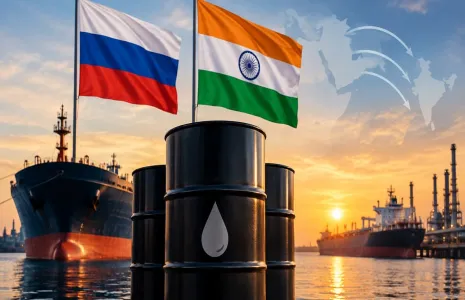
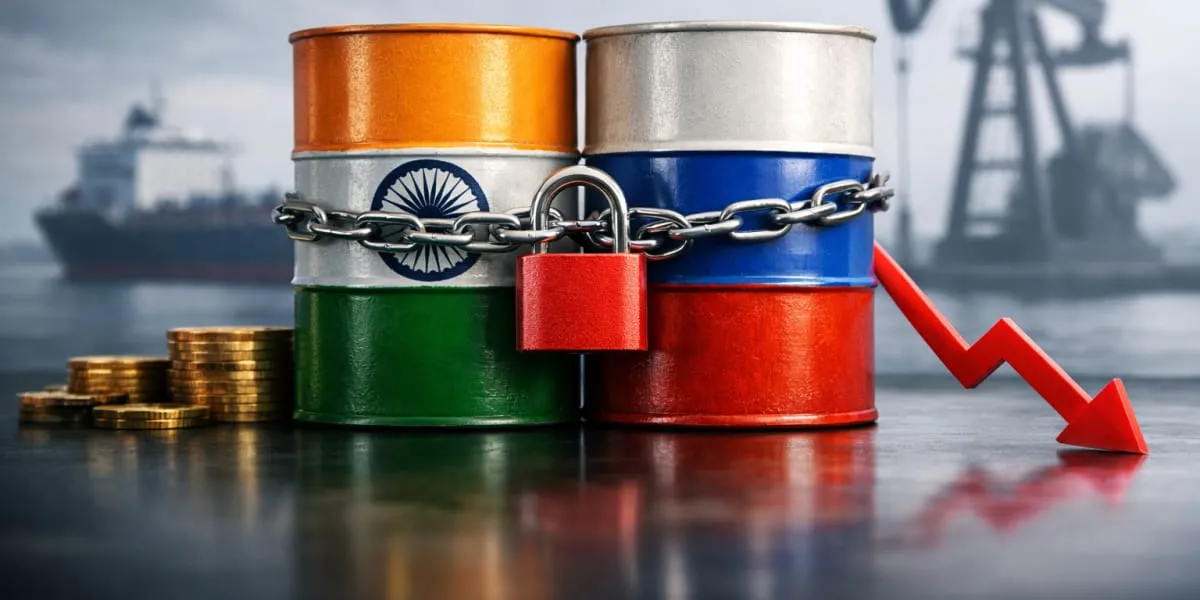
India's crude oil imports from Russia in January dropped to the lowest level seen in more than three years as international sanctions and tightened trading channels disrupted previously steady flows. The decline reflected both difficulties in completing transactions and greater reluctance among some trading intermediaries to handle Russian cargoes owing to compliance risks. Market participants and analysts noted that this contraction came amid broader efforts by many buyers to reduce direct exposure to sanctioned supplies.

Refiners in India reacted by accelerating searches for alternative suppliers and by adjusting procurement schedules to secure feedstock for planned runs. The shift increased logistical complexity and raised short term costs for procurement and shipping, even though global crude markets showed signs of adjustment. Domestic processing units were reported to prioritise flexibility in feedstock use to mitigate interruptions and maintain throughput. The adjustments came with transitional costs for end consumers and storage operators.

Government authorities were said to monitor the evolving import pattern and to engage with industry to ensure energy security and smooth supply chains. Strategic reserves and contractual adjustments were used where feasible to bridge temporary gaps, and regulators signalled readiness to facilitate transparent compliance with sanctions while protecting domestic fuel availability. Traders and shipping firms adapted routes and documentation practices to navigate heightened scrutiny and insurance constraints.

Analysts observed that recovery in imports from Russia would depend on the evolution of sanctions regimes and on the willingness of intermediaries to resume trade under clarified compliance frameworks. In the near term, India's energy managers were expected to continue diversifying sources and to seek longer term arrangements that reduce vulnerability to abrupt geopolitical shifts. The situation underlined the broader imperative of resilient procurement strategies as global trade patterns respond to policy changes. This episode prompted renewed emphasis on building flexible contractual terms and on strengthening logistics resilience.

India's crude oil imports from Russia in January dropped to the lowest level seen in more than three years as international sanctions and tightened trading channels disrupted previously steady flows. The decline reflected both difficulties in completing transactions and greater reluctance among some trading intermediaries to handle Russian cargoes owing to compliance risks. Market participants and analysts noted that this contraction came amid broader efforts by many buyers to reduce direct exposure to sanctioned supplies. Refiners in India reacted by accelerating searches for alternative suppliers and by adjusting procurement schedules to secure feedstock for planned runs. The shift increased logistical complexity and raised short term costs for procurement and shipping, even though global crude markets showed signs of adjustment. Domestic processing units were reported to prioritise flexibility in feedstock use to mitigate interruptions and maintain throughput. The adjustments came with transitional costs for end consumers and storage operators. Government authorities were said to monitor the evolving import pattern and to engage with industry to ensure energy security and smooth supply chains. Strategic reserves and contractual adjustments were used where feasible to bridge temporary gaps, and regulators signalled readiness to facilitate transparent compliance with sanctions while protecting domestic fuel availability. Traders and shipping firms adapted routes and documentation practices to navigate heightened scrutiny and insurance constraints. Analysts observed that recovery in imports from Russia would depend on the evolution of sanctions regimes and on the willingness of intermediaries to resume trade under clarified compliance frameworks. In the near term, India's energy managers were expected to continue diversifying sources and to seek longer term arrangements that reduce vulnerability to abrupt geopolitical shifts. The situation underlined the broader imperative of resilient procurement strategies as global trade patterns respond to policy changes. This episode prompted renewed emphasis on building flexible contractual terms and on strengthening logistics resilience.

Next Story
Equipment

Kabelschlepp India Installs Robotic VMC in Bengaluru

Kabelschlepp India, part of the Tsubaki Group, has installed a state-of-the-art Vertical Machining Center (VMC) integrated with robotic automation at its Bengaluru facility. The inauguration was held in the presence of Henning Preis, President & CEO, Kabelschlepp Group, Jörg Schulz, Vice President – Production, and Srinivas P. Kamisetty, Managing Director, Kabelschlepp India.The high-precision CNC VMC is designed for advanced milling, drilling, tapping and multi-axis machining. Equipped with a vertical spindle orientation, automatic tool changer and intelligent CNC control system, it en..

Next Story
Infrastructure Transport

Highway Delivery Reset!

Project delays and inefficiencies continue to bedevil the progress of India’s National Highways network. A multi-pronged reform agenda is needed to inject greater transparency and accountability at every stage – from planning and procurement to execution, maintenance and oversight. This article offers key recommendations and reform strategies that government stakeholders – from the Ministry of Road Transport & Highways (MoRTH) and the National Highways Authority of India (NHAI) to state agencies and oversight bodies – should pursue to put highway development on a better track.Decen..

Next Story
Infrastructure Transport

MSIDC Executes ₹37,000 Crore Road Programme

With Rs 37,000 crore worth of road projects under execution across Maharashtra, Maharashtra State Infrastructure Development Corporation (MSIDC) is driving one of the state’s largest infrastructure programmes. Dr Brijesh Dixit, Managing Director, discusses the institutional reforms, execution frameworks, financing strategies and technology adoption enabling timely, high-quality delivery, in conversation with PRATAP PADODE, Editor-in-Chief, CW.With over Rs 37,000 crore worth of road projects underway across districts – many under tight timelines – what institutional and executio..

Advertisement

Subscribe to Our Newsletter

Get daily newsletters around different themes from Construction world.

STAY CONNECTED

Advertisement

Advertisement

Advertisement

Open In App