Schmersal to showcase 4D model for safety components for the first time
ECONOMY & POLICY

Schmersal to showcase 4D model for safety components for the first time

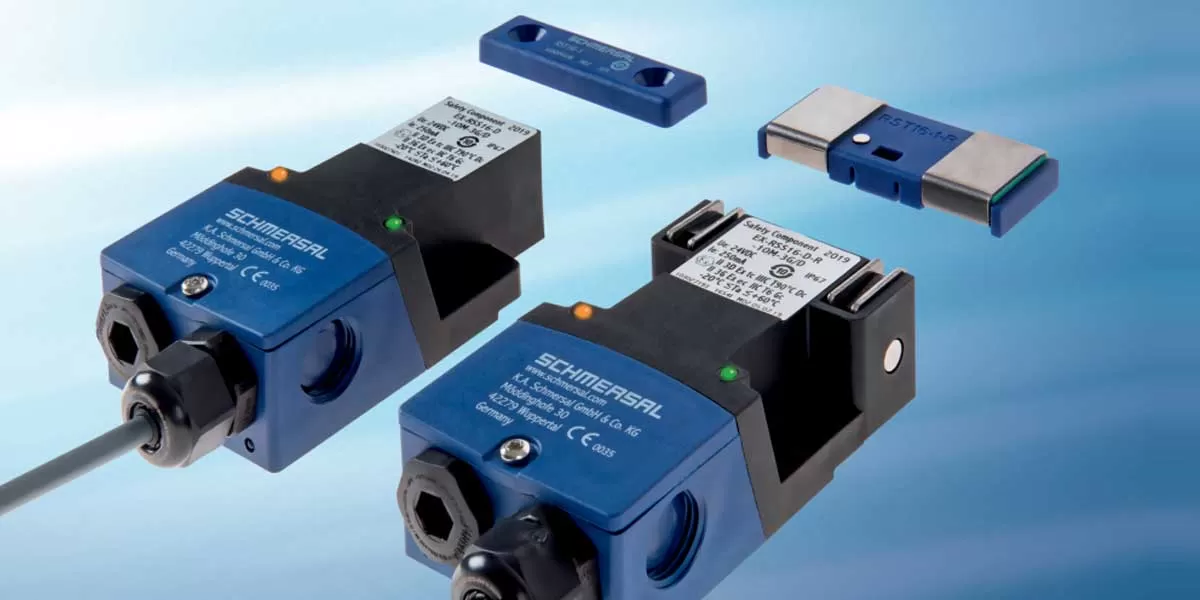
Schmersal is set to showcase a 4D model of its safety components for the first time at SPS 2024 " Smart Production Solutions " in Nuremberg, stand 460, hall 9: a digital twin of the AZM40 solenoid interlock and the DHS door handle system. In addition to the three-dimensional representation (3D), the virtual image simulates all properties and functions of the physical devices as a fourth dimension (4D). If, for instance, a guard door is unlocked using the real button on the door handle, the LEDs on the digital twin light up in the same way as on the physical counterpart. This makes Schmersal one of the very first companies to develop a digital twin for safety components.

The Schmersal Safety 4D model simulates not only individual components, but also complete process and control sequences using virtual mapping of signal flows. The benefit: In addition to early fault detection and optimisation, the 4D model will also aid with virtual machine commissioning in the future, even before the real machine has been mechanically assembled. This will help to save costs and reduce unnecessary development loops. In future, it should also be possible to monitor the components as a prerequisite for predictive maintenance

?Our plan is to offer the Schmersal Safety 4D model to customers as a future service, e.g. via our website or via the online store for 4D models "TwinStore" ' a platform on which component and system suppliers can make their digital twins available,' explains Volker Heinzer, Strategic Product Manager for Programmable Electronic Systems and Industry 4.0/IIoT at the Schmersal Group. To this end, there will be a range of successive digital ?model catalogues' containing the 4D models of Schmersal products.

Schmersal is using the "ISG-virtuos" simulation software from ISG Industrielle Steuerungstechnik GmbH for the Safety 4D model. The CPU-intensive simulation model is computed on the ISG real-time target. This powerful yet ultra-compact industrial PC enables loss-free real-time physics simulation. It represents the complete machine or system from the point of view of the control system, is mobile thanks to its compact dimensions and can also be installed inside the switch cabinet.

Schmersal is set to showcase a 4D model of its safety components for the first time at SPS 2024 Smart Production Solutions in Nuremberg, stand 460, hall 9: a digital twin of the AZM40 solenoid interlock and the DHS door handle system. In addition to the three-dimensional representation (3D), the virtual image simulates all properties and functions of the physical devices as a fourth dimension (4D). If, for instance, a guard door is unlocked using the real button on the door handle, the LEDs on the digital twin light up in the same way as on the physical counterpart. This makes Schmersal one of the very first companies to develop a digital twin for safety components. The Schmersal Safety 4D model simulates not only individual components, but also complete process and control sequences using virtual mapping of signal flows. The benefit: In addition to early fault detection and optimisation, the 4D model will also aid with virtual machine commissioning in the future, even before the real machine has been mechanically assembled. This will help to save costs and reduce unnecessary development loops. In future, it should also be possible to monitor the components as a prerequisite for predictive maintenance ?Our plan is to offer the Schmersal Safety 4D model to customers as a future service, e.g. via our website or via the online store for 4D models TwinStore ' a platform on which component and system suppliers can make their digital twins available,' explains Volker Heinzer, Strategic Product Manager for Programmable Electronic Systems and Industry 4.0/IIoT at the Schmersal Group. To this end, there will be a range of successive digital ?model catalogues' containing the 4D models of Schmersal products. Schmersal is using the ISG-virtuos simulation software from ISG Industrielle Steuerungstechnik GmbH for the Safety 4D model. The CPU-intensive simulation model is computed on the ISG real-time target. This powerful yet ultra-compact industrial PC enables loss-free real-time physics simulation. It represents the complete machine or system from the point of view of the control system, is mobile thanks to its compact dimensions and can also be installed inside the switch cabinet.

Next Story
Equipment

Schwing Stetter India Unveils New Innovations at Excon 2025

Schwing Stetter India unveiled more than 20 new machines at Excon 2025, marking one of its most significant showcases and introducing several India-first technologies to the construction equipment sector. The company launched the country’s first 56-metre boom pump designed and manufactured in India, the first fully electric truck mixer, the first CNG mixer variant and the first hybrid boom pump. Executives said the launch portfolio was engineered to support India’s move toward faster, greener and more vertically oriented infrastructure through advanced engineering, clean-energy solutions a..

Next Story
Infrastructure Energy

SEPC Resolves Hindustan Copper Dispute, Wins Rs 725 Mn Order

Engineering, procurement and construction firm SEPC Ltd has recently settled a dispute with Hindustan Copper Ltd (HCL) and secured a mining infrastructure order valued at Rs 725 million from the state-owned company. SEPC informed the stock exchanges that it has executed a settlement deed with HCL, bringing closure to all inter-se claims and counterclaims arising from arbitration proceedings. As part of the settlement, SEPC will receive Rs 304.5 million as full and final payment, marking the resolution of all pending disputes between the two entities. The company also stated that Hindustan Co..

Next Story
Infrastructure Energy

20% Ethanol Blending Cuts India’s CO2 Emissions by 73.6 Mn Tonnes

Union Road Transport and Highways Minister Nitin Gadkari recently said that India has reduced carbon dioxide emissions by 73.6 million metric tonnes due to the adoption of 20 per cent ethanol blending in petrol. He made the statement while replying to supplementary questions during the Question Hour in the Lok Sabha. Describing ethanol as a green fuel, the minister said it plays a key role in reducing pollution while also supporting higher incomes for farmers. He underlined that ethanol blending contributes both to environmental sustainability and rural economic growth. Nitin Gadkari also po..

Advertisement

Subscribe to Our Newsletter

Get daily newsletters around different themes from Construction world.

STAY CONNECTED

Advertisement

Advertisement

Advertisement

Advertisement

Open In App