+
SIAM Withdraws Communication on E20 Petrol Contamination
ECONOMY & POLICY

SIAM Withdraws Communication on E20 Petrol Contamination

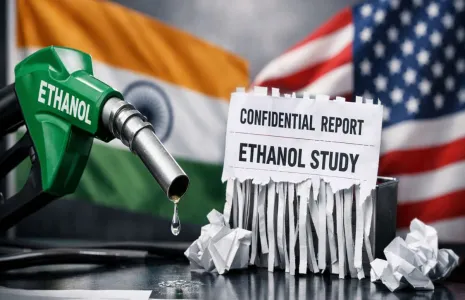
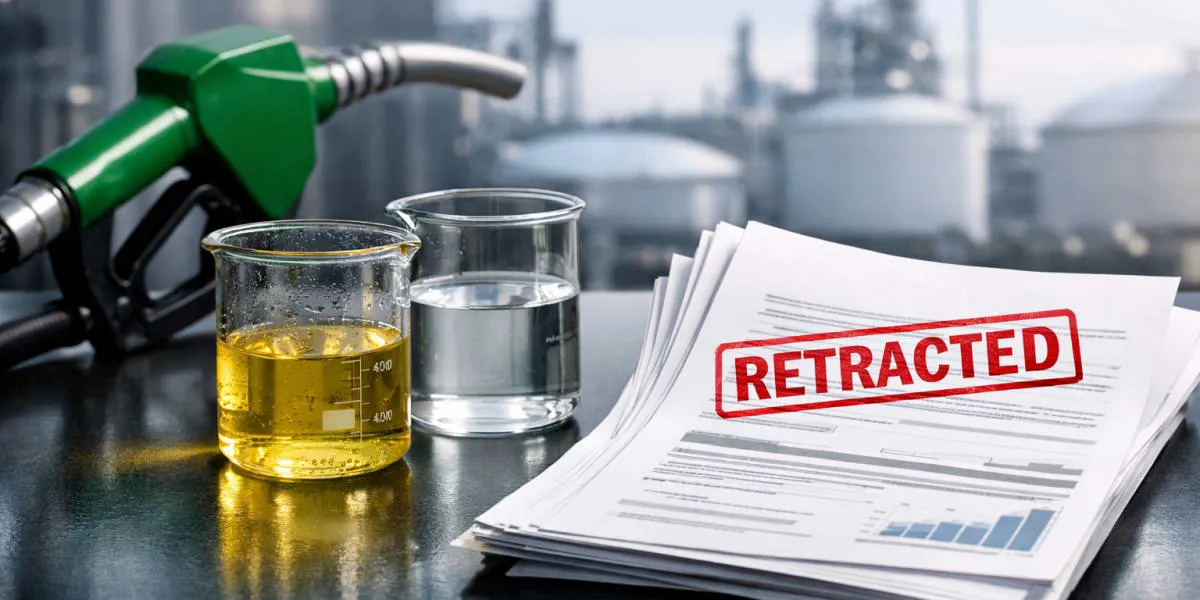
The Society of Indian Automobile Manufacturers (SIAM) has withdrawn a communication to the government after acknowledging that the figures cited in the note were not authenticated. The industry body said parts of the communication had been selectively quoted in media coverage and that some numbers required further verification. The withdrawal was described as a corrective step to prevent the dissemination of unverified technical data.

The clarification followed media reports that SIAM had raised concerns with the Ministry of Petroleum and Natural Gas over contamination in E20 petrol, citing higher chloride and moisture levels and an increase in replacement of fuel system and exhaust components. One media account set out a chloride reading of up to 500 mg/kg in certain fuel samples and linked the level to corrosion and component wear, prompting industry queries. SIAM said such figures needed elaborate regional data collection and consultation with member original equipment manufacturers before being accepted.

SIAM characterised the communication as part of routine technical deliberations among stakeholders, including oil marketing companies, original equipment manufacturers and testing agencies, and said that information had been shared in that context. The industry body highlighted an existing three ppm guideline for chloride and sulphur in ethanol blended into petrol and noted that oil marketing companies had strengthened quality checks across the supply chain. It reiterated support for the government's E20 initiative and sought to reassure consumers and stakeholders about ongoing safeguards.

The Petroleum Ministry emphasised that fuel quality is monitored regularly by state-run oil marketing companies and that testing protocols had been enhanced following the reports. A business channel article that earlier carried detailed claims was removed after publication and SIAM indicated that comprehensive verification was required before drawing any conclusions. Stakeholders will continue technical consultations to resolve discrepancies and to ensure that the rollout of E20 proceeds without quality concerns.

The Society of Indian Automobile Manufacturers (SIAM) has withdrawn a communication to the government after acknowledging that the figures cited in the note were not authenticated. The industry body said parts of the communication had been selectively quoted in media coverage and that some numbers required further verification. The withdrawal was described as a corrective step to prevent the dissemination of unverified technical data. The clarification followed media reports that SIAM had raised concerns with the Ministry of Petroleum and Natural Gas over contamination in E20 petrol, citing higher chloride and moisture levels and an increase in replacement of fuel system and exhaust components. One media account set out a chloride reading of up to 500 mg/kg in certain fuel samples and linked the level to corrosion and component wear, prompting industry queries. SIAM said such figures needed elaborate regional data collection and consultation with member original equipment manufacturers before being accepted. SIAM characterised the communication as part of routine technical deliberations among stakeholders, including oil marketing companies, original equipment manufacturers and testing agencies, and said that information had been shared in that context. The industry body highlighted an existing three ppm guideline for chloride and sulphur in ethanol blended into petrol and noted that oil marketing companies had strengthened quality checks across the supply chain. It reiterated support for the government's E20 initiative and sought to reassure consumers and stakeholders about ongoing safeguards. The Petroleum Ministry emphasised that fuel quality is monitored regularly by state-run oil marketing companies and that testing protocols had been enhanced following the reports. A business channel article that earlier carried detailed claims was removed after publication and SIAM indicated that comprehensive verification was required before drawing any conclusions. Stakeholders will continue technical consultations to resolve discrepancies and to ensure that the rollout of E20 proceeds without quality concerns.

Related Stories

Gold Stories

Next Story
Real Estate

BMC OC Amnesty Scheme Requires Key Approvals from Mumbai Societies

The Brihanmumbai Municipal Corporation (BMC) has clarified that housing societies applying under its Occupation Certificate (OC) amnesty scheme must possess key approvals linked to the original construction. The requirements include a valid Intimation of Disapproval (IOD), an approved building plan and a Commencement Certificate (CC), along with a No Objection Certificate (NOC) from the developer or original construction applicant. The Standard Operating Procedure (SOP) makes clear that the absence of an OC alone will not qualify a building for relief. Societies must establish that their build..

Next Story
Real Estate

Gurugram Emerges as Luxury Senior Living Hub

Gurugram is emerging as a potential hub for luxury senior living, supported by available land, healthcare infrastructure, connectivity and a concentration of affluent professionals, high-net-worth individuals and non-resident Indians. These factors could give the city an advantage over land-constrained metros such as Mumbai. A report by the Association of Senior Living India (ASLI) and JLL estimates that India’s organised senior living market could represent a $10.1 bn opportunity by 2030. The sector had about 25,050 organised units as of June 2026, while penetration stood at only 1.5 per ce..

Next Story
Real Estate

Corrosion Costs India’s Infrastructure Rs. 142 bn Annually

Corrosion costs India an estimated Rs. 1.42 tn annually, equivalent to 4.3 per cent of gross domestic product, according to a report by the Confederation of Indian Industry and the National Research Institute. Infrastructure accounts for Rs. 142 bn of the annual burden, making it the sector with the largest absolute cost among those examined. The report, presented at the CII Annual Infrastructure Summit 2026, said the infrastructure-sector cost equals about 2.9 per cent of the sector’s gross domestic product. It estimated that effective measures could generate maximum savings of Rs. 495.8 bn..

Advertisement

Subscribe to Our Newsletter

Get daily newsletters around different themes from Construction world.

STAY CONNECTED

Advertisement

SPECIAL OFFER
QR Code