Smart Meter Scheme Not Mandatory, Himachal Court Rules
ECONOMY & POLICY

Smart Meter Scheme Not Mandatory, Himachal Court Rules

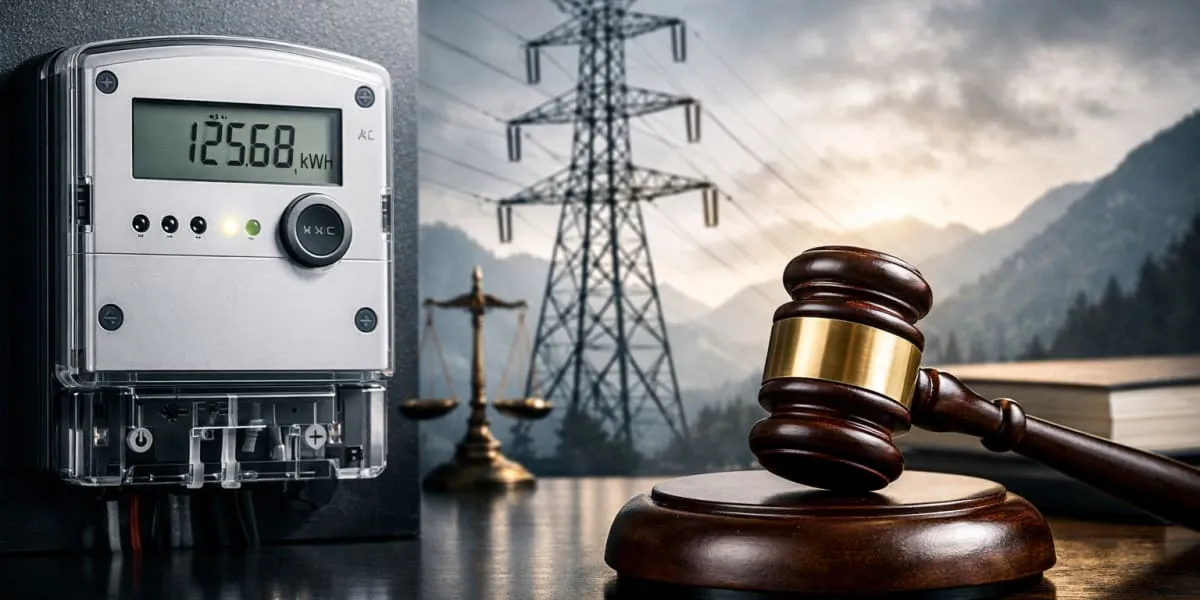
The Himachal court has ruled that the smart meter scheme cannot be treated as mandatory for electricity consumers, setting aside directives that compelled installation without adequate legal basis. The judgement clarified that consumers retain the right to decline smart meters in the absence of a clear statutory mandate and a transparent procedure for opting in or out. The court noted that forced implementation would raise concerns about procedural fairness and individual rights.\n\nThe decision is likely to affect distribution companies that had been rolling out smart meters across the state, as they will need to revisit deployment plans and consent mechanisms. Utilities may be required to obtain explicit informed consent from consumers or to secure regulatory approvals before enforcing replacement of analogue meters. The ruling may also prompt regulators to issue guidance on timelines and standards for meter installation and data handling.\n\nThe court examined the administrative record and found gaps in consultation and notification processes, according to the judgement, and held that large scale changes to service delivery require clear statutory backing. Legal experts said the judgement emphasises the need for procedural safeguards when introducing new technology that affects billing and privacy. The state or utilities may now consider framing detailed rules or seeking legislative sanction for compulsory rollouts.\n\nThe outcome provides temporary relief to consumers who object to smart meters on grounds of cost, privacy or technical reliability, while leaving open the prospect of structured adoption where appropriate. Energy regulators and the government may engage stakeholders to balance modernisation goals with consumer protections, and utilities may continue voluntary programmes to demonstrate benefits. Any appeal against the decision could determine the future pace of telemetric metering in the region.

The Himachal court has ruled that the smart meter scheme cannot be treated as mandatory for electricity consumers, setting aside directives that compelled installation without adequate legal basis. The judgement clarified that consumers retain the right to decline smart meters in the absence of a clear statutory mandate and a transparent procedure for opting in or out. The court noted that forced implementation would raise concerns about procedural fairness and individual rights.\n\nThe decision is likely to affect distribution companies that had been rolling out smart meters across the state, as they will need to revisit deployment plans and consent mechanisms. Utilities may be required to obtain explicit informed consent from consumers or to secure regulatory approvals before enforcing replacement of analogue meters. The ruling may also prompt regulators to issue guidance on timelines and standards for meter installation and data handling.\n\nThe court examined the administrative record and found gaps in consultation and notification processes, according to the judgement, and held that large scale changes to service delivery require clear statutory backing. Legal experts said the judgement emphasises the need for procedural safeguards when introducing new technology that affects billing and privacy. The state or utilities may now consider framing detailed rules or seeking legislative sanction for compulsory rollouts.\n\nThe outcome provides temporary relief to consumers who object to smart meters on grounds of cost, privacy or technical reliability, while leaving open the prospect of structured adoption where appropriate. Energy regulators and the government may engage stakeholders to balance modernisation goals with consumer protections, and utilities may continue voluntary programmes to demonstrate benefits. Any appeal against the decision could determine the future pace of telemetric metering in the region.

Related Stories

Gold Stories

Next Story
Infrastructure Urban

NABARD, NaBFID Partner to Fund Rural Infrastructure

The National Bank for Agriculture and Rural Development (NABARD) and the National Bank for Financing Infrastructure and Development (NaBFID) have signed a Memorandum of Understanding (MoU) to collaborate on financing infrastructure projects with significant rural impact.The partnership combines NABARD’s expertise in rural and agricultural infrastructure with NaBFID’s specialised infrastructure financing capabilities. It will focus on joint financing, knowledge sharing and developing financing solutions to improve access to long-term, competitively priced capital for rural infrastructure an..

Next Story
Infrastructure Energy

Advait Energy Wins Rs 1.34 Billion MPPTCL Order

Advait Energy Transitions (AETL) has secured a Rs 1.34 billion turnkey contract from Madhya Pradesh Power Transmission Co. Ltd. (MPPTCL) for the design, manufacturing and supply of Emergency Restoration Systems (ERS) for 400kV, 220kV and 132kV EHV transmission lines.The order, received against Tender No. TR-23/2025 on August 25, 2026, will be executed over 18 months. The contract value, inclusive of taxes, covers the complete ERS along with the required accessories.Emergency Restoration Systems are used to restore transmission infrastructure following disruptions, helping maintain continuity a..

Next Story
Real Estate

Gradiant expands Coimbatore engineering centre

Gradiant has expanded its Global Engineering Center (GEC) in Coimbatore, more than doubling its engineering workforce from approximately 100 to over 200 professionals as it strengthens its global project execution capabilities.The expanded centre will bring together multidisciplinary expertise across process engineering, detailed design and project engineering, enabling the India team to take on greater responsibility for the engineering and design of Gradiant’s international projects.According to Govind Alagappan, COO, Gradiant, Coimbatore’s engineering talent and industrial heritage make..

Advertisement

Subscribe to Our Newsletter

Get daily newsletters around different themes from Construction world.

STAY CONNECTED

Advertisement