Steel-Based Construction Key to Smarter, Greener Cities
ECONOMY & POLICY

Steel-Based Construction Key to Smarter, Greener Cities

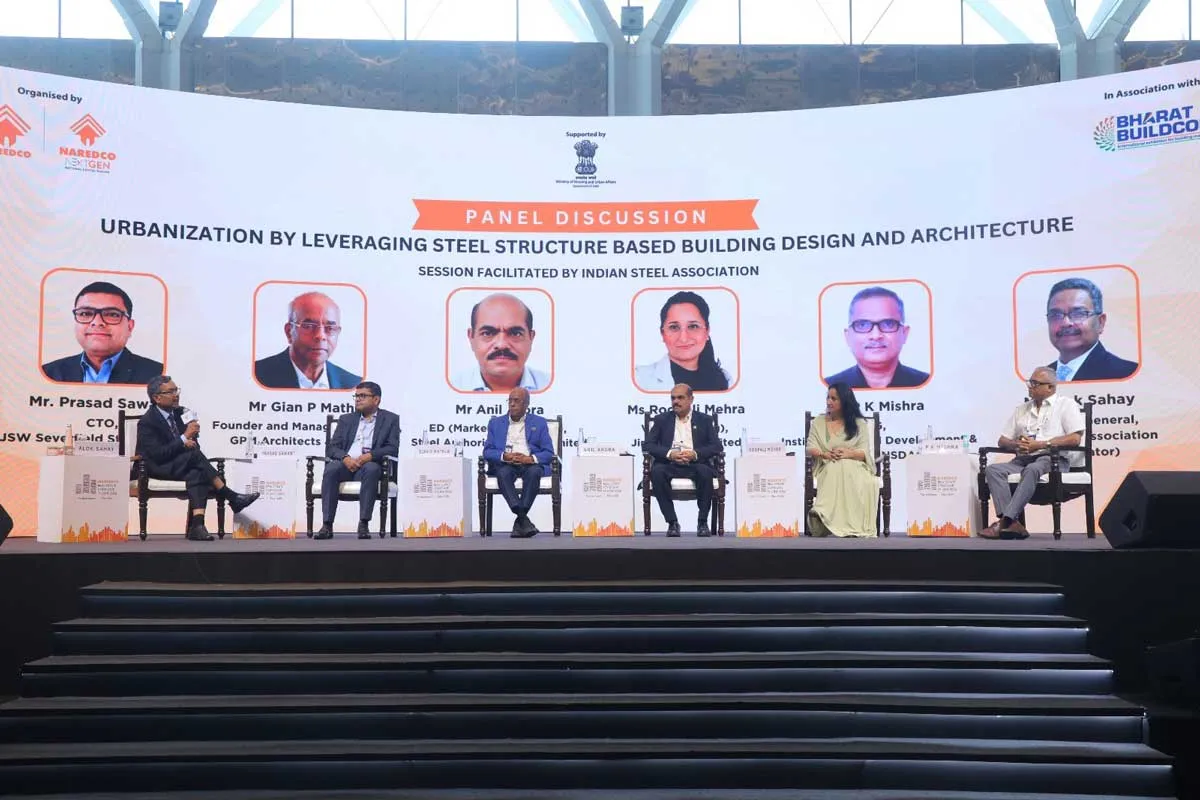
Steel-based construction can play a transformative role in addressing India's urbanisation challenges by enabling faster project execution, sustainable development and efficient land utilisation, experts said during a panel discussion at the NAREDCO Real Estate Conclave 2026 held at Yashobhoomi, New Delhi.

The session, titled “Urbanization by Leveraging Steel Structure Based Building Design and Architecture”, brought together experts from the steel, architecture and construction sectors, who highlighted the need to accelerate the adoption of steel structures to support India's rapidly expanding urban centres.

Speaking at the session, Shri Prasad Sawant, CTO, JSW Severfield Structures, said steel and off-site fabricated construction solutions are emerging as a key answer to India's future urban development needs. He noted that as cities continue to expand vertically due to limited land availability, steel-based construction offers significant advantages in terms of speed, efficiency and scalability. He also pointed to the declining availability of unskilled construction labour, which is expected to make steel and precast construction methods increasingly important in the coming years.

Shri Gian P. Mathur, Founder and Managing Director, GPM Architects & Planners, said the future of urban development lies in building higher and smarter. According to him, steel structures help reduce site congestion, minimise material wastage and improve overall project efficiency. While steel is often considered more expensive than conventional concrete construction, he noted that lifecycle benefits, faster completion and quicker utilisation offer compelling economic advantages.

Highlighting steel’s role in addressing urban space constraints, Shri Anil Arora, Executive Director (Marketing Services), Steel Authority of India (SAIL), said steel can enable better space utilisation through high-rise developments, vertical warehousing and multi-level parking infrastructure. He added that steel construction offers unmatched speed and scalability and can contribute significantly to meeting rising urban infrastructure requirements. He acknowledged challenges related to skilled manpower, design capabilities and initial project costs but emphasised that wider adoption would help cities use limited land resources more efficiently.

Shri P. K. Mishra, Director General, Institute for Steel Development & Growth (INSDAG), stressed the need for stronger policy support and greater awareness of steel technologies. He observed that limited exposure to steel design within engineering education has resulted in a shortage of professionals trained in steel-based construction. He advocated lifecycle cost-based assessments of infrastructure projects and called for government-led initiatives to create a stronger ecosystem for steel usage. He added that steel and concrete should be viewed as complementary materials, depending on project requirements and long-term performance considerations.

Moderating the discussion, Shri Alok Sahay, Secretary General, Indian Steel Association, said steel has evolved beyond being merely a construction material and is now a key enabler of sustainable urbanisation, modern infrastructure and architectural innovation. He highlighted its advantages, including high strength-to-weight ratio, design flexibility, seismic resilience, recyclability and shorter construction timelines.

Drawing lessons from international best practices, Shri Sahay noted that countries such as Japan have developed robust standards, certification systems and educational frameworks to support widespread steel adoption. He stressed the need for India to strengthen design codes, expand steel-focused engineering education and create a larger network of certified fabricators and skilled professionals.

The panel also recommended the formation of a multi-stakeholder expert group comprising government agencies, steel producers, construction companies, educational institutions and standards bodies to identify measures for accelerating steel adoption in India’s construction sector.

The session concluded with a consensus that steel-based construction can become a cornerstone of India’s next phase of urban development, helping create smarter, greener and more resilient cities.

"Join industry leaders at RAHSTA Expo, India's premier platform for roads, highways and traffic infrastructure. Register now to explore innovations, network with experts and shape the future of mobility."

Steel-based construction can play a transformative role in addressing India's urbanisation challenges by enabling faster project execution, sustainable development and efficient land utilisation, experts said during a panel discussion at the NAREDCO Real Estate Conclave 2026 held at Yashobhoomi, New Delhi.The session, titled “Urbanization by Leveraging Steel Structure Based Building Design and Architecture”, brought together experts from the steel, architecture and construction sectors, who highlighted the need to accelerate the adoption of steel structures to support India's rapidly expanding urban centres.Speaking at the session, Shri Prasad Sawant, CTO, JSW Severfield Structures, said steel and off-site fabricated construction solutions are emerging as a key answer to India's future urban development needs. He noted that as cities continue to expand vertically due to limited land availability, steel-based construction offers significant advantages in terms of speed, efficiency and scalability. He also pointed to the declining availability of unskilled construction labour, which is expected to make steel and precast construction methods increasingly important in the coming years.Shri Gian P. Mathur, Founder and Managing Director, GPM Architects & Planners, said the future of urban development lies in building higher and smarter. According to him, steel structures help reduce site congestion, minimise material wastage and improve overall project efficiency. While steel is often considered more expensive than conventional concrete construction, he noted that lifecycle benefits, faster completion and quicker utilisation offer compelling economic advantages.Highlighting steel’s role in addressing urban space constraints, Shri Anil Arora, Executive Director (Marketing Services), Steel Authority of India (SAIL), said steel can enable better space utilisation through high-rise developments, vertical warehousing and multi-level parking infrastructure. He added that steel construction offers unmatched speed and scalability and can contribute significantly to meeting rising urban infrastructure requirements. He acknowledged challenges related to skilled manpower, design capabilities and initial project costs but emphasised that wider adoption would help cities use limited land resources more efficiently.Shri P. K. Mishra, Director General, Institute for Steel Development & Growth (INSDAG), stressed the need for stronger policy support and greater awareness of steel technologies. He observed that limited exposure to steel design within engineering education has resulted in a shortage of professionals trained in steel-based construction. He advocated lifecycle cost-based assessments of infrastructure projects and called for government-led initiatives to create a stronger ecosystem for steel usage. He added that steel and concrete should be viewed as complementary materials, depending on project requirements and long-term performance considerations.Moderating the discussion, Shri Alok Sahay, Secretary General, Indian Steel Association, said steel has evolved beyond being merely a construction material and is now a key enabler of sustainable urbanisation, modern infrastructure and architectural innovation. He highlighted its advantages, including high strength-to-weight ratio, design flexibility, seismic resilience, recyclability and shorter construction timelines.Drawing lessons from international best practices, Shri Sahay noted that countries such as Japan have developed robust standards, certification systems and educational frameworks to support widespread steel adoption. He stressed the need for India to strengthen design codes, expand steel-focused engineering education and create a larger network of certified fabricators and skilled professionals.The panel also recommended the formation of a multi-stakeholder expert group comprising government agencies, steel producers, construction companies, educational institutions and standards bodies to identify measures for accelerating steel adoption in India’s construction sector.The session concluded with a consensus that steel-based construction can become a cornerstone of India’s next phase of urban development, helping create smarter, greener and more resilient cities.

Next Story
Infrastructure Urban

Benzoville Showcases Luxury Cabinet Handles

Benzoville has strengthened its position in India’s luxury cabinet handle segment by offering more than 53,000 designs sourced from leading global manufacturers.The company said the portfolio has been curated to meet rising demand from architects, interior designers, kitchen specialists and luxury homeowners seeking premium hardware solutions for residential, hospitality and commercial projects.Cabinet handles, once seen mainly as functional accessories, are increasingly being recognised as important design elements in luxury interiors. According to the company, premium handles now contribut..

Next Story
Infrastructure Urban

Meghalaya Opens North East’s Largest Spice Plant

Union Finance Minister Nirmala Sitharaman recently inaugurated the Organic Spice Industrial Unit, PRIME-HUB, at Bhoirymbong in Meghalaya. The facility is being positioned as the North East’s largest organic spice processing plant and is expected to strengthen Meghalaya’s agro-industrial and organic farming ecosystem.The project was developed with an investment of Rs 300 million (mn) and is designed to process over 10,000 metric tonnes of organic spices annually. It will directly benefit 5,500 farmers across 112 villages, supporting improved livelihoods, value addition and market access for..

Next Story
Infrastructure Urban

Recykal Raises USD 23 Mn Bridge Round

Recykal, a Hyderabad-based technology platform for waste management and the circular economy, recently raised USD 23 million in a bridge round through a mix of primary and secondary capital. The round saw participation from existing investors and select new family offices.The fresh capital will be used to strengthen Recykal’s technology platform, accelerate its Deposit Return System (DRS) deployments, expand behavioural change solutions in waste management, and support international growth. In FY26, the company reported gross revenue of Rs 14.98 billion, up 53.2 per cent from Rs 9.78 billion..

Advertisement

Subscribe to Our Newsletter

Get daily newsletters around different themes from Construction world.

STAY CONNECTED

Advertisement

Advertisement

Advertisement