Suzuki Targets 4 mn Units in India by FY30, Builds Global Hub
ECONOMY & POLICY

Suzuki Targets 4 mn Units in India by FY30, Builds Global Hub

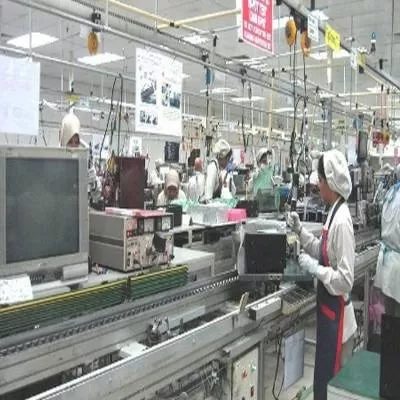
Suzuki Motor Corporation plans to raise annual production capacity in India to approximately 4 mn units from fiscal 2030, strengthening the country’s role as a manufacturing and export hub for its global operations. The Japanese car maker announced the target as part of its Technology Strategy 2026, which outlines its development and manufacturing priorities for the coming decade.

The company also aims to improve development efficiency by 30 per cent from the FY20 level and manufacturing efficiency by 50 per cent by FY30. It plans to halve the lead time required to develop new vehicles by improving coordination between engineering and manufacturing activities.

Suzuki has been expanding its Indian manufacturing base through facilities in Gurugram and Manesar, followed by the Hansalpur plant, which began operations in 2017, and the Kharkhoda plant, launched in 2025. The new facilities are intended to support higher production volumes and increase the company’s ability to serve overseas markets from India.

Under the strategy, Suzuki will advance concurrent development across engineering and manufacturing, deepen the use of digital engineering and promote modularisation. These measures are intended to help the company deliver products suited to individual markets more quickly while using technologies developed in Japan.

Suzuki, which holds approximately a 58 per cent stake in Maruti Suzuki India, said it would also accelerate its multi-pathway approach to address differences in energy availability and infrastructure across markets. The approach includes adapting to higher raw material and energy costs, as well as tighter environmental and safety regulations. Suzuki said development and manufacturing processes would be transformed together to deliver products aligned with local customer requirements and support its goal of minimising energy use.

Suzuki Motor Corporation plans to raise annual production capacity in India to approximately 4 mn units from fiscal 2030, strengthening the country’s role as a manufacturing and export hub for its global operations. The Japanese car maker announced the target as part of its Technology Strategy 2026, which outlines its development and manufacturing priorities for the coming decade. The company also aims to improve development efficiency by 30 per cent from the FY20 level and manufacturing efficiency by 50 per cent by FY30. It plans to halve the lead time required to develop new vehicles by improving coordination between engineering and manufacturing activities. Suzuki has been expanding its Indian manufacturing base through facilities in Gurugram and Manesar, followed by the Hansalpur plant, which began operations in 2017, and the Kharkhoda plant, launched in 2025. The new facilities are intended to support higher production volumes and increase the company’s ability to serve overseas markets from India. Under the strategy, Suzuki will advance concurrent development across engineering and manufacturing, deepen the use of digital engineering and promote modularisation. These measures are intended to help the company deliver products suited to individual markets more quickly while using technologies developed in Japan. Suzuki, which holds approximately a 58 per cent stake in Maruti Suzuki India, said it would also accelerate its multi-pathway approach to address differences in energy availability and infrastructure across markets. The approach includes adapting to higher raw material and energy costs, as well as tighter environmental and safety regulations. Suzuki said development and manufacturing processes would be transformed together to deliver products aligned with local customer requirements and support its goal of minimising energy use.

Related Stories

Gold Stories

Next Story
Real Estate

Japanese companies expand GCC operations in India

More than 100 Japanese companies have established or are expanding Global Capability Centres (GCCs) in India, with a growing focus on artificial intelligence (AI), engineering, digital innovation, product development, cybersecurity and advanced analytics. The shift marks an expansion beyond traditional back-office and operational support functions towards higher-value technology and innovation activities.Japanese companies are increasingly using their Indian GCCs to support digital transformation, address talent shortages and contribute to global business strategies. These centres are taking o..

Next Story
Real Estate

India’s flexible office stock projected to reach 160 million sq ft by 2030

India retained its position as the world's most mature flexible office market, scoring 100 per cent on Cushman & Wakefield's Flexible Office Market Maturity Index, according to the firm's Global Trends in Flexible Office 2026 report.India's flexible office inventory reached 88.7 million sq ft (MSF) in H1 2026, accounting for 10.5 per cent of the country's total office stock. The report projects this to exceed 100 MSF in 2026 and reach approximately 160 MSF by 2030.Flexible office operators leased 8.5 MSF across India's top eight cities in H1 2026, their strongest first-half performance to ..

Next Story
Infrastructure Urban

K2 Infragen appoints Abhishek Sharma as DGM, supply chain

K2 Infragen has appointed Abhishek Sharma as Deputy General Manager, Supply Chain Management. He will oversee procurement planning, vendor partnerships and coordination with project teams.Sharma brings nearly two decades of experience in infrastructure procurement across railways, highways, expressways and hydropower. His experience includes procurement responsibilities associated with the Delhi–Meerut Expressway and the Delhi–Vadodara greenfield corridor. ..

Advertisement

Subscribe to Our Newsletter

Get daily newsletters around different themes from Construction world.

STAY CONNECTED

Advertisement

SPECIAL OFFER
QR Code