Tata Motors inaugurates vehicle scrapping facility in Surat
ECONOMY & POLICY

Tata Motors inaugurates vehicle scrapping facility in Surat

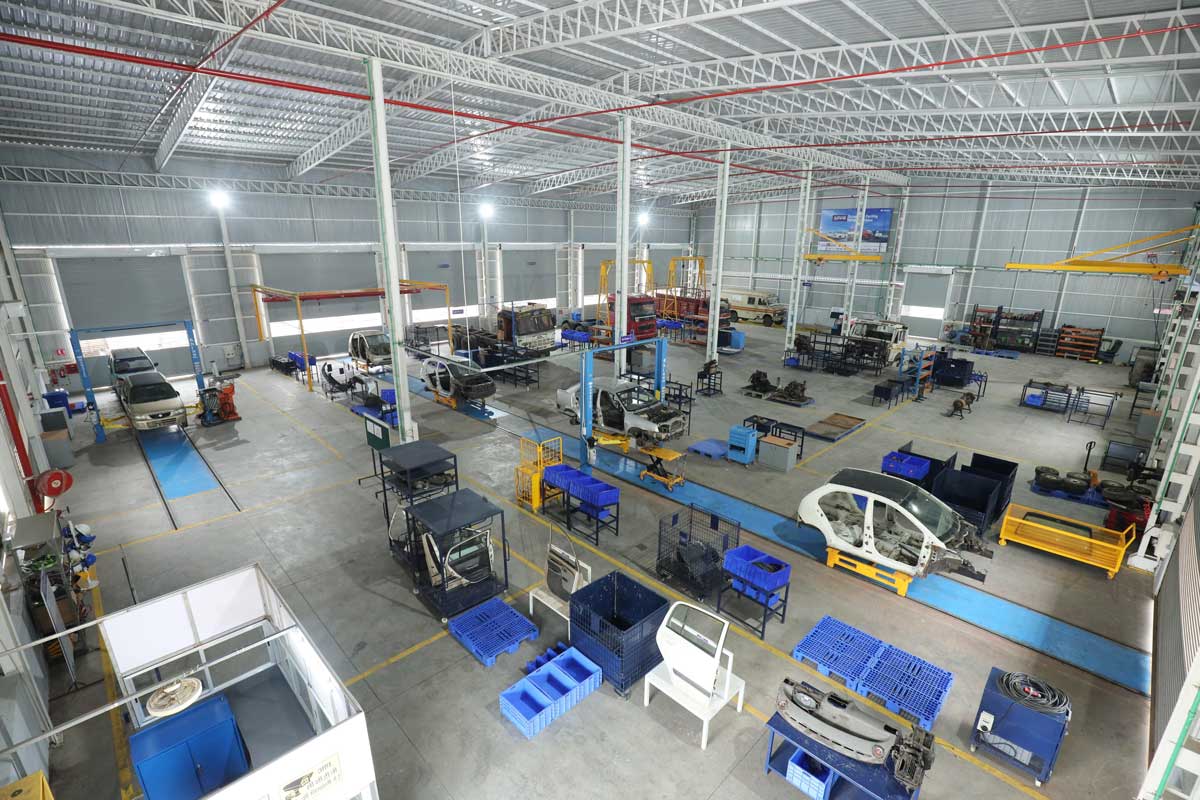
Tata Motors, India’s leading automobile manufacturer, continues its commitment to sustainable mobility with the launch of its third Registered Vehicle Scrapping Facility (RVSF), in Surat, Gujarat. Named ‘Re.Wi.Re – Recycle with Respect’, this advanced facility was inaugurated by Mr. PB Balaji, Group Chief Financial Officer, Tata Motors. The state-of-the-art facility uses environmentally friendly processes and has the capacity to disassemble 15,000 end-of-life vehicles safely and sustainably each year. The RVSF is developed and operated by Tata Motors’ partner Shree Ambica Auto to scrap end-of-life passenger and commercial vehicles of all brands. This launch follows the success of the two facilities; in Jaipur and Bhubaneshwar, and marks another significant milestone for the company’s sustainable initiatives.

Commenting on the momentous launch, PB Balaji, Group Chief Financial Officer, Tata Motors, said, “Sustainability is our driving force and serves as our compass, guiding our vision and actions. Today, I am delighted to witness the launch of the Re.Wi.Re. facility in Surat, as we make great strides on a transformative journey towards responsible end-of-life vehicle scrapping. With our globally benchmarked recycling processes, we aim to minimise waste for a brighter future. We are confident that these decentralised facilities will benefit our customers, foster economic growth, generate employment opportunities and fulfill the need for eco-friendly vehicle scrapping.”

A cutting-edge facility, Re.Wi.Re. is purpose-built for dismantling end-of-life passenger and commercial vehicles across all brands, with a focus on employing environmentally friendly practices. The fully digitalised facility is equipped with dedicated cell-type and line-type dismantling for commercial vehicles and passenger vehicles, respectively, and all its operations are seamless and paperless. Additionally, there are dedicated stations for the safe dismantling of various components, including tyres, batteries, fuel, oils, liquids and gases. Every vehicle undergoes a meticulous documentation and dismantling process specifically designed to meet the requirements of passenger and commercial vehicles. By doing so, the dismantling process ensures maximum attention to detail, guaranteeing the safe disposal of all components. Ultimately, the Re.Wi.Re. facility embodies a ground-breaking leap toward fostering sustainable practices within the automotive industry.

Tata Motors, India’s leading automobile manufacturer, continues its commitment to sustainable mobility with the launch of its third Registered Vehicle Scrapping Facility (RVSF), in Surat, Gujarat. Named ‘Re.Wi.Re – Recycle with Respect’, this advanced facility was inaugurated by Mr. PB Balaji, Group Chief Financial Officer, Tata Motors. The state-of-the-art facility uses environmentally friendly processes and has the capacity to disassemble 15,000 end-of-life vehicles safely and sustainably each year. The RVSF is developed and operated by Tata Motors’ partner Shree Ambica Auto to scrap end-of-life passenger and commercial vehicles of all brands. This launch follows the success of the two facilities; in Jaipur and Bhubaneshwar, and marks another significant milestone for the company’s sustainable initiatives. Commenting on the momentous launch, PB Balaji, Group Chief Financial Officer, Tata Motors, said, “Sustainability is our driving force and serves as our compass, guiding our vision and actions. Today, I am delighted to witness the launch of the Re.Wi.Re. facility in Surat, as we make great strides on a transformative journey towards responsible end-of-life vehicle scrapping. With our globally benchmarked recycling processes, we aim to minimise waste for a brighter future. We are confident that these decentralised facilities will benefit our customers, foster economic growth, generate employment opportunities and fulfill the need for eco-friendly vehicle scrapping.” A cutting-edge facility, Re.Wi.Re. is purpose-built for dismantling end-of-life passenger and commercial vehicles across all brands, with a focus on employing environmentally friendly practices. The fully digitalised facility is equipped with dedicated cell-type and line-type dismantling for commercial vehicles and passenger vehicles, respectively, and all its operations are seamless and paperless. Additionally, there are dedicated stations for the safe dismantling of various components, including tyres, batteries, fuel, oils, liquids and gases. Every vehicle undergoes a meticulous documentation and dismantling process specifically designed to meet the requirements of passenger and commercial vehicles. By doing so, the dismantling process ensures maximum attention to detail, guaranteeing the safe disposal of all components. Ultimately, the Re.Wi.Re. facility embodies a ground-breaking leap toward fostering sustainable practices within the automotive industry.

Related Stories

Gold Stories

Next Story
Infrastructure Urban

KONE Opens India's First Digital Experience Centre in Pune

KONE, a global elevator and escalator manufacturer, has inaugurated its first Digital Experience Centre (DEC) in India, located in Pune. The facility aims to showcase how artificial intelligence (AI), connectivity and data-driven technologies can enhance customer experiences and improve building operations.The centre was inaugurated by Jussi Herlin, Executive Vice Chair, KONE Corporation; Philippe Delorme, President and CEO, KONE; and Nandan Nilekani, Co-founder and Chairman of the Board, Infosys.Designed as an interactive customer environment, the facility demonstrates digital solutions cover..

Next Story
Infrastructure Urban

CII GreenCo Launches Circularity Guidelines for Indian Industry

The Confederation of Indian Industry (CII) GreenCo Council has launched the CII GreenCo Circularity Guidelines – Pilot Version at the 17th CII GreenCo Waste & Resource Management Summit 2026 in Chennai. The initiative aims to strengthen resource efficiency, waste reduction and circular economy practices across Indian manufacturing and process industries.The guidelines introduce a structured framework with circularity indices covering raw materials, consumables, packaging and other resource inputs. These indicators will help industries assess existing practices, identify opportunities to ..

Next Story
Infrastructure Energy

Global Electronics Association Launches IPC-1783-CO2E Standard

The Global Electronics Association has introduced IPC-1783-CO2E, a new international standard aimed at improving consistency, transparency and comparability in product carbon footprint reporting across the electronics manufacturing industry.The standard, titled International Standard for Data Collection and Reporting of CO2 Equivalent (CO2e) Emissions for the Electronics Manufacturing Supply Chain, provides industry-specific guidance for collecting, estimating and reporting carbon emissions data.With increasing regulatory requirements and customer expectations, electronics manufacturers face c..

Advertisement

Subscribe to Our Newsletter

Get daily newsletters around different themes from Construction world.

STAY CONNECTED

Advertisement

SPECIAL OFFER
QR Code