+
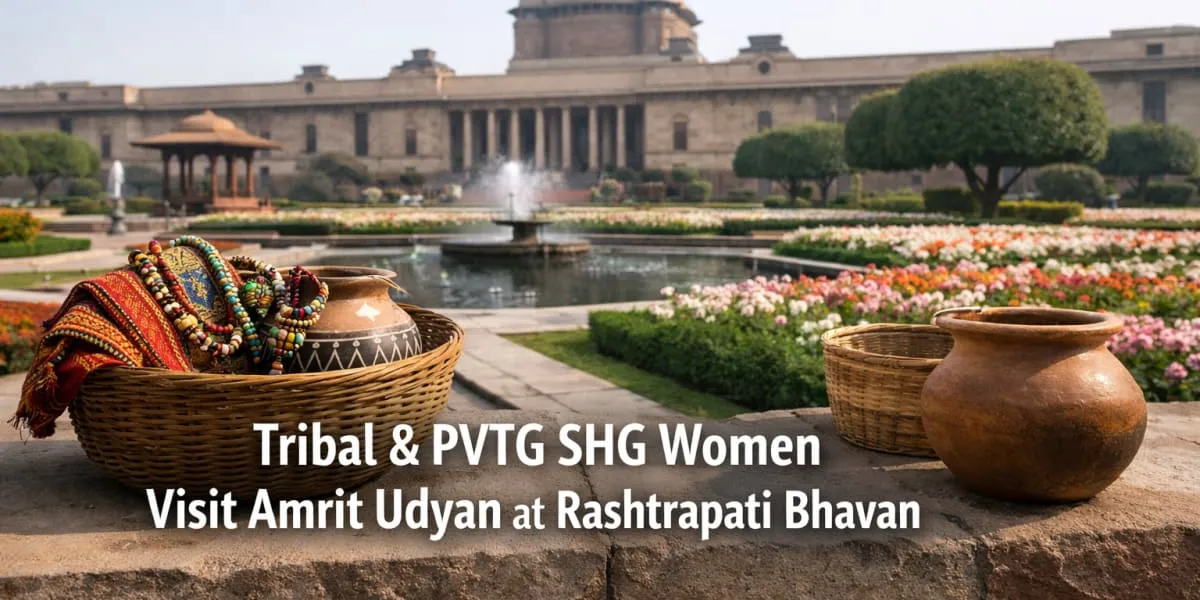
Tribal and PVTG SHG Women Visit Amrit Udyan at Rashtrapati Bhavan
ECONOMY & POLICY

Tribal and PVTG SHG Women Visit Amrit Udyan at Rashtrapati Bhavan

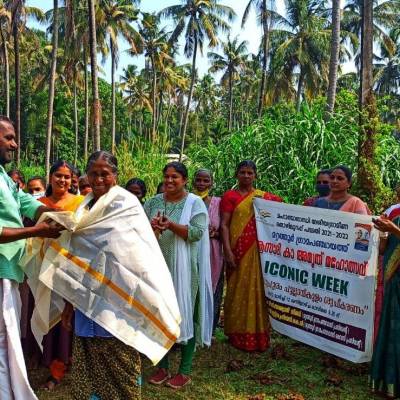
The Ministry of Rural Development organised a special visit on 10 March 2026 for women members of Self Help Groups (SHGs) belonging to Tribal communities and Particularly Vulnerable Tribal Groups (PVTGs) to Amrit Udyan at Rashtrapati Bhavan under the Deendayal Antyodaya Yojana – National Rural Livelihoods Mission (DAY-NRLM). The visit was held following an invitation from the Office of the President of India which opened Amrit Udyan for special category visitors from 3 February to 31 March 2026. 10 March was designated for women and Tribal women Self Help Groups recognising the role of women collectives in strengthening grassroots democracy.

Over 150 SHG members from some of the remotest regions of the country participated, bringing together women from different geographies, cultures and languages to reflect the spirit of unity in diversity. For many participants it was their first visit to the national capital and their first experience of one of the country’s most iconic national spaces. As they walked through the vibrant floral landscapes the visitors conveyed the colours of rural diversity, resilience and aspiration.

The itinerary included a stop at India Gate where the visiting women experienced the cultural and historical significance of the national memorial and expressed pride in their shared heritage. Interaction among SHGs fostered a spirit of solidarity, mutual learning and shared aspiration as women exchanged experiences from livelihoods, institutions and social initiatives. The programme highlighted how grassroots collectives cultivated under DAY-NRLM can bring together people from different backgrounds to work towards common goals in financial inclusion and community leadership.

The Ministry of Rural Development acknowledged the coordinated efforts of the President’s Secretariat, State Rural Livelihoods Missions, State Coordinators, Liaison Officers and officials which ensured the smooth conduct of the visit. The initiative was presented as an affirmation of the government’s commitment to social inclusion and women’s empowerment and as a celebration of the cultural richness of Tribal communities. By facilitating such interactions the programme sought to strengthen a sense of dignity, belonging and national integration among participants.

The Ministry of Rural Development organised a special visit on 10 March 2026 for women members of Self Help Groups (SHGs) belonging to Tribal communities and Particularly Vulnerable Tribal Groups (PVTGs) to Amrit Udyan at Rashtrapati Bhavan under the Deendayal Antyodaya Yojana – National Rural Livelihoods Mission (DAY-NRLM). The visit was held following an invitation from the Office of the President of India which opened Amrit Udyan for special category visitors from 3 February to 31 March 2026. 10 March was designated for women and Tribal women Self Help Groups recognising the role of women collectives in strengthening grassroots democracy. Over 150 SHG members from some of the remotest regions of the country participated, bringing together women from different geographies, cultures and languages to reflect the spirit of unity in diversity. For many participants it was their first visit to the national capital and their first experience of one of the country’s most iconic national spaces. As they walked through the vibrant floral landscapes the visitors conveyed the colours of rural diversity, resilience and aspiration. The itinerary included a stop at India Gate where the visiting women experienced the cultural and historical significance of the national memorial and expressed pride in their shared heritage. Interaction among SHGs fostered a spirit of solidarity, mutual learning and shared aspiration as women exchanged experiences from livelihoods, institutions and social initiatives. The programme highlighted how grassroots collectives cultivated under DAY-NRLM can bring together people from different backgrounds to work towards common goals in financial inclusion and community leadership. The Ministry of Rural Development acknowledged the coordinated efforts of the President’s Secretariat, State Rural Livelihoods Missions, State Coordinators, Liaison Officers and officials which ensured the smooth conduct of the visit. The initiative was presented as an affirmation of the government’s commitment to social inclusion and women’s empowerment and as a celebration of the cultural richness of Tribal communities. By facilitating such interactions the programme sought to strengthen a sense of dignity, belonging and national integration among participants.

Next Story
Infrastructure Urban

Implementation Status of Jal Jeevan Mission

Since August 2019 the Government has implemented Jal Jeevan Mission to provide assured potable water through household tap connections in rural India. At the start of the mission only 32.3 million (mn) rural households, representing 16.7 per cent, were reported to have tap water connections. States and union territories have reported that 125.8 mn additional rural households have since been provided with tap connections. As a result, of about 193.6 mn rural households roughly 158.2 mn, or 81.71 per cent, are reported to have tap water supply at home.\n\nThe State, district and village level st..

Next Story
Infrastructure Urban

Jal Jeevan Mission Reaches Eighty One Per Cent Rural Coverage

The Government reported substantial progress under the Jal Jeevan Mission, launched in August 2019 to provide tap water to every rural household. At launch only 32.3 million (mn) rural households had tap connections and states and Union territories reported provision of 125.8 mn additional households by March 2026. Consequently, out of about 193.6 mn rural households around 158.2 mn, or 81.71 per cent, are reported to have tap water at home. The Finance Minister announced extension of the mission until 2028 in the 2025-26 budget speech. The Swachh Bharat Mission Grameen, launched in October 20..

Next Story
Infrastructure Urban

Empowering Local Governance for Sustainable Rural Water Supply

The Ministry of Jal Shakti has aligned the Jal Jeevan Mission (JJM) with the 73rd Amendment to strengthen village level planning and community ownership of water supply. Gram Panchayats, village water and sanitation committees and Pani Samitis are to plan, implement, manage and maintain piped water systems, with gram sabha processes formalising handover and oversight. Implementation support agencies including non government organisations, community based organisations and self help groups have been empanelled to train local committees and promote women participation. Under JJM, the department ..

Advertisement

Subscribe to Our Newsletter

Get daily newsletters around different themes from Construction world.

STAY CONNECTED

Advertisement

Advertisement

Advertisement