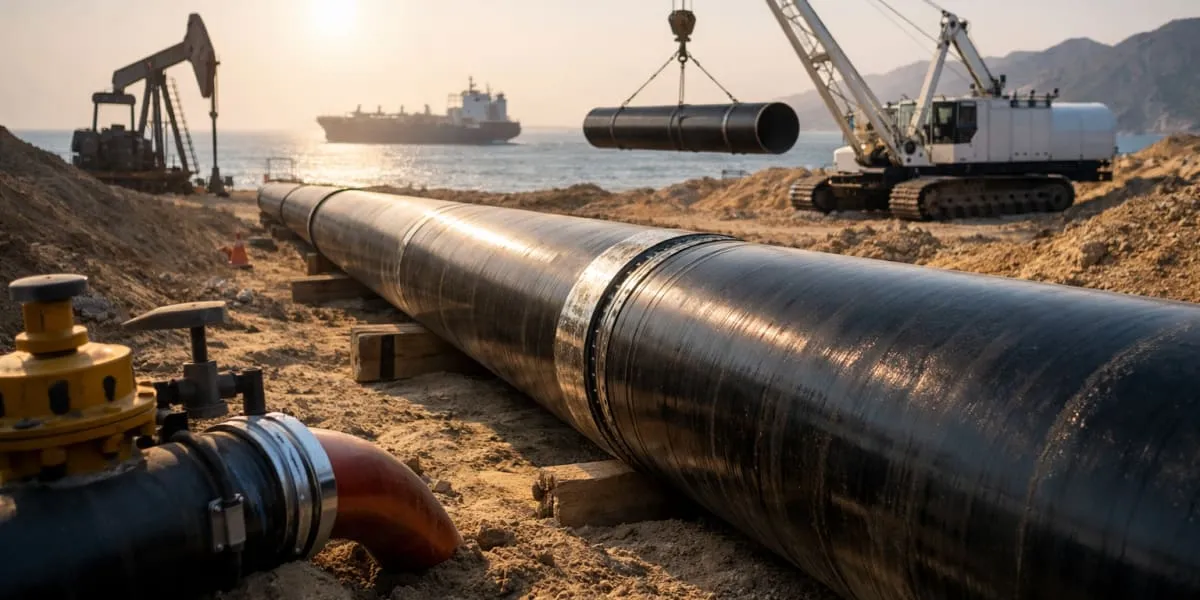
UAE Orders Fast Track Pipeline To Bypass Strait Of Hormuz
ECONOMY & POLICY

UAE Orders Fast Track Pipeline To Bypass Strait Of Hormuz

Federal authorities in the United Arab Emirates have ordered the fast track construction of a new oil pipeline designed to bypass the Strait of Hormuz chokepoint and secure maritime export routes. The directive calls for accelerated planning and delivery by relevant ministries and state energy firms to establish an overland alternative to vulnerable sea passages. Officials described the move as part of a broader effort to strengthen national energy resilience and logistical options.

The Strait of Hormuz carries a large portion of the region's crude shipments and has long been identified as a strategic bottleneck for global energy flows. Recent incidents and heightened regional tensions have underlined the vulnerabilities associated with reliance on a single maritime corridor, prompting a reappraisal of infrastructure priorities. The pipeline initiative is presented as a practical measure to reduce transit exposure and support continuity of supply.

Implementation will be led by state-owned companies in coordination with federal ministries that oversee energy and transport, with procurement processes to be accelerated under the new order. The plan includes land route surveys, construction contracts and integration with existing terminal and storage facilities to enable seamless export operations. Authorities signalled that regulatory approvals and logistical support will be prioritised to avoid delays.

The project is likely to influence regional energy logistics and prompt further investment in overland export capacity, reinforcing the UAE's role as a dependable supplier. Market participants and regional partners are anticipated to monitor progress as the pipeline provides an alternative route that reduces exposure to maritime chokepoints. Officials indicated the initiative forms part of a sustained strategy to bolster national infrastructure against disruptive events and contingencies.

"Join industry leaders at RAHSTA Expo, India's premier platform for roads, highways and traffic infrastructure. Register now to explore innovations, network with experts and shape the future of mobility."

Federal authorities in the United Arab Emirates have ordered the fast track construction of a new oil pipeline designed to bypass the Strait of Hormuz chokepoint and secure maritime export routes. The directive calls for accelerated planning and delivery by relevant ministries and state energy firms to establish an overland alternative to vulnerable sea passages. Officials described the move as part of a broader effort to strengthen national energy resilience and logistical options. The Strait of Hormuz carries a large portion of the region's crude shipments and has long been identified as a strategic bottleneck for global energy flows. Recent incidents and heightened regional tensions have underlined the vulnerabilities associated with reliance on a single maritime corridor, prompting a reappraisal of infrastructure priorities. The pipeline initiative is presented as a practical measure to reduce transit exposure and support continuity of supply. Implementation will be led by state-owned companies in coordination with federal ministries that oversee energy and transport, with procurement processes to be accelerated under the new order. The plan includes land route surveys, construction contracts and integration with existing terminal and storage facilities to enable seamless export operations. Authorities signalled that regulatory approvals and logistical support will be prioritised to avoid delays. The project is likely to influence regional energy logistics and prompt further investment in overland export capacity, reinforcing the UAE's role as a dependable supplier. Market participants and regional partners are anticipated to monitor progress as the pipeline provides an alternative route that reduces exposure to maritime chokepoints. Officials indicated the initiative forms part of a sustained strategy to bolster national infrastructure against disruptive events and contingencies.

Next Story
Real Estate

Pecan Realty Completes Rs 1.5 Billion Transactions

Pecan Realty has recently completed four institutional transactions worth over Rs 1.5 billion over the past two years, strengthening its position as an execution-led real estate platform. The deals include resolution-led acquisitions, structured finance transactions and capital partnerships across its development portfolio.The transactions covered acquisitions through the National Company Law Tribunal process and helped provide repayment or exits to both private and public sector lenders. The company said the deals demonstrate its ability to resolve complex project situations, work with instit..

Next Story
Real Estate

SNN Estates Expands North Bengaluru Housing Project

SNN Estates has announced an expansion of its SNN Estates Felicity residential project in North Bengaluru following strong buyer demand, with 75 per cent of the first-phase inventory sold within three days of launch.The developer will add 76 apartments in the new phase, taking the project's estimated revenue potential to around Rs 1,000 crore upon completion of Phase 2.Spread across 6.5 acres in Rachenahalli, near Manyata Tech Park, the project comprises 604 apartments in 1.5, 2, 2.5, 3 and 4 BHK configurations. The development includes a 50,000-sq-ft clubhouse with amenities such as sports co..

Next Story
Infrastructure Urban

SCG Drives ASEAN Industrial Transformation Strategy

SCG is strengthening its focus on ASEAN as a key growth region by advancing industrial transformation, enhancing competitiveness and building resilient regional value chains. Thammasak Sethaudom, President and Chief Executive Officer, SCG, highlighted the need for industries to continuously develop capabilities, strengthen resilience and deepen regional cooperation to achieve sustainable long-term growth.SCG views ASEAN as an important growth engine alongside China, supported by favourable demographics, trade connectivity and investment flows. With ASEAN’s GDP projected to grow by around 4.7..

Advertisement

Subscribe to Our Newsletter

Get daily newsletters around different themes from Construction world.

STAY CONNECTED

Advertisement

Advertisement

Advertisement