DPR For 671 km Hyderabad Pune Mumbai High Speed Rail Complete
RAILWAYS & METRO RAIL

DPR For 671 km Hyderabad Pune Mumbai High Speed Rail Complete

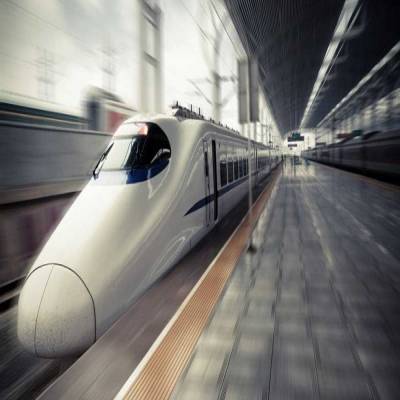
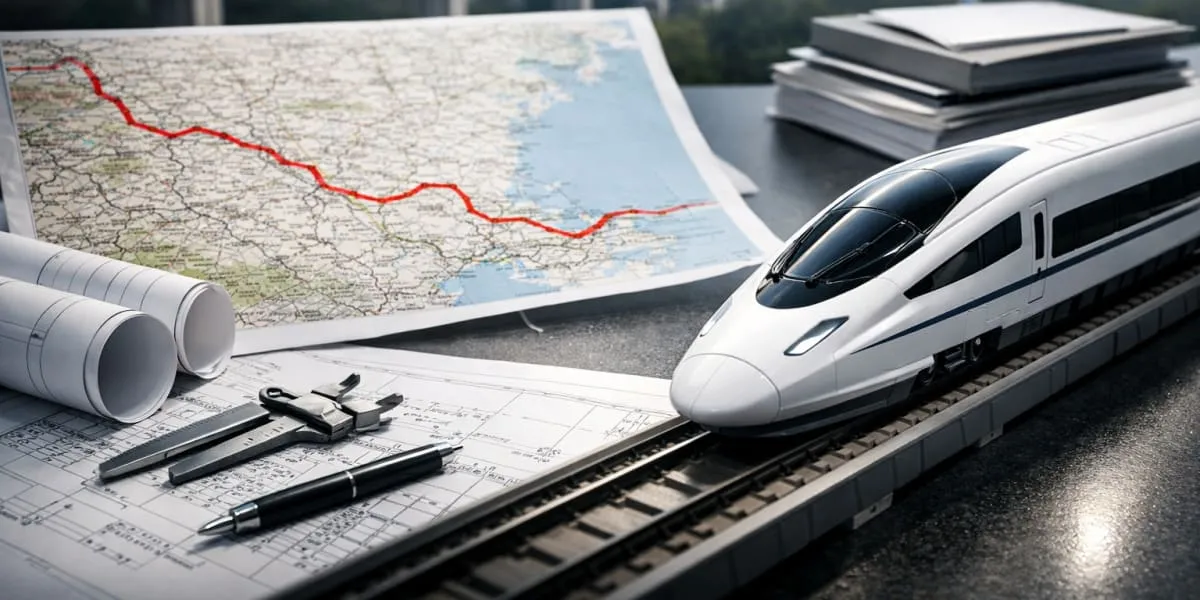
Railway authorities have completed the detailed project report for the 671 km Hyderabad–Pune–Mumbai high-speed rail corridor and have identified land acquisition needs of 93 km within Telangana. The DPR covers alignment options, station locations and initial estimates for right of way, and officials have prepared proposals for submission to the Union railway ministry. The state Chief Secretary chaired a review of the proposals with senior departmental officials and representatives of railway agencies.

The Chief Secretary instructed departments to prepare coordinated project proposals and to work closely with the Union railway ministry on land acquisition, connectivity and infrastructure requirements. Officials were asked to liaise with the roads and buildings department, the Hyderabad Metropolitan Development Authority and airport authorities to ensure timely clearances and utility relocations. The administration emphasised phased implementation and interagency coordination to reduce delays.

Railway representatives informed the meeting that separate land acquisition totalling 123 km would be required for the Hyderabad–Bengaluru and Hyderabad–Chennai corridors and that land would also be needed at Kokapet and Shamshabad for depots. Special Chief Secretaries Vikas Raj and Navin Mittal, HMDA metropolitan commissioner Sarfaraz Ahmed and officials from the Union railway ministry and GMR Hyderabad Airport participated in the review. The proposals are to be finalised in consultation with central agencies.

Officials indicated that the network is intended to function as a modern rapid transport system supporting future public transport demand and boosting industrial, information technology and tourism activity across the region. The Chief Secretary framed the projects as part of a broader Telangana Rising 2047 economic growth corridor and urged departments to prioritise preparatory work. Project teams will now advance land surveys, environmental assessments and detailed designs ahead of statutory approvals.

Railway authorities have completed the detailed project report for the 671 km Hyderabad–Pune–Mumbai high-speed rail corridor and have identified land acquisition needs of 93 km within Telangana. The DPR covers alignment options, station locations and initial estimates for right of way, and officials have prepared proposals for submission to the Union railway ministry. The state Chief Secretary chaired a review of the proposals with senior departmental officials and representatives of railway agencies. The Chief Secretary instructed departments to prepare coordinated project proposals and to work closely with the Union railway ministry on land acquisition, connectivity and infrastructure requirements. Officials were asked to liaise with the roads and buildings department, the Hyderabad Metropolitan Development Authority and airport authorities to ensure timely clearances and utility relocations. The administration emphasised phased implementation and interagency coordination to reduce delays. Railway representatives informed the meeting that separate land acquisition totalling 123 km would be required for the Hyderabad–Bengaluru and Hyderabad–Chennai corridors and that land would also be needed at Kokapet and Shamshabad for depots. Special Chief Secretaries Vikas Raj and Navin Mittal, HMDA metropolitan commissioner Sarfaraz Ahmed and officials from the Union railway ministry and GMR Hyderabad Airport participated in the review. The proposals are to be finalised in consultation with central agencies. Officials indicated that the network is intended to function as a modern rapid transport system supporting future public transport demand and boosting industrial, information technology and tourism activity across the region. The Chief Secretary framed the projects as part of a broader Telangana Rising 2047 economic growth corridor and urged departments to prioritise preparatory work. Project teams will now advance land surveys, environmental assessments and detailed designs ahead of statutory approvals.

Next Story
Infrastructure Transport

Railways To Sell 10 per cent In PSUs To Raise Rs Two Point Six Two tn

The railway ministry has outlined a plan to sell up to 10 per cent stakes in several public sector undertakings as part of a broader asset monetisation drive. The move is designed to unlock value and generate funds for capital expenditure and network modernisation. The programme targets private participation through offer for sale and minority stake divestments across operating and finance entities. The initiative follows previous asset recycling efforts and seeks to capture market interest for strategic holdings. The target for the exercise is Rs two point six two trillion (tn) to be realised..

Next Story
Infrastructure Transport

Cabinet Clears Railway Multitracking Projects Worth Rs 234.37 Billion

The Union Cabinet approved three multitracking railway projects worth Rs 234.37 billion (Rs 234.37 bn) to improve connectivity and ease congestion. The Cabinet Committee on Economic Affairs chaired by the Prime Minister authorised schemes that will expand the Indian Railways network by nearly 901 km across 19 districts. Officials said the projects form part of the PM Gati Shakti National Master Plan for integrated planning. The approved projects include the Nagda-Mathura third and fourth line, Guntakal-Wadi third and fourth line and Burhwal-Sitapur third and fourth line, serving routes in Madh..

Next Story
Infrastructure Transport

Rail Network To Be Upgraded To 220 kmph, Says Railways Minister

Railways minister Ashwini Vaishnaw announced a plan to upgrade the national rail network to run trains at 220 kmph on selected corridors. The move forms part of a wider drive to modernise infrastructure and accelerate passenger services across the country. Government officials said the initiative will prioritise high-density routes and newly built tracks where alignment and signalling permit higher speeds. The announcement frames faster services as a key component of transport policy for improved connectivity. Implementation will involve comprehensive track renewal, enhanced signalling systems..

Advertisement

Subscribe to Our Newsletter

Get daily newsletters around different themes from Construction world.

STAY CONNECTED

Advertisement

Advertisement

Advertisement

-->