UP Tables Rs 245 Billion Supplementary Budget for FY26
ECONOMY & POLICY

UP Tables Rs 245 Billion Supplementary Budget for FY26

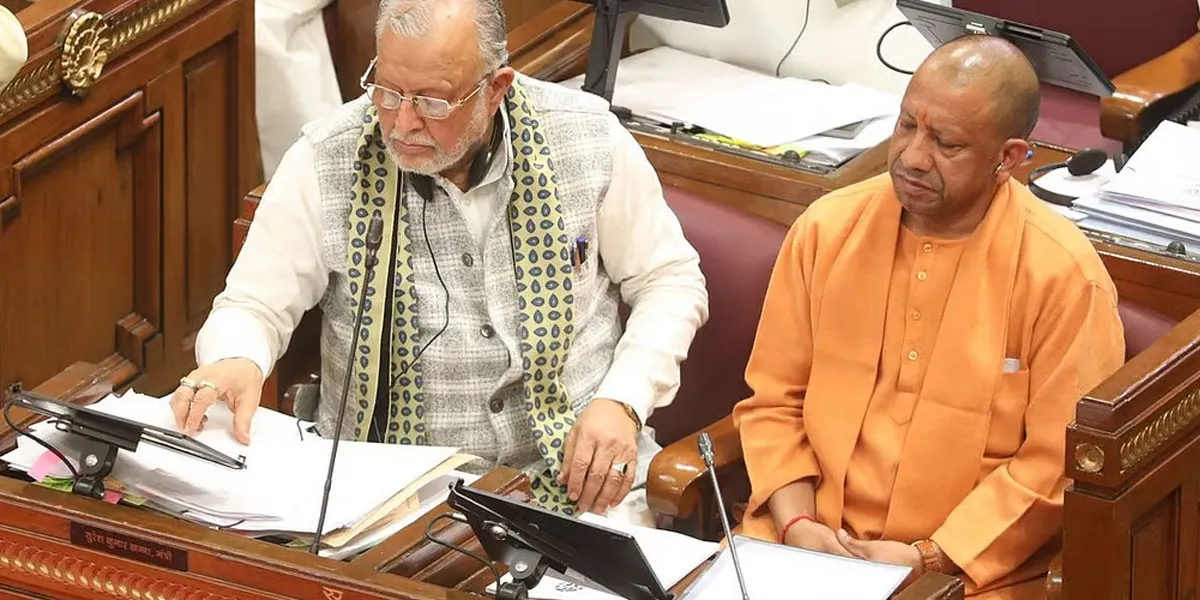
The Uttar Pradesh government on Monday presented a supplementary budget of Rs 244.97 billion for the financial year 2025–26 during the second day of the five-day winter session of the state legislature. Presenting the budget in the Assembly, State Finance Minister Suresh Khanna said the additional provisions are aimed at sustaining development momentum, strengthening essential sectors and accelerating welfare schemes to address emerging requirements.

Khanna said the original budget for the current fiscal stood at Rs 8,087.36 billion, with the supplementary budget accounting for 3.03 per cent of the total. Following the inclusion of the additional outlay, the overall budget size for the year has increased to Rs 8,332.33 billion. He noted that the supplementary budget prioritises the state’s development agenda, with Rs 183.69 billion allocated for revenue expenditure and Rs 61.28 billion earmarked for capital expenditure, reflecting a balance between meeting immediate revenue needs and reinforcing long-term infrastructure creation.

Key sectoral allocations include Rs 48.74 billion for industrial development, Rs 45.21 billion for the power sector, Rs 35 billion for health and family welfare, and Rs 17.59 billion for urban development. Additional provisions have been made for technical education with Rs 6.40 billion, women and child development with Rs 5.35 billion, the New and Renewable Energy Development Agency with Rs 5 billion, and medical education with Rs 4.23 billion. The government has also set aside Rs 4 billion for cane and sugar mills.

Among major infrastructure projects, the Ganga Expressway connecting Meerut and Prayagraj has been allocated Rs 18.35 billion, while Rs 12.46 billion has been earmarked for the Greenfield Expressway link road connecting Jewar International Airport with the Ganga Expressway. Reiterating the Yogi government’s commitment to fiscal discipline under the FRBM Act, Khanna cited Government of India estimates indicating Uttar Pradesh’s Gross State Domestic Product is projected at Rs 31.14 trillion, underscoring the state’s progress towards becoming a revenue surplus economy.

The Uttar Pradesh government on Monday presented a supplementary budget of Rs 244.97 billion for the financial year 2025–26 during the second day of the five-day winter session of the state legislature. Presenting the budget in the Assembly, State Finance Minister Suresh Khanna said the additional provisions are aimed at sustaining development momentum, strengthening essential sectors and accelerating welfare schemes to address emerging requirements. Khanna said the original budget for the current fiscal stood at Rs 8,087.36 billion, with the supplementary budget accounting for 3.03 per cent of the total. Following the inclusion of the additional outlay, the overall budget size for the year has increased to Rs 8,332.33 billion. He noted that the supplementary budget prioritises the state’s development agenda, with Rs 183.69 billion allocated for revenue expenditure and Rs 61.28 billion earmarked for capital expenditure, reflecting a balance between meeting immediate revenue needs and reinforcing long-term infrastructure creation. Key sectoral allocations include Rs 48.74 billion for industrial development, Rs 45.21 billion for the power sector, Rs 35 billion for health and family welfare, and Rs 17.59 billion for urban development. Additional provisions have been made for technical education with Rs 6.40 billion, women and child development with Rs 5.35 billion, the New and Renewable Energy Development Agency with Rs 5 billion, and medical education with Rs 4.23 billion. The government has also set aside Rs 4 billion for cane and sugar mills. Among major infrastructure projects, the Ganga Expressway connecting Meerut and Prayagraj has been allocated Rs 18.35 billion, while Rs 12.46 billion has been earmarked for the Greenfield Expressway link road connecting Jewar International Airport with the Ganga Expressway. Reiterating the Yogi government’s commitment to fiscal discipline under the FRBM Act, Khanna cited Government of India estimates indicating Uttar Pradesh’s Gross State Domestic Product is projected at Rs 31.14 trillion, underscoring the state’s progress towards becoming a revenue surplus economy.

Next Story
Real Estate

AI: The New Recruit

From getting ideas to evaluating designs, presenting concepts to clients and tracking projects, artificial intelligence (AI) is helping architects work better and faster.“AI allows architects to spend more time doing what only they can do: think critically, synthesise complexity and design with intent,” says Dikshu C Kukreja, Managing Principal, CP Kukreja Architects. “Every minute reclaimed from repetitive processes can be invested in creativity, contextual understanding, interdisciplinary collaboration and innovation – the qualities that define meaningful architecture.”To read the ..

Next Story
Real Estate

Redevelopment 2.0

In 2017, Mumbai identified 160,000 ageing buildings due for structural audit. Close to half of these were in the Western Suburbs. Redeveloping the oldest and structurally weakest of these would help unlock new housing, much needed given the city’s growing population density and constant developed area of 437.7 sq km. At 30,600 people per sq km in 2024, Mumbai’s density was almost thrice that of Gurugram, and 60 per cent higher than Bengaluru’s.Essentially, Mumbai’s realty market has demand. It has capital. It has realty development potential.Fast forward to 2026. Mumbai has 1,094 regis..

Next Story
Technology

Cost intelligence will become a strategic contributor to project success

As India's construction industry accelerates its digital transformation, integrated platforms, AI and connected data are becoming essential to improving cost certainty, project efficiency and sustainability. Ravi Kumar, Sales Director – India, RIB Software India, shares how digital workflows are reshaping project planning, commercial management and decision-making across the construction value chain.India's construction sector is embracing digital technologies at an unprecedented pace. From your perspective, what are the biggest shifts driving this transformation and how is RIB Software enab..

Advertisement

Subscribe to Our Newsletter

Get daily newsletters around different themes from Construction world.

STAY CONNECTED

Advertisement

Advertisement

Advertisement