UPES And IIT Guwahati Launch SPARC-AI For Clean Energy And Agritech
ECONOMY & POLICY

UPES And IIT Guwahati Launch SPARC-AI For Clean Energy And Agritech

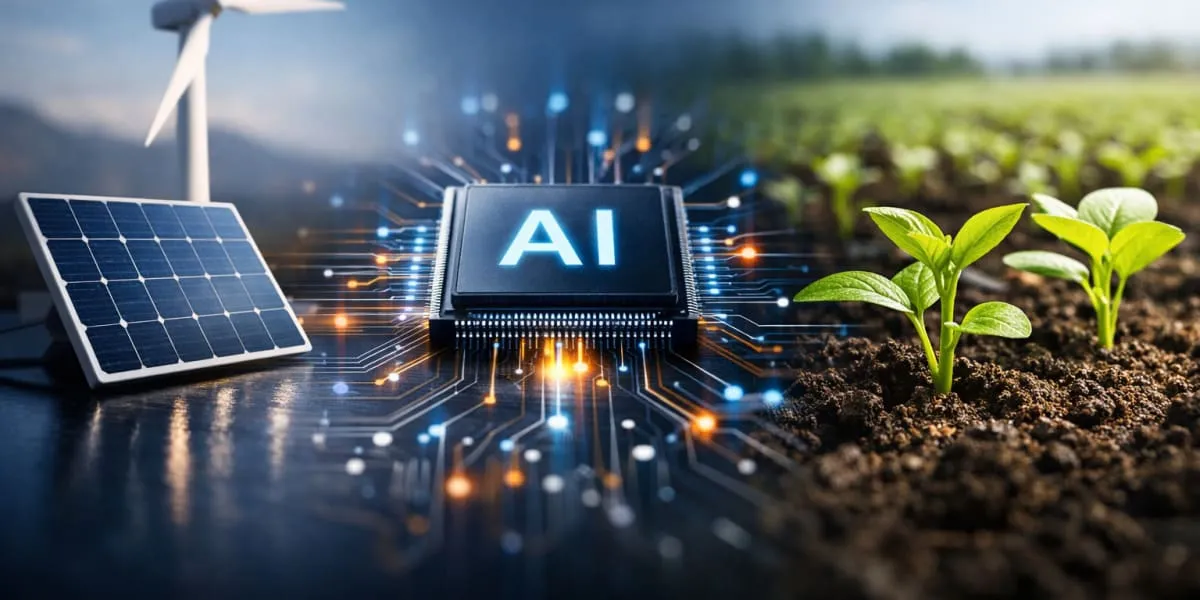
UPES and IIT Guwahati have launched SPARC-AI, an 18-month programme to identify, fund and accelerate student-led innovations in clean energy, agritech and cleantech. The initiative is a partnership between UPES, the Technology Innovation and Development Foundation at IIT Guwahati and the IIT Guwahati BioNEST incubation arm, and is designed to nurture solutions tailored to regional environmental and agricultural challenges. The programme is led by the Artificial Intelligence Transformation Office at UPES alongside IIT Guwahati BioNEST to build a structured pipeline from idea to venture.

SPARC-AI will scout 50 student fellows in its first phase, provide funding to 20 fellows and incubate 10 high-potential startups. Selected innovators will receive kickstarter grants of Rs 0.2 million (Rs 0.2 mn) each to validate proof-of-concept ideas and prepare them for market deployment. The programme aims to balance field immersion, prototype development and post-incubation support to increase commercial viability.

Participants will receive mentoring in problem identification, design thinking, AI integration, intellectual property strategy and business planning to ready ventures for investors. A residential bootcamp at IIT Guwahati will focus on minimum viable product development, team cohesion and fundraising skills. The initiative will conclude with a Demo Day where teams present before investors, funding agencies and industry experts to seek commercial partnerships.

Organisers said the programme complements UPES efforts to become an AI-First University and leverages industry collaborations with OpenAI, Google Cloud, Salesforce and Harvard Business Impact to equip students with advanced technologies. The partners expect the initiative to foster resilient startups that address regional clean energy transitions and sustainable livelihoods. The scheme is also positioned to contribute to national goals of Viksit Bharat and Atmanirbhar Bharat by promoting entrepreneurial capacity among young technologists. The scheme will also extend support for regulatory navigation and market linkages to aid scale up across regional markets and investor access.

UPES and IIT Guwahati have launched SPARC-AI, an 18-month programme to identify, fund and accelerate student-led innovations in clean energy, agritech and cleantech. The initiative is a partnership between UPES, the Technology Innovation and Development Foundation at IIT Guwahati and the IIT Guwahati BioNEST incubation arm, and is designed to nurture solutions tailored to regional environmental and agricultural challenges. The programme is led by the Artificial Intelligence Transformation Office at UPES alongside IIT Guwahati BioNEST to build a structured pipeline from idea to venture. SPARC-AI will scout 50 student fellows in its first phase, provide funding to 20 fellows and incubate 10 high-potential startups. Selected innovators will receive kickstarter grants of Rs 0.2 million (Rs 0.2 mn) each to validate proof-of-concept ideas and prepare them for market deployment. The programme aims to balance field immersion, prototype development and post-incubation support to increase commercial viability. Participants will receive mentoring in problem identification, design thinking, AI integration, intellectual property strategy and business planning to ready ventures for investors. A residential bootcamp at IIT Guwahati will focus on minimum viable product development, team cohesion and fundraising skills. The initiative will conclude with a Demo Day where teams present before investors, funding agencies and industry experts to seek commercial partnerships. Organisers said the programme complements UPES efforts to become an AI-First University and leverages industry collaborations with OpenAI, Google Cloud, Salesforce and Harvard Business Impact to equip students with advanced technologies. The partners expect the initiative to foster resilient startups that address regional clean energy transitions and sustainable livelihoods. The scheme is also positioned to contribute to national goals of Viksit Bharat and Atmanirbhar Bharat by promoting entrepreneurial capacity among young technologists. The scheme will also extend support for regulatory navigation and market linkages to aid scale up across regional markets and investor access.

Related Stories

Gold Stories

Next Story
Infrastructure Urban

KONE Opens India's First Digital Experience Centre in Pune

KONE, a global elevator and escalator manufacturer, has inaugurated its first Digital Experience Centre (DEC) in India, located in Pune. The facility aims to showcase how artificial intelligence (AI), connectivity and data-driven technologies can enhance customer experiences and improve building operations.The centre was inaugurated by Jussi Herlin, Executive Vice Chair, KONE Corporation; Philippe Delorme, President and CEO, KONE; and Nandan Nilekani, Co-founder and Chairman of the Board, Infosys.Designed as an interactive customer environment, the facility demonstrates digital solutions cover..

Next Story
Infrastructure Urban

CII GreenCo Launches Circularity Guidelines for Indian Industry

The Confederation of Indian Industry (CII) GreenCo Council has launched the CII GreenCo Circularity Guidelines – Pilot Version at the 17th CII GreenCo Waste & Resource Management Summit 2026 in Chennai. The initiative aims to strengthen resource efficiency, waste reduction and circular economy practices across Indian manufacturing and process industries.The guidelines introduce a structured framework with circularity indices covering raw materials, consumables, packaging and other resource inputs. These indicators will help industries assess existing practices, identify opportunities to ..

Next Story
Infrastructure Energy

Global Electronics Association Launches IPC-1783-CO2E Standard

The Global Electronics Association has introduced IPC-1783-CO2E, a new international standard aimed at improving consistency, transparency and comparability in product carbon footprint reporting across the electronics manufacturing industry.The standard, titled International Standard for Data Collection and Reporting of CO2 Equivalent (CO2e) Emissions for the Electronics Manufacturing Supply Chain, provides industry-specific guidance for collecting, estimating and reporting carbon emissions data.With increasing regulatory requirements and customer expectations, electronics manufacturers face c..

Advertisement

Subscribe to Our Newsletter

Get daily newsletters around different themes from Construction world.

STAY CONNECTED

Advertisement

SPECIAL OFFER
QR Code