+
US and China Challenge Modi's Make in India Incentives
ECONOMY & POLICY

US and China Challenge Modi's Make in India Incentives

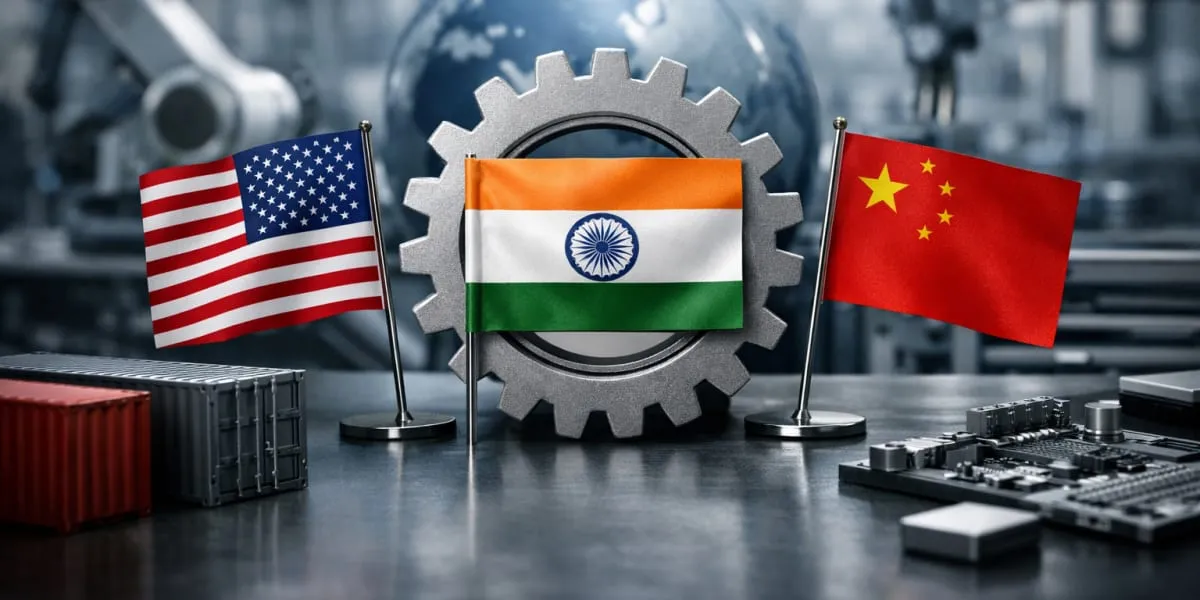
The United States (US) and China have challenged Prime Minister Narendra Modi's Make in India programme by contesting factory incentive schemes offered to domestic manufacturers. The challenges were lodged amid growing scrutiny of state supported industrial policies and their impact on international competition. The development has elevated concern in New Delhi about balancing industrial growth with external trade pressures.

Both Washington and Beijing contended that the incentives could distort markets and provide unfair advantage to certain firms, and they have sought deliberations in international trade fora. The disputes reportedly focus on eligibility criteria, fiscal support and the potential for preference that might affect foreign suppliers. The actions could involve formal reviews or requests for information under customary dispute settlement procedures. Observers noted that parallel challenges from two major economies underline the geopolitical sensitivity of industrial policy.

The Government of India defended the incentives as measures intended to attract investment, create jobs and foster technology transfer within the country, and it maintained that the schemes were consistent with development objectives. Officials argued that the incentives were structured to be open to a range of investors and to comply with global obligations while supporting domestic capacity building. New Delhi indicated readiness to engage with critics through dialogue and technical exchanges to address concerns without abandoning core policy goals.

The contestation may prompt revisions to programme design or greater transparency in administration to satisfy trading partners while preserving policy intent. Analysts expected protracted consultations that could lead to tailored adjustments rather than wholesale reversal of incentives. Domestic industry representatives signalled that any adjustments would be calibrated to protect nascent manufacturers and preserve employment while ensuring compliance with international obligations, and officials anticipated sustained bilateral discussions to find pragmatic solutions. Policymakers will face the task of reconciling industrial ambition with evolving norms of international trade.

The United States (US) and China have challenged Prime Minister Narendra Modi's Make in India programme by contesting factory incentive schemes offered to domestic manufacturers. The challenges were lodged amid growing scrutiny of state supported industrial policies and their impact on international competition. The development has elevated concern in New Delhi about balancing industrial growth with external trade pressures. Both Washington and Beijing contended that the incentives could distort markets and provide unfair advantage to certain firms, and they have sought deliberations in international trade fora. The disputes reportedly focus on eligibility criteria, fiscal support and the potential for preference that might affect foreign suppliers. The actions could involve formal reviews or requests for information under customary dispute settlement procedures. Observers noted that parallel challenges from two major economies underline the geopolitical sensitivity of industrial policy. The Government of India defended the incentives as measures intended to attract investment, create jobs and foster technology transfer within the country, and it maintained that the schemes were consistent with development objectives. Officials argued that the incentives were structured to be open to a range of investors and to comply with global obligations while supporting domestic capacity building. New Delhi indicated readiness to engage with critics through dialogue and technical exchanges to address concerns without abandoning core policy goals. The contestation may prompt revisions to programme design or greater transparency in administration to satisfy trading partners while preserving policy intent. Analysts expected protracted consultations that could lead to tailored adjustments rather than wholesale reversal of incentives. Domestic industry representatives signalled that any adjustments would be calibrated to protect nascent manufacturers and preserve employment while ensuring compliance with international obligations, and officials anticipated sustained bilateral discussions to find pragmatic solutions. Policymakers will face the task of reconciling industrial ambition with evolving norms of international trade.

Next Story
Resources

Deepak Halder Appointed CEO Of Sarvottam India

Sarvottam India has appointed Deepak Halder as its Chief Executive Officer. With over 23 years of professional experience, including nearly two decades in the real estate sector, Halder brings extensive leadership and strategic expertise to the organisation. Halder began his career in real estate in 2007 and has held senior leadership roles with developers such as Bestech Group, Paras Buildtech, Hero Realty, ATS Infrastructure and Rajdarbar Group. During his career, he has been involved in strategic expansion, brand positioning, major project launches and revenue growth across residential and..

Next Story
Real Estate

India Drives APAC Office Leasing Growth in 2025: Colliers

Office demand across Asia Pacific’s 11 major markets reached 9.8 million sq m (105.5 million sq ft) in 2025, marking an 11 per cent year-on-year increase, according to Colliers’ Asia Pacific Office Market Insights February 2026 report. India, Mainland China and Japan accounted for over 90 per cent of the region’s total demand during the year, with India emerging as the dominant leasing market.India alone contributed nearly 68 per cent of total office leasing across the region and accounted for 55 per cent of new office supply among the top 11 APAC markets in 2025. The report highlights t..

Next Story
Infrastructure Urban

Ramky Infra Wins Rs 14.01 Billion Dighi Port Project

Ramky Infrastructure has secured an EPC contract worth Rs 14.01 billion from Maharashtra Industrial Township Limited (MITL) for infrastructure development works at the Dighi Port Industrial Area (DPIA) Phase 1 under the Delhi Mumbai Industrial Corridor (DMIC). The contract value includes GST and revenues from operations and maintenance (O&M).The project will be executed within 930 days from the appointed date, followed by a four-year O&M period starting from the commercial operation date (COD), with the possibility of extension through mutual agreement.MITL is a special purpose vehicle..

Advertisement

Subscribe to Our Newsletter

Get daily newsletters around different themes from Construction world.

STAY CONNECTED

Advertisement

Advertisement

Advertisement

Open In App