Uttar Pradesh Launches Project GANGA To Connect Two Million Homes
ECONOMY & POLICY

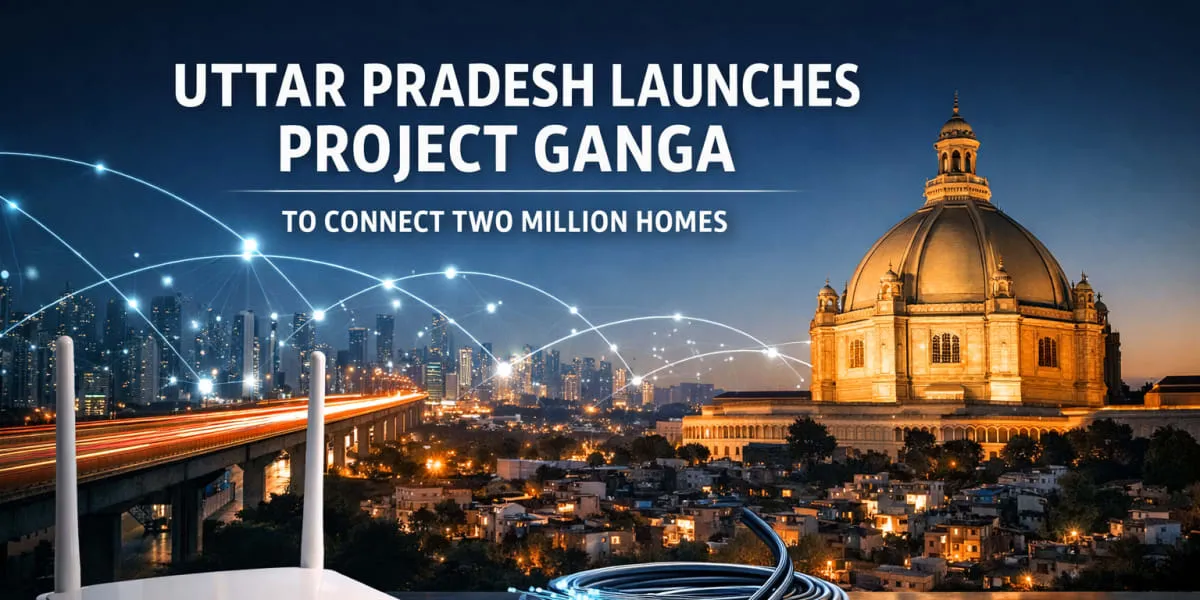
Uttar Pradesh Launches Project GANGA To Connect Two Million Homes

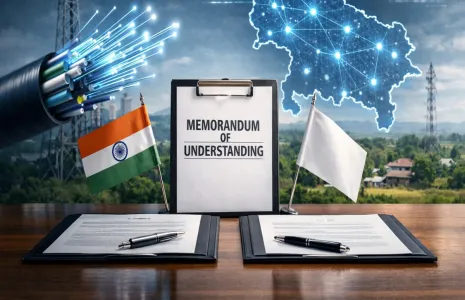
Uttar Pradesh has formally launched Project GANGA, a state-wide digital inclusion and social upliftment initiative, following a memorandum of understanding signed in March 2026 between the State Transformation Commission and OneOTT Intertainment Limited, the broadband vertical of Hinduja Global Solutions. The launch in Lucknow brought together senior state ministers and officials alongside executives from HGS and the Hinduja Group. The programme was framed as a public–private partnership aimed at strengthening digital infrastructure across the state.

The project portal is now live, enabling citizens, especially women, to apply to become Digital Service Providers and build local digital livelihoods. The initiative will onboard 8,000 to 10,000 Digital Service Providers at the Nyaya Panchayat level and is projected to generate over 100,000 employment opportunities across the digital ecosystem, with a stated emphasis on youth and women entrepreneurs. DSP partners will receive structured onboarding, training and financing assistance under the CM-YUVA scheme alongside technology enablement.

Project GANGA aims to extend high-speed broadband connectivity to two million households across Uttar Pradesh over the next two to three years, with consumer services offered under the brand name Ganga Fiber. The model relies on a decentralised DSP-led approach to deliver last-mile connectivity and digital services to households, businesses and public institutions in urban and rural areas. Officials indicated the initiative aligns with the state government’s digital vision to improve access to education, healthcare and governance services.

OIL, supported by HGS and NXTDIGITAL, will provide execution capabilities drawing on a national footprint that connects more than five million homes (five mn) and operates in over 4,500 pin codes and 1,500 cities and towns. The partners work with more than 15,000 franchise partners and leverage some 200,000 kilometres of fibre infrastructure, and HGS reported total income of Rs. 48.57 billion (Rs. 48.57 bn) for the year ended 31 March 2026. The programme is presented as a scalable effort to create sustainable livelihoods and expand reliable broadband across the state.

Uttar Pradesh has formally launched Project GANGA, a state-wide digital inclusion and social upliftment initiative, following a memorandum of understanding signed in March 2026 between the State Transformation Commission and OneOTT Intertainment Limited, the broadband vertical of Hinduja Global Solutions. The launch in Lucknow brought together senior state ministers and officials alongside executives from HGS and the Hinduja Group. The programme was framed as a public–private partnership aimed at strengthening digital infrastructure across the state. The project portal is now live, enabling citizens, especially women, to apply to become Digital Service Providers and build local digital livelihoods. The initiative will onboard 8,000 to 10,000 Digital Service Providers at the Nyaya Panchayat level and is projected to generate over 100,000 employment opportunities across the digital ecosystem, with a stated emphasis on youth and women entrepreneurs. DSP partners will receive structured onboarding, training and financing assistance under the CM-YUVA scheme alongside technology enablement. Project GANGA aims to extend high-speed broadband connectivity to two million households across Uttar Pradesh over the next two to three years, with consumer services offered under the brand name Ganga Fiber. The model relies on a decentralised DSP-led approach to deliver last-mile connectivity and digital services to households, businesses and public institutions in urban and rural areas. Officials indicated the initiative aligns with the state government’s digital vision to improve access to education, healthcare and governance services. OIL, supported by HGS and NXTDIGITAL, will provide execution capabilities drawing on a national footprint that connects more than five million homes (five mn) and operates in over 4,500 pin codes and 1,500 cities and towns. The partners work with more than 15,000 franchise partners and leverage some 200,000 kilometres of fibre infrastructure, and HGS reported total income of Rs. 48.57 billion (Rs. 48.57 bn) for the year ended 31 March 2026. The programme is presented as a scalable effort to create sustainable livelihoods and expand reliable broadband across the state.

Next Story
Real Estate

AI: The New Recruit

From getting ideas to evaluating designs, presenting concepts to clients and tracking projects, artificial intelligence (AI) is helping architects work better and faster.“AI allows architects to spend more time doing what only they can do: think critically, synthesise complexity and design with intent,” says Dikshu C Kukreja, Managing Principal, CP Kukreja Architects. “Every minute reclaimed from repetitive processes can be invested in creativity, contextual understanding, interdisciplinary collaboration and innovation – the qualities that define meaningful architecture.”To read the ..

Next Story
Real Estate

Redevelopment 2.0

In 2017, Mumbai identified 160,000 ageing buildings due for structural audit. Close to half of these were in the Western Suburbs. Redeveloping the oldest and structurally weakest of these would help unlock new housing, much needed given the city’s growing population density and constant developed area of 437.7 sq km. At 30,600 people per sq km in 2024, Mumbai’s density was almost thrice that of Gurugram, and 60 per cent higher than Bengaluru’s.Essentially, Mumbai’s realty market has demand. It has capital. It has realty development potential.Fast forward to 2026. Mumbai has 1,094 regis..

Next Story
Technology

Cost intelligence will become a strategic contributor to project success

As India's construction industry accelerates its digital transformation, integrated platforms, AI and connected data are becoming essential to improving cost certainty, project efficiency and sustainability. Ravi Kumar, Sales Director – India, RIB Software India, shares how digital workflows are reshaping project planning, commercial management and decision-making across the construction value chain.India's construction sector is embracing digital technologies at an unprecedented pace. From your perspective, what are the biggest shifts driving this transformation and how is RIB Software enab..

Advertisement

Subscribe to Our Newsletter

Get daily newsletters around different themes from Construction world.

STAY CONNECTED

Advertisement

Advertisement

Advertisement