



+
Vedanta Aluminium Expands Automotive Alloy Range
ECONOMY & POLICY

Vedanta Aluminium Expands Automotive Alloy Range

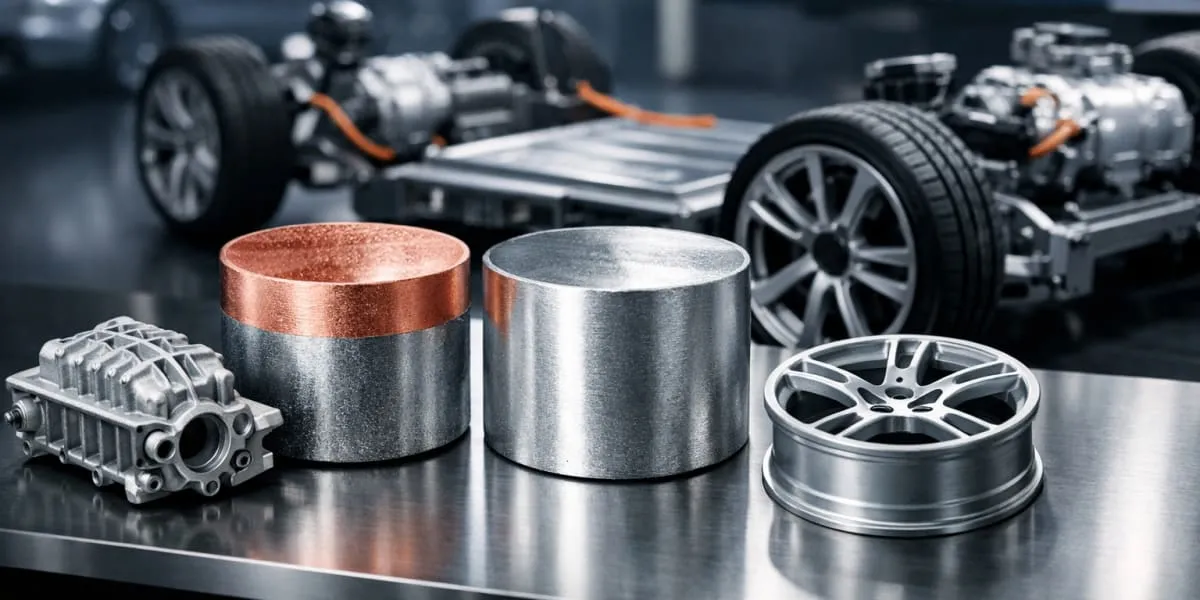
Vedanta Aluminium has broadened its automotive materials portfolio with the launch of two new alloys under its Primary Foundry Alloy (PFA) range at AutoEdge 2026.

The Copper-Doped Alloy and the Vedanta Foundry Alloy (VFA), developed with the Indian Institute of Technology Delhi, target lightweighting and higher performance in conventional and electric vehicles.

The Copper-Doped Alloy has been engineered to improve high-temperature performance, wear resistance and durability across engine, transmission and powertrain castings. These properties meet demands for parts that operate near combustion sources or within heavily loaded drivetrains. The formulation uses copper to alter microstructure and extend component life.

The VFA has been designed to deliver higher structural strength, enhanced corrosion resistance and improved casting performance, making it suitable for both internal combustion engine applications and electric vehicle architectures. It is intended for structural castings and components where a balance of strength, manufacturability and longevity is required. Development with an academic partner was presented as a step to align laboratory research with industrial-scale production.

The launches form part of the company's strategic shift towards high-margin, value-added products, with a stated aim to raise their share of the overall portfolio to 90 per cent. Vedanta Aluminium currently operates a PFA production capacity of 0.38 mn t per annum and indicated that completion of the ongoing expansion at the BALCO plant in Korba will increase primary billet manufacturing capacity to 1.25 mn t per annum. The growth plan was framed as a response to evolving automotive requirements for lighter and more sophisticated material solutions.

The firm's automotive metal portfolio covers PFAs for alloy wheels, cylinder heads and engine components alongside specialised extrusion billets used in HVAC systems and crash-management structures. Vedanta Aluminium supplies to 60 international markets and runs smelting facilities at Jharsuguda and Korba, both certified under the Aluminium Stewardship Initiative Performance Standards. The company emphasised local development and manufacturing while aligning materials to global performance benchmarks.

Vedanta Aluminium has broadened its automotive materials portfolio with the launch of two new alloys under its Primary Foundry Alloy (PFA) range at AutoEdge 2026. The Copper-Doped Alloy and the Vedanta Foundry Alloy (VFA), developed with the Indian Institute of Technology Delhi, target lightweighting and higher performance in conventional and electric vehicles. The Copper-Doped Alloy has been engineered to improve high-temperature performance, wear resistance and durability across engine, transmission and powertrain castings. These properties meet demands for parts that operate near combustion sources or within heavily loaded drivetrains. The formulation uses copper to alter microstructure and extend component life. The VFA has been designed to deliver higher structural strength, enhanced corrosion resistance and improved casting performance, making it suitable for both internal combustion engine applications and electric vehicle architectures. It is intended for structural castings and components where a balance of strength, manufacturability and longevity is required. Development with an academic partner was presented as a step to align laboratory research with industrial-scale production. The launches form part of the company's strategic shift towards high-margin, value-added products, with a stated aim to raise their share of the overall portfolio to 90 per cent. Vedanta Aluminium currently operates a PFA production capacity of 0.38 mn t per annum and indicated that completion of the ongoing expansion at the BALCO plant in Korba will increase primary billet manufacturing capacity to 1.25 mn t per annum. The growth plan was framed as a response to evolving automotive requirements for lighter and more sophisticated material solutions. The firm's automotive metal portfolio covers PFAs for alloy wheels, cylinder heads and engine components alongside specialised extrusion billets used in HVAC systems and crash-management structures. Vedanta Aluminium supplies to 60 international markets and runs smelting facilities at Jharsuguda and Korba, both certified under the Aluminium Stewardship Initiative Performance Standards. The company emphasised local development and manufacturing while aligning materials to global performance benchmarks.

Related Stories

Gold Stories

Next Story
Real Estate

Mindspace REIT earns IGBC Green Landscape Gold Rating

Mindspace Business Parks REIT’s Mindspace Airoli East business park in Navi Mumbai has received the IGBC Green Landscape Gold Rating from the Indian Green Building Council (IGBC). Mindspace REIT said it is the first REIT in India to receive the distinction.The certification evaluates the design, management and ecological performance of landscaped areas, including biodiversity, resource efficiency and sustainability practices.Mindspace Airoli East has more than 60 per cent native and adaptive green cover and more than 30 per cent vegetation supporting local birds and insects. Smart landscape ..

Next Story
Real Estate

Vertical integration gives us control over cost and delivery: Renny Strips

At bauma CONEXPO India 2026, Renny Strips showcased its green steel proposition, with a focus on lower-emission manufacturing, vertical integration and customised structural steel solutions. Managing Director Binny Gupta spoke to Kavita Parab about the company’s sustainability initiatives, including its 22MW solar plant, and its plans to expand capacity and support India’s infrastructure growth.What was Renny Strips’ focus at Bauma CONEXPO India 2026?We focused on showcasing our green steel proposition and explaining its benefits to customers, particularly in European markets. Our steel ..

Next Story
Infrastructure Energy

Beyond Energy-Efficiency

Walk through any major Indian business district today and you will see slick, glass-clad towers shimmering under the tropical sun. Most of these structures proudly display plaque certifications: Platinum, Gold, or 5-Star ratings. They promise lower carbon footprints, reduced electricity bills and a sustainable future.Yet, behind these polished green plaques, the electricity meter tells a different story. Many of these certified structures consume massive amounts of energy to remain operational. This gap, between what a certificate says and what a building actually does, is where this critique ..

Advertisement

Subscribe to Our Newsletter

Get daily newsletters around different themes from Construction world.

STAY CONNECTED

Advertisement

SPECIAL OFFER
QR Code














