Yadav Reviews Delhi-NCR Air Plans, Orders Monthly Checks
ECONOMY & POLICY

Yadav Reviews Delhi-NCR Air Plans, Orders Monthly Checks

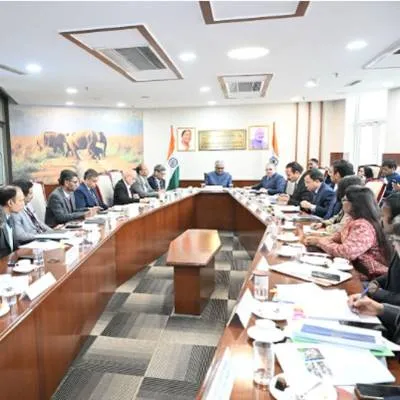
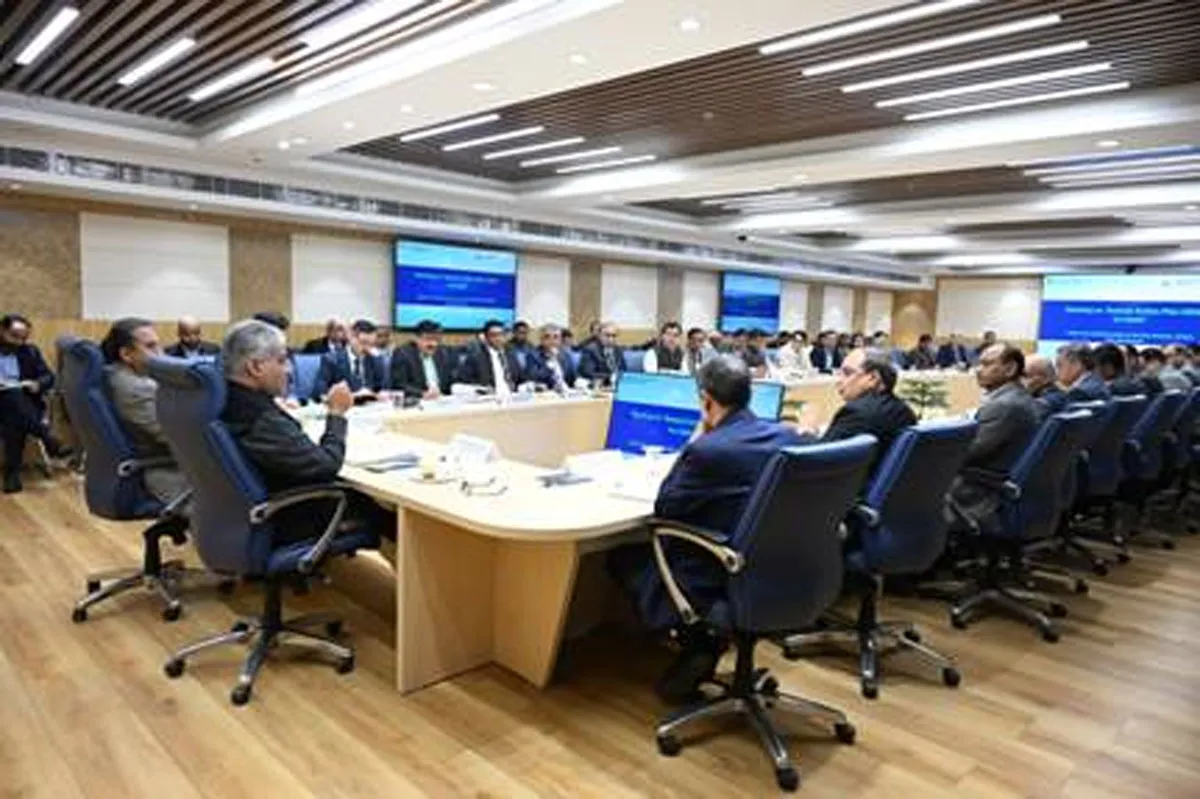
Union Minister for Environment, Forest and Climate Change Bhupender Yadav chaired a high-level review meeting with the governments of NCT Delhi, Haryana and Uttar Pradesh, along with municipal bodies, to assess action plans aimed at addressing the prevailing air pollution in the Delhi-NCR. This was the fourth such review conducted on structured parameters, following directions issued at the previous meeting on 3 December 2025. Union Minister of State for Environment, Forest and Climate Change Kirti Vardhan Singh was also present.

Expressing concern over the continued poor air quality, Yadav announced that from January 2026, reviews of the action plans will be held every month at the ministerial level. States were asked to integrate the action plans of all NCR cities under their jurisdiction for future presentations, while implementation-related bottlenecks will be addressed through regular inter-state coordination at the highest level.

The Minister reviewed measures taken by state governments and municipal bodies, stressing that momentum must be sustained until visible improvement is achieved across the NCR. He directed that strict action be taken against defaulters without causing unnecessary inconvenience to the public. Identified gaps are to be addressed through corrective steps, with a follow-up review scheduled in 15 days.

Directions were issued to improve traffic management at 62 identified congestion hotspots and to encourage corporates and industrial units to use electric or CNG buses for employee transport. Staggered timings for offices, shopping malls and commercial complexes were emphasised to ease peak-hour congestion. Authorities were also instructed to ensure end-to-end public transport on high-traffic routes and to intensify action against illegal and polluting industrial units. Gurugram, Faridabad, Ghaziabad and Noida were told to fast-track the Integrated Smart Traffic Management System, while traffic police were cautioned to ensure enforcement does not itself cause congestion.

Yadav underlined the need for coordinated planning with the Delhi Metro Rail Corporation and state authorities to improve last-mile metro connectivity. He directed removal of encroachments causing traffic bottlenecks within 10 days, annual maintenance contracts for pothole-free roads, and proper drainage to prevent monsoon damage. Public grievance redressal related to pollution is to be coordinated under the supervision of the Commission for Air Quality Management, along with targeted information, education and communication activities.

The Minister called for visible improvement in air quality within a week, directing authorities to remove dust and construction and demolition waste from roads, curb biomass burning, and strictly enforce construction bans during high pollution periods. Officers were to be assigned responsibility for mechanical road sweeping machines, supported by GPS tracking, to improve dust control, with public representatives involved to strengthen accountability.

The CAQM was advised to guide municipal bodies to prohibit demolition activities unless construction and demolition waste collection sub-centres are available within a 10 km radius. Such activities are to be banned during October to December, while start-ups and private players may be engaged for innovative waste management solutions. Haryana was directed to replace defunct crop residue management machines, ensure utilisation of paddy straw in power plants, brick kilns and crematoriums, and promote pelletisation plants with central financial assistance. Decentralised solutions such as compressed bio-gas and ethanol plants were also encouraged to discourage stubble burning.

Specific instructions were issued to seal illegal tyre-burning units and other unauthorised polluting establishments, and to ensure installation of online continuous emission monitoring systems in all polluting units, particularly in Haryana, with a compliance deadline of 31 December. The Minister also directed society-wise solid waste collection and joint disposal of Bandhwari legacy waste by Faridabad and Gurugram at a common facility. In coordination with the Delhi Forest Department, plantation opportunities in the NDMC area will be explored, with a target of planting 1.1 million saplings on World Environment Day 2026.

Union Minister for Environment, Forest and Climate Change Bhupender Yadav chaired a high-level review meeting with the governments of NCT Delhi, Haryana and Uttar Pradesh, along with municipal bodies, to assess action plans aimed at addressing the prevailing air pollution in the Delhi-NCR. This was the fourth such review conducted on structured parameters, following directions issued at the previous meeting on 3 December 2025. Union Minister of State for Environment, Forest and Climate Change Kirti Vardhan Singh was also present. Expressing concern over the continued poor air quality, Yadav announced that from January 2026, reviews of the action plans will be held every month at the ministerial level. States were asked to integrate the action plans of all NCR cities under their jurisdiction for future presentations, while implementation-related bottlenecks will be addressed through regular inter-state coordination at the highest level. The Minister reviewed measures taken by state governments and municipal bodies, stressing that momentum must be sustained until visible improvement is achieved across the NCR. He directed that strict action be taken against defaulters without causing unnecessary inconvenience to the public. Identified gaps are to be addressed through corrective steps, with a follow-up review scheduled in 15 days. Directions were issued to improve traffic management at 62 identified congestion hotspots and to encourage corporates and industrial units to use electric or CNG buses for employee transport. Staggered timings for offices, shopping malls and commercial complexes were emphasised to ease peak-hour congestion. Authorities were also instructed to ensure end-to-end public transport on high-traffic routes and to intensify action against illegal and polluting industrial units. Gurugram, Faridabad, Ghaziabad and Noida were told to fast-track the Integrated Smart Traffic Management System, while traffic police were cautioned to ensure enforcement does not itself cause congestion. Yadav underlined the need for coordinated planning with the Delhi Metro Rail Corporation and state authorities to improve last-mile metro connectivity. He directed removal of encroachments causing traffic bottlenecks within 10 days, annual maintenance contracts for pothole-free roads, and proper drainage to prevent monsoon damage. Public grievance redressal related to pollution is to be coordinated under the supervision of the Commission for Air Quality Management, along with targeted information, education and communication activities. The Minister called for visible improvement in air quality within a week, directing authorities to remove dust and construction and demolition waste from roads, curb biomass burning, and strictly enforce construction bans during high pollution periods. Officers were to be assigned responsibility for mechanical road sweeping machines, supported by GPS tracking, to improve dust control, with public representatives involved to strengthen accountability. The CAQM was advised to guide municipal bodies to prohibit demolition activities unless construction and demolition waste collection sub-centres are available within a 10 km radius. Such activities are to be banned during October to December, while start-ups and private players may be engaged for innovative waste management solutions. Haryana was directed to replace defunct crop residue management machines, ensure utilisation of paddy straw in power plants, brick kilns and crematoriums, and promote pelletisation plants with central financial assistance. Decentralised solutions such as compressed bio-gas and ethanol plants were also encouraged to discourage stubble burning. Specific instructions were issued to seal illegal tyre-burning units and other unauthorised polluting establishments, and to ensure installation of online continuous emission monitoring systems in all polluting units, particularly in Haryana, with a compliance deadline of 31 December. The Minister also directed society-wise solid waste collection and joint disposal of Bandhwari legacy waste by Faridabad and Gurugram at a common facility. In coordination with the Delhi Forest Department, plantation opportunities in the NDMC area will be explored, with a target of planting 1.1 million saplings on World Environment Day 2026.

Next Story
Real Estate

Modon, Related, Panepinto form JV for Harborside 4 in Jersey City

Abu Dhabi-based Modon Holding PSC has formed a joint venture with US real estate major Related Companies and Jersey City-based Panepinto Properties to develop Harborside 4, a 54-storey luxury residential tower on a prime waterfront site in downtown Jersey City, New Jersey.Under the partnership, Modon will hold a majority equity stake alongside Related and Panepinto, marking another step in the group’s strategy to scale and diversify its global real estate portfolio. The project will be developed on one of the last remaining premium waterfront parcels in the city.Designed by Handel Architects..

Next Story
Infrastructure Urban

P+Ex and Post-Tensioning Institute partner to drive sustainability

P+Ex, the Center of Excellence for Concrete Preservation and Service Life Extension, has announced a strategic partnership with the Post-Tensioning Institute (PTI) aimed at advancing sustainability, durability, and resilience in the built environment.The collaboration brings together P+Ex’s expertise in concrete preservation, repair, and service life extension with PTI’s global leadership in post-tensioning technology. Through this alliance, the two organisations will work to advance best practices in durability-focused design for new structures, while also promoting effective repair, reha..

Next Story
Infrastructure Energy

India’s Largest 2,000 MW Subansiri Hydro Project Turns Operational

India’s largest hydropower project, the 2,000 MW Subansiri Lower Hydroelectric Project, has finally become operational with the commissioning of its first unit, marking a major milestone after nearly 20 years of development marked by delays, protests and cost escalation.The 250 MW Unit-2 of the project, located on the Subansiri River at Gerukamukh on the Assam–Arunachal Pradesh border, was virtually inaugurated from New Delhi by Union Minister of Power Manohar Lal Khattar. The event was attended by Pankaj Agarwal, Secretary (Power), and Bhupender Gupta, Chairman and Managing Director, Nati..

Advertisement

Subscribe to Our Newsletter

Get daily newsletters around different themes from Construction world.

STAY CONNECTED

Advertisement

Advertisement

Advertisement

Advertisement

Open In App