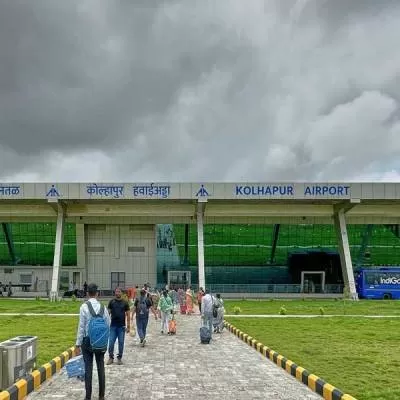
AAI Plans Major Upgrade Of Air Navigation Systems
AVIATION & AIRPORTS

AAI Plans Major Upgrade Of Air Navigation Systems

The Airports Authority of India (AAI), which provides air navigation services across the country, has announced plans to upgrade and replace key air navigation systems at airports to improve operational efficiency, safety standards and air traffic management capabilities.

According to officials, the proposed programme will focus on modernising critical navigation, surveillance and communication systems that support aircraft movements. These systems are essential for ensuring safe take-offs and landings, as well as seamless coordination between pilots and air traffic controllers.

The replacement of ageing infrastructure is expected to enhance system reliability and reduce the risk of technical disruptions. With air traffic volumes steadily rising, particularly at major airports, AAI has underlined the need for advanced and resilient air navigation technology to manage future demand.

The upgraded systems will also enable the adoption of next-generation air traffic management practices, including improved airspace monitoring, higher data accuracy and faster response times, contributing to safer and more efficient flight operations.

AAI officials said the modernisation programme is aligned with international aviation standards and best practices. The initiative is expected to strengthen India’s aviation ecosystem while supporting the continued growth of both domestic and international air traffic.

Once implemented, the new systems are likely to indirectly enhance passenger experience by reducing delays and improving overall airport performance, reflecting AAI’s ongoing commitment to upgrading aviation infrastructure in line with the sector’s expansion.

The Airports Authority of India (AAI), which provides air navigation services across the country, has announced plans to upgrade and replace key air navigation systems at airports to improve operational efficiency, safety standards and air traffic management capabilities. According to officials, the proposed programme will focus on modernising critical navigation, surveillance and communication systems that support aircraft movements. These systems are essential for ensuring safe take-offs and landings, as well as seamless coordination between pilots and air traffic controllers. The replacement of ageing infrastructure is expected to enhance system reliability and reduce the risk of technical disruptions. With air traffic volumes steadily rising, particularly at major airports, AAI has underlined the need for advanced and resilient air navigation technology to manage future demand. The upgraded systems will also enable the adoption of next-generation air traffic management practices, including improved airspace monitoring, higher data accuracy and faster response times, contributing to safer and more efficient flight operations. AAI officials said the modernisation programme is aligned with international aviation standards and best practices. The initiative is expected to strengthen India’s aviation ecosystem while supporting the continued growth of both domestic and international air traffic. Once implemented, the new systems are likely to indirectly enhance passenger experience by reducing delays and improving overall airport performance, reflecting AAI’s ongoing commitment to upgrading aviation infrastructure in line with the sector’s expansion.

Next Story
Infrastructure Urban

Implementation Status of Jal Jeevan Mission

Since August 2019 the Government has implemented Jal Jeevan Mission to provide assured potable water through household tap connections in rural India. At the start of the mission only 32.3 million (mn) rural households, representing 16.7 per cent, were reported to have tap water connections. States and union territories have reported that 125.8 mn additional rural households have since been provided with tap connections. As a result, of about 193.6 mn rural households roughly 158.2 mn, or 81.71 per cent, are reported to have tap water supply at home.\n\nThe State, district and village level st..

Next Story
Infrastructure Urban

Jal Jeevan Mission Reaches Eighty One Per Cent Rural Coverage

The Government reported substantial progress under the Jal Jeevan Mission, launched in August 2019 to provide tap water to every rural household. At launch only 32.3 million (mn) rural households had tap connections and states and Union territories reported provision of 125.8 mn additional households by March 2026. Consequently, out of about 193.6 mn rural households around 158.2 mn, or 81.71 per cent, are reported to have tap water at home. The Finance Minister announced extension of the mission until 2028 in the 2025-26 budget speech. The Swachh Bharat Mission Grameen, launched in October 20..

Next Story
Infrastructure Urban

Empowering Local Governance for Sustainable Rural Water Supply

The Ministry of Jal Shakti has aligned the Jal Jeevan Mission (JJM) with the 73rd Amendment to strengthen village level planning and community ownership of water supply. Gram Panchayats, village water and sanitation committees and Pani Samitis are to plan, implement, manage and maintain piped water systems, with gram sabha processes formalising handover and oversight. Implementation support agencies including non government organisations, community based organisations and self help groups have been empanelled to train local committees and promote women participation. Under JJM, the department ..

Advertisement

Subscribe to Our Newsletter

Get daily newsletters around different themes from Construction world.

STAY CONNECTED

Advertisement

Advertisement

Advertisement