+
AAI Seeks Approval for Chennai Airport Satellite Terminal
AVIATION & AIRPORTS

AAI Seeks Approval for Chennai Airport Satellite Terminal

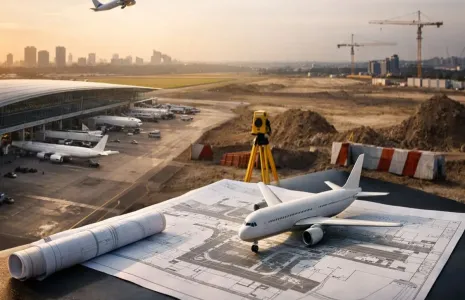
Airports Authority of India (AAI) has submitted a detailed study to the Water Resources Department to support the construction of an elevated corridor and a satellite terminal at Chennai Airport. The proposal marks a renewed push to expand airport infrastructure and improve passenger and cargo handling capacity.

The satellite terminal, first proposed nearly eight years ago, is intended to ease congestion, optimise airside operations and enhance the utilisation of remote bays. After remaining stalled for several years, the project was revived in 2024 as part of AAI’s broader strategy to modernise Chennai Airport.

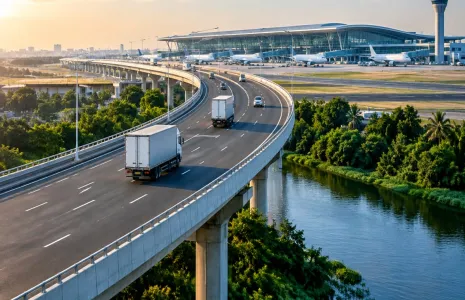
Initially, AAI had planned to connect the proposed terminal through additional land acquisition. However, after the Tamil Nadu government declined the request, the authority proposed an alternative solution in the form of an elevated corridor from National Highway 32. The proposed route will pass near Madha Arts and Science College, cross the Adyar River and terminate at the satellite terminal site.

The revised plan does not require additional land acquisition but will require approvals from the Water Resources Department and the Central Pollution Control Board. Once regulatory clearances are secured, AAI is expected to allocate funds for the construction of both the terminal and the elevated corridor. The facility could be developed as a passenger terminal or an exclusive cargo terminal, depending on operational requirements and demand.

The proposed satellite terminal and elevated corridor are expected to strengthen Chennai Airport’s capacity to handle rising passenger volumes and cargo traffic while improving connectivity and operational efficiency. The initiative reflects AAI’s efforts to address infrastructure constraints at one of India’s busiest aviation hubs and support long-term growth in air travel and logistics.

Airports Authority of India (AAI) has submitted a detailed study to the Water Resources Department to support the construction of an elevated corridor and a satellite terminal at Chennai Airport. The proposal marks a renewed push to expand airport infrastructure and improve passenger and cargo handling capacity. The satellite terminal, first proposed nearly eight years ago, is intended to ease congestion, optimise airside operations and enhance the utilisation of remote bays. After remaining stalled for several years, the project was revived in 2024 as part of AAI’s broader strategy to modernise Chennai Airport. Initially, AAI had planned to connect the proposed terminal through additional land acquisition. However, after the Tamil Nadu government declined the request, the authority proposed an alternative solution in the form of an elevated corridor from National Highway 32. The proposed route will pass near Madha Arts and Science College, cross the Adyar River and terminate at the satellite terminal site. The revised plan does not require additional land acquisition but will require approvals from the Water Resources Department and the Central Pollution Control Board. Once regulatory clearances are secured, AAI is expected to allocate funds for the construction of both the terminal and the elevated corridor. The facility could be developed as a passenger terminal or an exclusive cargo terminal, depending on operational requirements and demand. The proposed satellite terminal and elevated corridor are expected to strengthen Chennai Airport’s capacity to handle rising passenger volumes and cargo traffic while improving connectivity and operational efficiency. The initiative reflects AAI’s efforts to address infrastructure constraints at one of India’s busiest aviation hubs and support long-term growth in air travel and logistics.

Next Story
Infrastructure Urban

Eicher Delivers First 13.5 m Electric Intercity Sleeper Bus

Eicher Trucks & Buses, a business unit of VE Commercial Vehicles Ltd., has recently delivered its first 13.5 m electric intercity sleeper bus, marking a key milestone in India’s long-distance electric mobility segment. The first bus is being operated by LeafyBus, with plans to deploy 35 buses by March 2026 across high-demand intercity corridors in North India.The initial deployment will cover routes such as Delhi–Dehradun and Delhi–Lucknow, supporting LeafyBus’ expansion across environmentally sensitive and high-density travel corridors.Commenting on the partnership, Suresh Chettia..

Next Story
Infrastructure Urban

HCSS Showcases Unified Construction Platform at CONEXPO 2026

HCSS will recently present the next evolution of its connected construction management platform at CONEXPO-CON/AGG 2026, bringing together construction workflows, data and teams on a single platform across the entire project lifecycle. The event will be held from 3–7 March 2026 in Las Vegas, Nevada. HCSS will host two booths at the show, demonstrating how its integrated software ecosystem enables seamless collaboration between the office, field and shop, from bid stage through to project closeout. Steve McGough, President and CEO, HCSS, said, “For 40 years, we’ve done everything within..

Next Story
Building Material

Berger Paints Q3 Profit Declines Despite Volume Growth

Berger Paints India has reported a mixed performance for the quarter ended 31 December 2025, with healthy volume growth and margin improvement offset by softer demand conditions and cost pressures. On a consolidated basis, revenue from operations for the quarter stood at Rs 29,840 million, compared to Rs 29,751 million in the corresponding quarter last year, reflecting a marginal increase of 0.3 per cent. EBITDA (excluding other income) was Rs 4,710 million, slightly lower than Rs 4,717 million a year earlier. Net profit declined by 8.3 per cent to Rs 2,713 million from Rs 2,960 million. Sta..

Advertisement

Subscribe to Our Newsletter

Get daily newsletters around different themes from Construction world.

STAY CONNECTED

Advertisement

Advertisement

Advertisement

Open In App