Ahmedabad’s New Cargo Terminal Handles 70 per cent of Air Freight
AVIATION & AIRPORTS

Ahmedabad’s New Cargo Terminal Handles 70 per cent of Air Freight

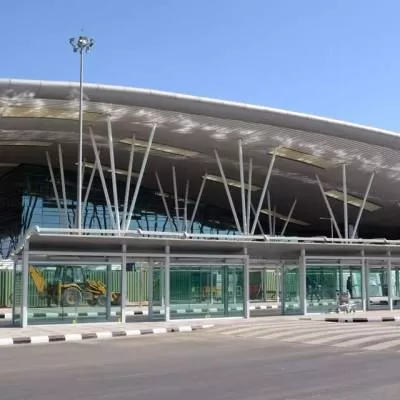
The newly inaugurated Integrated Cargo Terminal (ICT) at Ahmedabad Airport has rapidly emerged as the city’s main freight hub, handling nearly 70 per cent of international cargo traffic within just one month of operations. According to industry estimates, the terminal has already processed approximately 5,000 metric tonnes (MT) of international freight, alongside a comparable volume of domestic cargo.
Constructed over 21,000 sq. m. with potential expansion to 33,000 sq. m., the terminal has seen swift adoption by major carriers. Air India, Emirates, Qatar Airways, and Singapore Airlines have already shifted cargo operations to the ICT, with Blue Dart and SpiceJet expected to follow soon.

Cargo Throughput Set to Rise
In FY25, Ahmedabad Airport managed around 60,000 MT of total cargo, with 20,000 MT recorded between April and July. With the ICT operational, monthly throughput is projected to rise substantially, with long-term capacity targeted at 200,000 MT.
The ICT has been designed to offer:

  • Faster turnaround times
  • Seamless multimodal connectivity
  • Compliance with international safety standards
The terminal currently handles a diversified cargo mix, including perishables, pharmaceuticals, courier parcels, and engineering goods.

Strategic Boost to Gujarat's Export Ecosystem
The development of the ICT aligns with Gujarat’s robust export-driven economy, especially in sectors such as pharmaceuticals, chemicals, textiles, and engineering. The facility is expected to greatly enhance trade facilitation, reduce logistics bottlenecks, and elevate Ahmedabad’s status as a logistics gateway for western India.
Industry analysts believe the terminal will play a critical role in strengthening regional air cargo infrastructure and supporting the government’s broader goal of modernising aviation-linked trade logistics. 

The newly inaugurated Integrated Cargo Terminal (ICT) at Ahmedabad Airport has rapidly emerged as the city’s main freight hub, handling nearly 70 per cent of international cargo traffic within just one month of operations. According to industry estimates, the terminal has already processed approximately 5,000 metric tonnes (MT) of international freight, alongside a comparable volume of domestic cargo.Constructed over 21,000 sq. m. with potential expansion to 33,000 sq. m., the terminal has seen swift adoption by major carriers. Air India, Emirates, Qatar Airways, and Singapore Airlines have already shifted cargo operations to the ICT, with Blue Dart and SpiceJet expected to follow soon.Cargo Throughput Set to RiseIn FY25, Ahmedabad Airport managed around 60,000 MT of total cargo, with 20,000 MT recorded between April and July. With the ICT operational, monthly throughput is projected to rise substantially, with long-term capacity targeted at 200,000 MT.The ICT has been designed to offer:Faster turnaround timesSeamless multimodal connectivityCompliance with international safety standardsThe terminal currently handles a diversified cargo mix, including perishables, pharmaceuticals, courier parcels, and engineering goods.Strategic Boost to Gujarat's Export EcosystemThe development of the ICT aligns with Gujarat’s robust export-driven economy, especially in sectors such as pharmaceuticals, chemicals, textiles, and engineering. The facility is expected to greatly enhance trade facilitation, reduce logistics bottlenecks, and elevate Ahmedabad’s status as a logistics gateway for western India.Industry analysts believe the terminal will play a critical role in strengthening regional air cargo infrastructure and supporting the government’s broader goal of modernising aviation-linked trade logistics. 

Next Story
Infrastructure Transport

India Becomes First to Produce Bio-Bitumen for Roads

India has become the first country in the world to commercially produce bio-bitumen for use in road construction, according to Road, Transport and Highways Minister Nitin Gadkari. Bitumen, a black and viscous hydrocarbon derived from crude oil, is a key binding material in road building, and the bio-based alternative is expected to significantly improve the sector’s environmental footprint.Addressing the CSIR Technology Transfer Ceremony in New Delhi, Mr Gadkari congratulated Council of Scientific and Industrial Research on achieving the milestone, noting that the initiative would help curb ..

Next Story
Infrastructure Urban

HILT Policy Seen Boosting Telangana Revenue Sharply

The Hyderabad Industrial Land Transformation (HILT) Policy is expected to generate around Rs 1.08 billion in revenue for the Telangana state exchequer, according to Deputy Chief Minister Bhatti Vikramarka Mallu. Speaking in the Telangana Legislative Assembly, he said the policy would be implemented within a six-month timeframe in a transparent manner, with uniform rules applicable to all stakeholders. Mr Vikramarka noted that without the HILT Policy, the state would have earned only about Rs 1.2 million per acre. Under the new framework, however, revenue is projected to rise sharply to Rs 70 ..

Next Story
Infrastructure Urban

India Post, MoRD Tie Up to Boost Rural Inclusion

The Department of Posts and the Ministry of Rural Development have signed a Memorandum of Understanding to accelerate rural transformation and expand financial, digital and logistics services for Self-Help Groups (SHGs) and rural households across India. The agreement was signed in the presence of Union Minister of Communications and Development of North Eastern Region Jyotiraditya M. Scindia and Union Minister of Rural Development and Agriculture and Farmers’ Welfare Shivraj Singh Chouhan. The collaboration aligns with the government’s “Dak Sewa, Jan Sewa” vision and seeks to repositi..

Advertisement

Subscribe to Our Newsletter

Get daily newsletters around different themes from Construction world.

STAY CONNECTED

Advertisement

Advertisement

Advertisement

Advertisement

Open In App