BCAS And RRU Sign MoU For Indigenous Aviation Security Testing
AVIATION & AIRPORTS

BCAS And RRU Sign MoU For Indigenous Aviation Security Testing

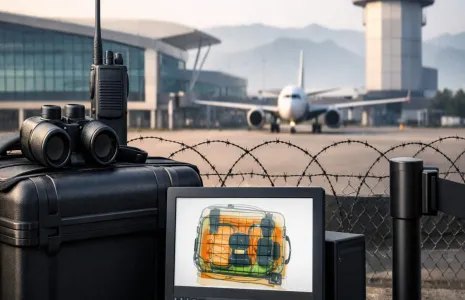
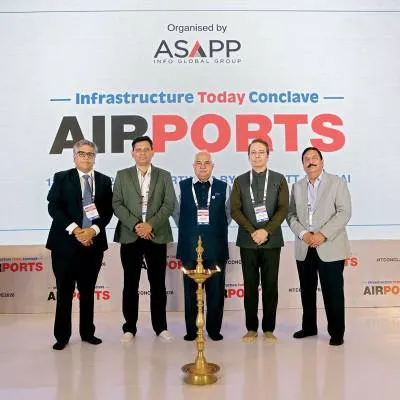
The Bureau of Civil Aviation Security (BCAS) and Rashtriya Raksha University (RRU) signed a memorandum of understanding to establish an indigenous testing centre for aviation security equipment. The centre will carry out trials, performance evaluation and certification of full body scanners and other screening systems used at Indian airports. The agreement was formalised in New Delhi in the presence of Ram Mohan Naidu Kinjarapu, Union Minister of Civil Aviation, and senior officials.

The partnership creates an institutional framework for cooperation in testing, certification, research, training and standards development to strengthen the national aviation security ecosystem. RRU, in collaboration with BCAS, will establish and maintain the dedicated centre and undertake independent evaluation, verification and certification of equipment supplied by original equipment manufacturers. Findings will be submitted for regulatory consideration to enable evidence-based approvals.

The memorandum provides for state-of-the-art testing laboratories at RRU aligned with global standards to conduct performance, safety and interoperability assessments and to develop an institutionalised accreditation framework. The scheme emphasises Atmanirbharta in aviation security while seeking alignment with recognised foreign certification practices and aiming to become a global certification hub. The combination of BCAS regulatory authority and RRU technical expertise is intended to build an indigenous certification ecosystem.

The agreement also envisages cooperation in academics, research, extension and specialised training programmes to develop professional expertise in testing, accreditation and emerging aviation security technologies. Capacity-building initiatives will include workshops, targeted training and knowledge-sharing activities to support Indian original equipment manufacturers and to facilitate development of Bharat Standards. These measures are intended to promote research, innovation and continuous refinement of testing methodologies and deployment protocols.

The minister highlighted rapid growth in the civil aviation sector, noting that airports have risen from 74 in 2014 to 165 today, with about 250 to 300 aircraft movements an hour and passenger throughput of about 40,000 to 45,000 an hour. He observed that air cargo volumes have increased by almost 50 per cent over the last 10 to 12 years. The memorandum is expected to support a future-ready and resilient aviation security ecosystem.

The Bureau of Civil Aviation Security (BCAS) and Rashtriya Raksha University (RRU) signed a memorandum of understanding to establish an indigenous testing centre for aviation security equipment. The centre will carry out trials, performance evaluation and certification of full body scanners and other screening systems used at Indian airports. The agreement was formalised in New Delhi in the presence of Ram Mohan Naidu Kinjarapu, Union Minister of Civil Aviation, and senior officials. The partnership creates an institutional framework for cooperation in testing, certification, research, training and standards development to strengthen the national aviation security ecosystem. RRU, in collaboration with BCAS, will establish and maintain the dedicated centre and undertake independent evaluation, verification and certification of equipment supplied by original equipment manufacturers. Findings will be submitted for regulatory consideration to enable evidence-based approvals. The memorandum provides for state-of-the-art testing laboratories at RRU aligned with global standards to conduct performance, safety and interoperability assessments and to develop an institutionalised accreditation framework. The scheme emphasises Atmanirbharta in aviation security while seeking alignment with recognised foreign certification practices and aiming to become a global certification hub. The combination of BCAS regulatory authority and RRU technical expertise is intended to build an indigenous certification ecosystem. The agreement also envisages cooperation in academics, research, extension and specialised training programmes to develop professional expertise in testing, accreditation and emerging aviation security technologies. Capacity-building initiatives will include workshops, targeted training and knowledge-sharing activities to support Indian original equipment manufacturers and to facilitate development of Bharat Standards. These measures are intended to promote research, innovation and continuous refinement of testing methodologies and deployment protocols. The minister highlighted rapid growth in the civil aviation sector, noting that airports have risen from 74 in 2014 to 165 today, with about 250 to 300 aircraft movements an hour and passenger throughput of about 40,000 to 45,000 an hour. He observed that air cargo volumes have increased by almost 50 per cent over the last 10 to 12 years. The memorandum is expected to support a future-ready and resilient aviation security ecosystem.

Next Story
Infrastructure Urban

Güntner Showcases Cooling Tech at China Expo

Güntner showcased its latest refrigeration and air conditioning innovations at China Refrigeration 2026, highlighting digital intelligence and carbon-neutral solutions.The company presented its aicore™ Controls and IoT platform, designed to optimise energy consumption, enable remote monitoring and enhance lifecycle management of cooling systems. The solution integrates advanced controllers and cloud-based capabilities to improve operational efficiency and reduce energy use.Güntner also demonstrated advancements in heat pump technologies, including its role in projects such as the Ordos Zer..

Next Story
Real Estate

Superb Realty Ties Up with Praan for AI Air Tech

Superb Realty has partnered with Praan to deploy AI-powered autonomous air infrastructure across over one million sq ft of real estate in Mumbai, marking a significant move towards intelligent indoor environments.The rollout will begin at Superb Altura and expand across upcoming residential and mixed-use developments. The initiative aims to integrate real-time sensing, adaptive purification and AI-led optimisation to improve indoor air quality and occupant experience.Praan’s technology is designed to remove ultrafine particles significantly smaller than conventional systems and eliminate har..

Next Story
Technology

DAAKit Raises $138,000 in Pre-Seed Round

DAAKit has raised $138,000 in a pre-seed funding round led by Inflection Point Ventures to expand its hyperlocal fulfilment network and strengthen technology capabilities.The company plans to use the funds to launch 25 new dark stores across Tier I and Tier II cities, enhance its technology infrastructure, and expand its leadership and operations teams. Currently operational in Delhi, Gurugram, Mumbai, Bengaluru and Kolkata, DAAKit is also piloting expansion into Tier II markets through Lucknow.Built on an asset-light, technology-driven model, the platform enables brands to position inventory ..

Advertisement

Subscribe to Our Newsletter

Get daily newsletters around different themes from Construction world.

STAY CONNECTED

Advertisement

Advertisement

Advertisement