BLR Airport Eyes Global Expansion After Strong 2025
AVIATION & AIRPORTS

BLR Airport Eyes Global Expansion After Strong 2025

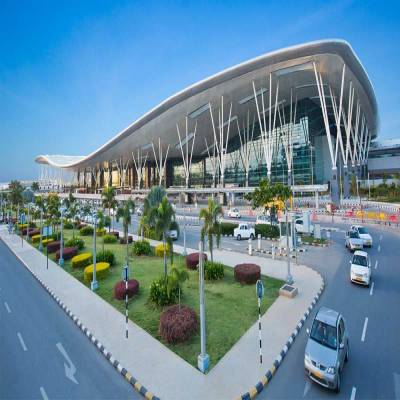
Kempegowda International Airport Bengaluru on Monday said it will expand international connectivity, add capacity and deepen airline partnerships in 2026, after closing calendar year 2025 with higher passenger volumes and moderate cargo growth.

The operator said its focus will be on scaling both passenger and cargo operations while supporting wider network expansion. Total passenger traffic stood at 43.82 million in 2025, up from 40.73 million in 2024. The airport also recorded its highest-ever single-day passenger movement of 137,317 travellers on 23 November 2025. Daily aircraft movements peaked at 837 in October, with an annual daily average of 765.

One of the year’s key milestones was the airport’s rise from third to second place nationally in terms of domestic flights operated in October 2025. International traffic delivered the strongest growth, with average daily international departures rising from 38 in 2024 to 51 in 2025, translating into a 28.7 per cent year-on-year increase in international passengers. During the year, the airport added five new domestic routes and five new international routes.

Girish Nair, Chief Operating Officer at Bangalore International Airport Limited, said 2025 was a demanding year for India’s aviation sector, and BLR Airport was no exception. He said the airport’s disciplined and resilient response helped maintain operational stability, support airline partners and strengthen network connectivity. As the year progressed, passenger and cargo operations were scaled responsibly, with a strong focus on future readiness. He added that the growth reflected rising demand as well as the confidence of airlines and travellers in BLR Airport as a critical hub supporting Bengaluru’s emergence as a leading global city.

As of 31 December 2025, the airport was connected to 113 destinations, including 79 domestic and 34 international. Delhi, Mumbai, Kolkata, Hyderabad and Pune led domestic traffic, while Dubai, Abu Dhabi, Singapore, London Heathrow and Kuala Lumpur were among the top international destinations. New domestic additions included Hindon, Bidar, Jaisalmer, Silchar and Navi Mumbai, while new international links covered Dammam, Ho Chi Minh City, Krabi, Hanoi and Riyadh.

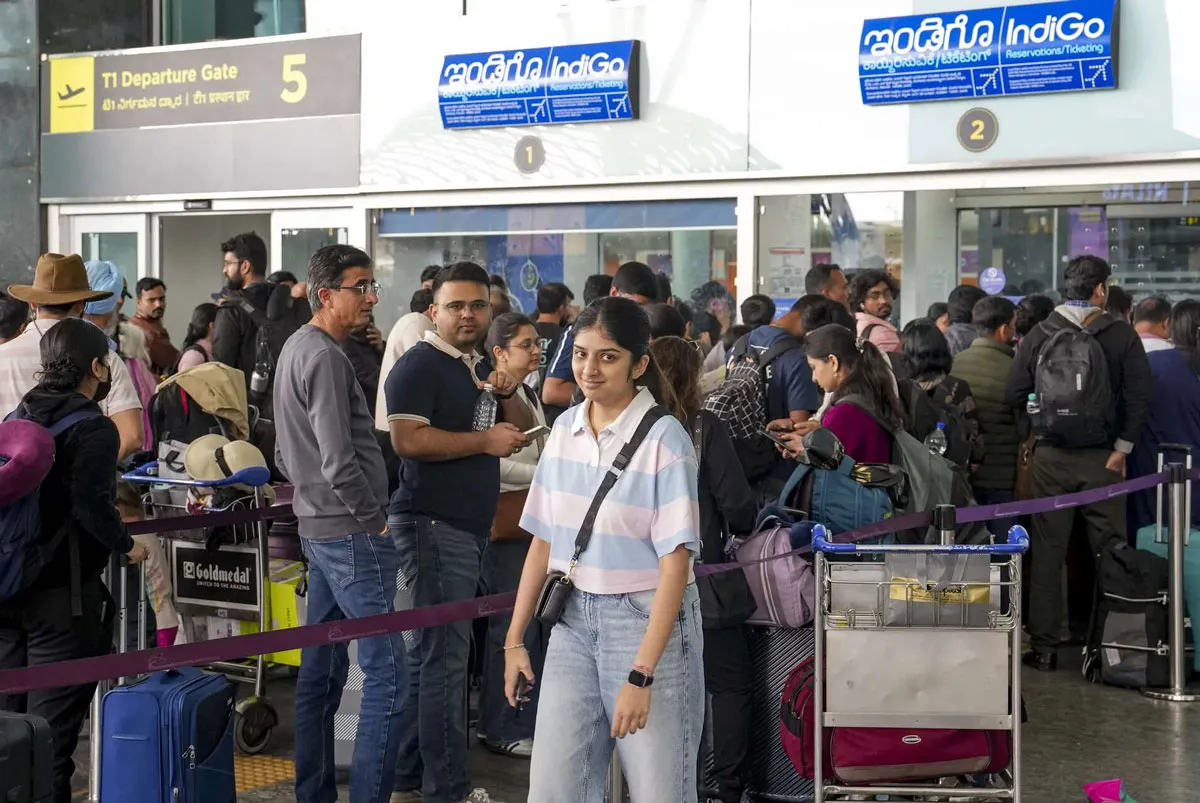
Airline activity from Bengaluru also increased through the year. Air India Express expanded its operations, IndiGo added new international connections, Akasa Air launched services to Phuket and Jeddah, while VietJet and Vietnam Airlines joined the airport’s network. Long-haul carriers including Lufthansa, KLM, Japan Airlines and Virgin Atlantic increased frequencies on existing routes.

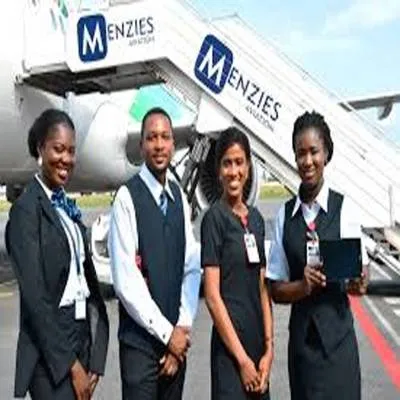
Cargo volumes reached 520,985 metric tonnes in 2025, marking a 5 per cent increase over the previous year. The airport achieved its highest-ever single-day cargo throughput of 2,207 metric tonnes on 7 August 2025. It is now connected to 37 cargo destinations through 15 cargo airlines, with shipments dominated by agri-perishables, pharmaceuticals, auto components, electronics and e-commerce goods. New cargo infrastructure became operational during the year, including a domestic cargo terminal developed by Menzies Aviation and the AISATS BLR Logistics Park, which added fresh warehousing capacity.

Looking ahead to 2026, the airport operator expects international passenger traffic and cargo demand to remain the primary growth drivers, supported by the addition of new routes and increased flight frequencies.

Kempegowda International Airport Bengaluru on Monday said it will expand international connectivity, add capacity and deepen airline partnerships in 2026, after closing calendar year 2025 with higher passenger volumes and moderate cargo growth. The operator said its focus will be on scaling both passenger and cargo operations while supporting wider network expansion. Total passenger traffic stood at 43.82 million in 2025, up from 40.73 million in 2024. The airport also recorded its highest-ever single-day passenger movement of 137,317 travellers on 23 November 2025. Daily aircraft movements peaked at 837 in October, with an annual daily average of 765. One of the year’s key milestones was the airport’s rise from third to second place nationally in terms of domestic flights operated in October 2025. International traffic delivered the strongest growth, with average daily international departures rising from 38 in 2024 to 51 in 2025, translating into a 28.7 per cent year-on-year increase in international passengers. During the year, the airport added five new domestic routes and five new international routes. Girish Nair, Chief Operating Officer at Bangalore International Airport Limited, said 2025 was a demanding year for India’s aviation sector, and BLR Airport was no exception. He said the airport’s disciplined and resilient response helped maintain operational stability, support airline partners and strengthen network connectivity. As the year progressed, passenger and cargo operations were scaled responsibly, with a strong focus on future readiness. He added that the growth reflected rising demand as well as the confidence of airlines and travellers in BLR Airport as a critical hub supporting Bengaluru’s emergence as a leading global city. As of 31 December 2025, the airport was connected to 113 destinations, including 79 domestic and 34 international. Delhi, Mumbai, Kolkata, Hyderabad and Pune led domestic traffic, while Dubai, Abu Dhabi, Singapore, London Heathrow and Kuala Lumpur were among the top international destinations. New domestic additions included Hindon, Bidar, Jaisalmer, Silchar and Navi Mumbai, while new international links covered Dammam, Ho Chi Minh City, Krabi, Hanoi and Riyadh. Airline activity from Bengaluru also increased through the year. Air India Express expanded its operations, IndiGo added new international connections, Akasa Air launched services to Phuket and Jeddah, while VietJet and Vietnam Airlines joined the airport’s network. Long-haul carriers including Lufthansa, KLM, Japan Airlines and Virgin Atlantic increased frequencies on existing routes. Cargo volumes reached 520,985 metric tonnes in 2025, marking a 5 per cent increase over the previous year. The airport achieved its highest-ever single-day cargo throughput of 2,207 metric tonnes on 7 August 2025. It is now connected to 37 cargo destinations through 15 cargo airlines, with shipments dominated by agri-perishables, pharmaceuticals, auto components, electronics and e-commerce goods. New cargo infrastructure became operational during the year, including a domestic cargo terminal developed by Menzies Aviation and the AISATS BLR Logistics Park, which added fresh warehousing capacity. Looking ahead to 2026, the airport operator expects international passenger traffic and cargo demand to remain the primary growth drivers, supported by the addition of new routes and increased flight frequencies.

Next Story
Infrastructure Urban

Implementation Status of Jal Jeevan Mission

Since August 2019 the Government has implemented Jal Jeevan Mission to provide assured potable water through household tap connections in rural India. At the start of the mission only 32.3 million (mn) rural households, representing 16.7 per cent, were reported to have tap water connections. States and union territories have reported that 125.8 mn additional rural households have since been provided with tap connections. As a result, of about 193.6 mn rural households roughly 158.2 mn, or 81.71 per cent, are reported to have tap water supply at home.\n\nThe State, district and village level st..

Next Story
Infrastructure Urban

Jal Jeevan Mission Reaches Eighty One Per Cent Rural Coverage

The Government reported substantial progress under the Jal Jeevan Mission, launched in August 2019 to provide tap water to every rural household. At launch only 32.3 million (mn) rural households had tap connections and states and Union territories reported provision of 125.8 mn additional households by March 2026. Consequently, out of about 193.6 mn rural households around 158.2 mn, or 81.71 per cent, are reported to have tap water at home. The Finance Minister announced extension of the mission until 2028 in the 2025-26 budget speech. The Swachh Bharat Mission Grameen, launched in October 20..

Next Story
Infrastructure Urban

Empowering Local Governance for Sustainable Rural Water Supply

The Ministry of Jal Shakti has aligned the Jal Jeevan Mission (JJM) with the 73rd Amendment to strengthen village level planning and community ownership of water supply. Gram Panchayats, village water and sanitation committees and Pani Samitis are to plan, implement, manage and maintain piped water systems, with gram sabha processes formalising handover and oversight. Implementation support agencies including non government organisations, community based organisations and self help groups have been empanelled to train local committees and promote women participation. Under JJM, the department ..

Advertisement

Subscribe to Our Newsletter

Get daily newsletters around different themes from Construction world.

STAY CONNECTED

Advertisement

Advertisement

Advertisement