+
GDA to Buy Land for RNE Roads, Clear Maps for Housing
AVIATION & AIRPORTS

GDA to Buy Land for RNE Roads, Clear Maps for Housing

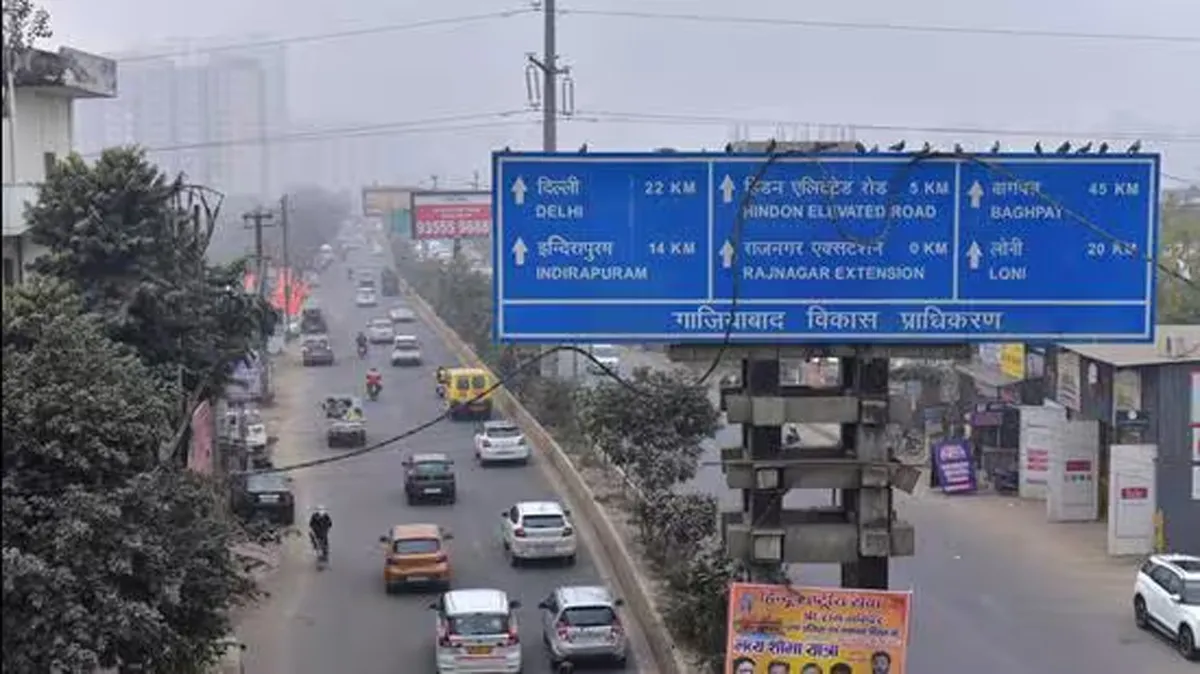
The Ghaziabad Development Authority (GDA) will now directly purchase land from owners for eight major roads under the zonal plan for Raj Nagar Extension (RNE), paving the way for improved road infrastructure and residential development in the area, officials confirmed on Wednesday.
Seven of these roads have remained stalled due to land acquisition hurdles, prompting the GDA to approve a proposal for direct purchase. The plan includes five roads with widths of 45 metres each, one 30-metre-wide road, and two roads of 24 metres in width—all integral to the approved zonal plan for RNE.
“This decision will streamline traffic movement and significantly improve connectivity for residents in Raj Nagar Extension,” said Rudresh Shukla, GDA’s media coordinator. The GDA board cleared the proposal on Tuesday, allowing the authority not only to buy land directly but also to begin sanctioning building maps for high-rise and other residential projects—thus unlocking revenue potential from these developments.
All eight roads face land-related obstacles that have delayed their completion. With the board’s approval, GDA can now bypass earlier constraints, especially since RNE is the only zone within GDA jurisdiction with an already prepared zonal plan.
As part of the newly implemented Master Plan 2031, the GDA has divided Ghaziabad, Loni, and Modinagar/Muradnagar into 15 zones, replacing the earlier 2021 plan, which had only eight zones. The authority will soon begin preparing zonal plans for the remaining areas.
A former GDA town planner explained that the RNE zonal plan was drafted nearly a decade ago but ran into legal and financial roadblocks related to development charges and lack of a land bank. “Direct land purchase required substantial additional funds, which delayed progress on the roads,” he said.
Residents have long voiced frustration over deteriorating traffic and poor connectivity in RNE. “Rush hour traffic is chaotic. With no proper road network under the zonal plan, many early settlers are now shifting towards better-connected areas like NH-9 or Greater Noida,” said Vikrant Sharma, an RNE resident.
The GDA’s decision marks a turning point for the long-stalled infrastructure work in Raj Nagar Extension and is expected to catalyse both urban connectivity and residential growth in the region.

The Ghaziabad Development Authority (GDA) will now directly purchase land from owners for eight major roads under the zonal plan for Raj Nagar Extension (RNE), paving the way for improved road infrastructure and residential development in the area, officials confirmed on Wednesday.Seven of these roads have remained stalled due to land acquisition hurdles, prompting the GDA to approve a proposal for direct purchase. The plan includes five roads with widths of 45 metres each, one 30-metre-wide road, and two roads of 24 metres in width—all integral to the approved zonal plan for RNE.“This decision will streamline traffic movement and significantly improve connectivity for residents in Raj Nagar Extension,” said Rudresh Shukla, GDA’s media coordinator. The GDA board cleared the proposal on Tuesday, allowing the authority not only to buy land directly but also to begin sanctioning building maps for high-rise and other residential projects—thus unlocking revenue potential from these developments.All eight roads face land-related obstacles that have delayed their completion. With the board’s approval, GDA can now bypass earlier constraints, especially since RNE is the only zone within GDA jurisdiction with an already prepared zonal plan.As part of the newly implemented Master Plan 2031, the GDA has divided Ghaziabad, Loni, and Modinagar/Muradnagar into 15 zones, replacing the earlier 2021 plan, which had only eight zones. The authority will soon begin preparing zonal plans for the remaining areas.A former GDA town planner explained that the RNE zonal plan was drafted nearly a decade ago but ran into legal and financial roadblocks related to development charges and lack of a land bank. “Direct land purchase required substantial additional funds, which delayed progress on the roads,” he said.Residents have long voiced frustration over deteriorating traffic and poor connectivity in RNE. “Rush hour traffic is chaotic. With no proper road network under the zonal plan, many early settlers are now shifting towards better-connected areas like NH-9 or Greater Noida,” said Vikrant Sharma, an RNE resident.The GDA’s decision marks a turning point for the long-stalled infrastructure work in Raj Nagar Extension and is expected to catalyse both urban connectivity and residential growth in the region.

Related Stories

Gold Stories

Next Story
Infrastructure Urban

KONE Opens India's First Digital Experience Centre in Pune

KONE, a global elevator and escalator manufacturer, has inaugurated its first Digital Experience Centre (DEC) in India, located in Pune. The facility aims to showcase how artificial intelligence (AI), connectivity and data-driven technologies can enhance customer experiences and improve building operations.The centre was inaugurated by Jussi Herlin, Executive Vice Chair, KONE Corporation; Philippe Delorme, President and CEO, KONE; and Nandan Nilekani, Co-founder and Chairman of the Board, Infosys.Designed as an interactive customer environment, the facility demonstrates digital solutions cover..

Next Story
Infrastructure Urban

CII GreenCo Launches Circularity Guidelines for Indian Industry

The Confederation of Indian Industry (CII) GreenCo Council has launched the CII GreenCo Circularity Guidelines – Pilot Version at the 17th CII GreenCo Waste & Resource Management Summit 2026 in Chennai. The initiative aims to strengthen resource efficiency, waste reduction and circular economy practices across Indian manufacturing and process industries.The guidelines introduce a structured framework with circularity indices covering raw materials, consumables, packaging and other resource inputs. These indicators will help industries assess existing practices, identify opportunities to ..

Next Story
Infrastructure Energy

Global Electronics Association Launches IPC-1783-CO2E Standard

The Global Electronics Association has introduced IPC-1783-CO2E, a new international standard aimed at improving consistency, transparency and comparability in product carbon footprint reporting across the electronics manufacturing industry.The standard, titled International Standard for Data Collection and Reporting of CO2 Equivalent (CO2e) Emissions for the Electronics Manufacturing Supply Chain, provides industry-specific guidance for collecting, estimating and reporting carbon emissions data.With increasing regulatory requirements and customer expectations, electronics manufacturers face c..

Advertisement

Subscribe to Our Newsletter

Get daily newsletters around different themes from Construction world.

STAY CONNECTED

Advertisement

SPECIAL OFFER
QR Code