+
Indian airlines likely to record Rs 26k cr net loss in FY22: ICRA
AVIATION & AIRPORTS

Indian airlines likely to record Rs 26k cr net loss in FY22: ICRA

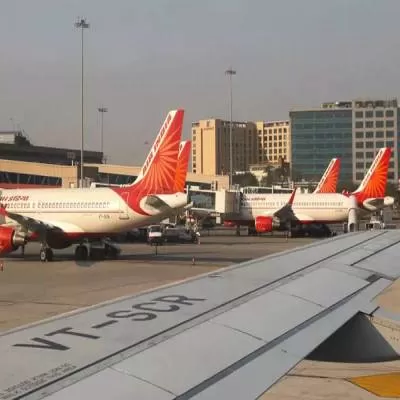
Indian Airlines are likely to record a net loss of Rs 250-260 billion in FY 2022. Moreover, to sustain services, it would need an additional Rs 450-470 crore between FY 2022-24.

According to the ICRA, a credit rating agency, in the coming term, the stability of Indian carriers would continue to be stressed until the carriers can decrease their debts through growth in operating performance or via equity infusion. Almost every airline has initiated fund-raising plans to sustain the crisis arising from the cash burn because of the effect on demand and growing ATF prices.

Due to the Covid-19 pandemic, Indian airlines underwent many challenges resulting in severe effects and lower demand for air travel.

However, demand is likely to rebound in FY 2022 because of increasing vaccination and state governments eliminating travel restrictions amidst a decreasing number of active Covid-19 cases. The air passenger traffic reported throughout FY 2022 is likely to lag the levels in FY 2013 and FY 2016.

During FY 2022, domestic air passenger travel is estimated to see substantial yearly growth of nearly 45-50% and international air passenger traffic around 80-85%.

The credit rating company expects the restoration in domestic air travel to be contingent on the following five factors—the vaccination pace, consumers readiness, recovery in macroeconomic growth, ability to travel and consumer sentiments.

The central and state government has made mandatory quarantine norms, travel limitations, and business recovery.

On the other hand, the effect of the pandemic is likely to be more long-lasting on international travel than domestic travel. International travel is contingent on the opening up of scheduled international operations by the Indian Government.

Kinjal Shah, vice president and co-group head at ICRA Limited, informed that the debt levels would continue to be high and are estimated to grow nearly Rs 1,200 billion, including lease liabilities in FY 2022.

Image Source


Also read: Govt plans to monetise 25 AAI airports in next four years

Indian Airlines are likely to record a net loss of Rs 250-260 billion in FY 2022. Moreover, to sustain services, it would need an additional Rs 450-470 crore between FY 2022-24. According to the ICRA, a credit rating agency, in the coming term, the stability of Indian carriers would continue to be stressed until the carriers can decrease their debts through growth in operating performance or via equity infusion. Almost every airline has initiated fund-raising plans to sustain the crisis arising from the cash burn because of the effect on demand and growing ATF prices. Due to the Covid-19 pandemic, Indian airlines underwent many challenges resulting in severe effects and lower demand for air travel. However, demand is likely to rebound in FY 2022 because of increasing vaccination and state governments eliminating travel restrictions amidst a decreasing number of active Covid-19 cases. The air passenger traffic reported throughout FY 2022 is likely to lag the levels in FY 2013 and FY 2016. During FY 2022, domestic air passenger travel is estimated to see substantial yearly growth of nearly 45-50% and international air passenger traffic around 80-85%. The credit rating company expects the restoration in domestic air travel to be contingent on the following five factors—the vaccination pace, consumers readiness, recovery in macroeconomic growth, ability to travel and consumer sentiments. The central and state government has made mandatory quarantine norms, travel limitations, and business recovery. On the other hand, the effect of the pandemic is likely to be more long-lasting on international travel than domestic travel. International travel is contingent on the opening up of scheduled international operations by the Indian Government. Kinjal Shah, vice president and co-group head at ICRA Limited, informed that the debt levels would continue to be high and are estimated to grow nearly Rs 1,200 billion, including lease liabilities in FY 2022. Image Source Also read: Govt plans to monetise 25 AAI airports in next four years

Related Stories

Gold Stories

Next Story
Infrastructure Urban

KONE Opens India's First Digital Experience Centre in Pune

KONE, a global elevator and escalator manufacturer, has inaugurated its first Digital Experience Centre (DEC) in India, located in Pune. The facility aims to showcase how artificial intelligence (AI), connectivity and data-driven technologies can enhance customer experiences and improve building operations.The centre was inaugurated by Jussi Herlin, Executive Vice Chair, KONE Corporation; Philippe Delorme, President and CEO, KONE; and Nandan Nilekani, Co-founder and Chairman of the Board, Infosys.Designed as an interactive customer environment, the facility demonstrates digital solutions cover..

Next Story
Infrastructure Urban

CII GreenCo Launches Circularity Guidelines for Indian Industry

The Confederation of Indian Industry (CII) GreenCo Council has launched the CII GreenCo Circularity Guidelines – Pilot Version at the 17th CII GreenCo Waste & Resource Management Summit 2026 in Chennai. The initiative aims to strengthen resource efficiency, waste reduction and circular economy practices across Indian manufacturing and process industries.The guidelines introduce a structured framework with circularity indices covering raw materials, consumables, packaging and other resource inputs. These indicators will help industries assess existing practices, identify opportunities to ..

Next Story
Infrastructure Energy

Global Electronics Association Launches IPC-1783-CO2E Standard

The Global Electronics Association has introduced IPC-1783-CO2E, a new international standard aimed at improving consistency, transparency and comparability in product carbon footprint reporting across the electronics manufacturing industry.The standard, titled International Standard for Data Collection and Reporting of CO2 Equivalent (CO2e) Emissions for the Electronics Manufacturing Supply Chain, provides industry-specific guidance for collecting, estimating and reporting carbon emissions data.With increasing regulatory requirements and customer expectations, electronics manufacturers face c..

Advertisement

Subscribe to Our Newsletter

Get daily newsletters around different themes from Construction world.

STAY CONNECTED

Advertisement

SPECIAL OFFER
QR Code