Kanpur, Agra Metro Corridor-1 to Finish by Dec 2025
AVIATION & AIRPORTS

Kanpur, Agra Metro Corridor-1 to Finish by Dec 2025

Metro rail construction in Kanpur and Agra is advancing steadily, with Corridor-1 in both cities slated for completion by December 2025.

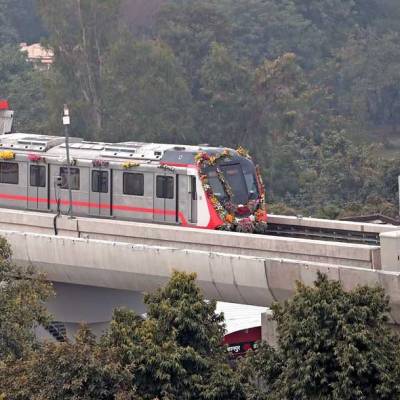
In Kanpur, the 6.7-kilometre underground stretch from Kanpur Central to Moti Jheel is now fully completed. Overall, 72 per cent of work on Corridor-1—stretching from IIT Kanpur to Naubasta—is done, and the remaining work remains on schedule to wrap up by year-end. Currently, a 15-kilometre section of the Kanpur Metro is already operational.

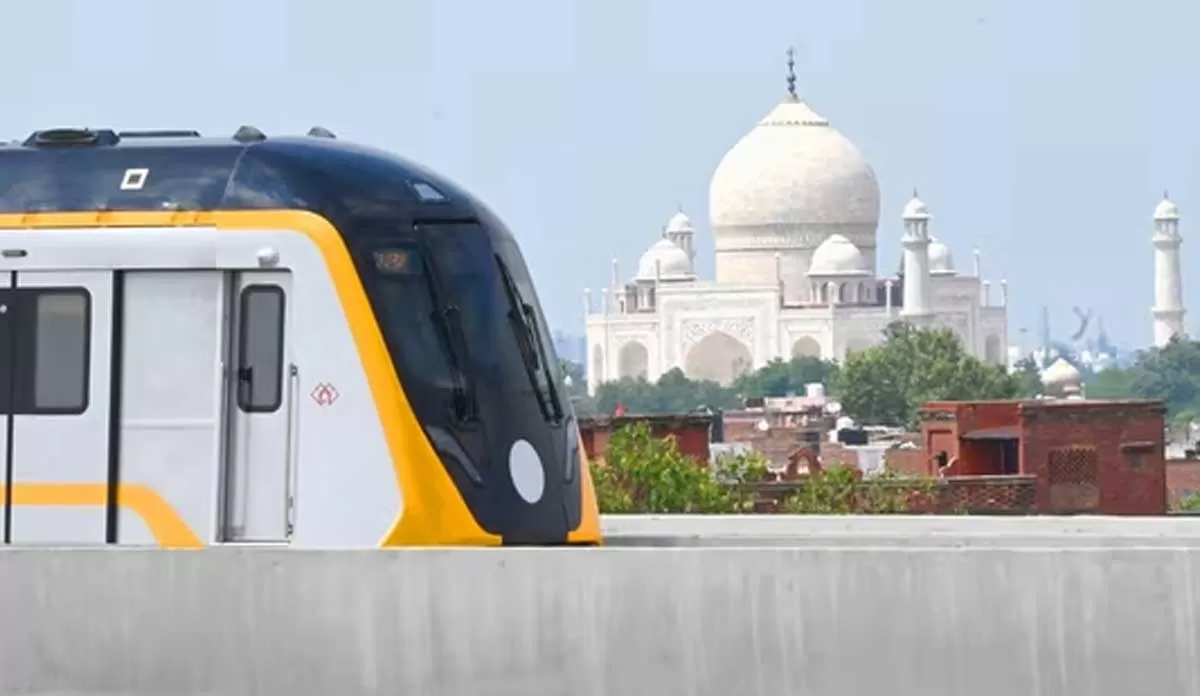
Simultaneously, the Agra Metro’s 14.27-kilometre Corridor-1—from Sikandra to Taj East Gate—has reached 52 per cent completion. Metro operations are underway along a 6-kilometre section from Taj East Gate to Mankameshwar, linking major landmarks like the Taj Mahal and Agra Fort. A successful trial run has also been conducted between Bijli Ghar and RBS College, covering four underground stations.

The development of Corridor-2 in both cities is progressing as well, with targeted completion set for December 2026. In Kanpur, the second corridor stretches 8.6 kilometres from Chandrashekhar Azad University of Agriculture to Barra. This includes 4.1 km underground and 4.5 km elevated segments. Tunnelling is ongoing between Rawatpur and Double Pulia, and the first pier cap has been installed near Company Bagh Chauraha.

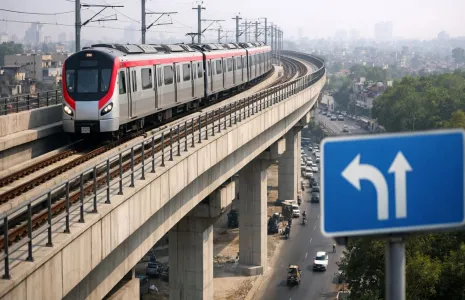
Agra’s Corridor-2, an entirely elevated 15.4-kilometre line from Agra Cantt to Kalindi Vihar, is also underway. Construction of piers and station structures has begun at locations such as Agra Cantt, Agra Mandi, and Kalindi Vihar along MG Road.

With metro networks already operating in Lucknow, Noida, and Ghaziabad, the expansion to Kanpur and Agra reflects Uttar Pradesh’s broader push for integrated urban mobility. Once completed, the Agra Metro is expected to significantly benefit local residents and enhance tourism connectivity in the heritage-rich city.

Metro rail construction in Kanpur and Agra is advancing steadily, with Corridor-1 in both cities slated for completion by December 2025.In Kanpur, the 6.7-kilometre underground stretch from Kanpur Central to Moti Jheel is now fully completed. Overall, 72 per cent of work on Corridor-1—stretching from IIT Kanpur to Naubasta—is done, and the remaining work remains on schedule to wrap up by year-end. Currently, a 15-kilometre section of the Kanpur Metro is already operational.Simultaneously, the Agra Metro’s 14.27-kilometre Corridor-1—from Sikandra to Taj East Gate—has reached 52 per cent completion. Metro operations are underway along a 6-kilometre section from Taj East Gate to Mankameshwar, linking major landmarks like the Taj Mahal and Agra Fort. A successful trial run has also been conducted between Bijli Ghar and RBS College, covering four underground stations.The development of Corridor-2 in both cities is progressing as well, with targeted completion set for December 2026. In Kanpur, the second corridor stretches 8.6 kilometres from Chandrashekhar Azad University of Agriculture to Barra. This includes 4.1 km underground and 4.5 km elevated segments. Tunnelling is ongoing between Rawatpur and Double Pulia, and the first pier cap has been installed near Company Bagh Chauraha.Agra’s Corridor-2, an entirely elevated 15.4-kilometre line from Agra Cantt to Kalindi Vihar, is also underway. Construction of piers and station structures has begun at locations such as Agra Cantt, Agra Mandi, and Kalindi Vihar along MG Road.With metro networks already operating in Lucknow, Noida, and Ghaziabad, the expansion to Kanpur and Agra reflects Uttar Pradesh’s broader push for integrated urban mobility. Once completed, the Agra Metro is expected to significantly benefit local residents and enhance tourism connectivity in the heritage-rich city.

Next Story
Infrastructure Transport

MMRDA advances 250 m on Orange Gate–Marine Drive tunnel

The Mumbai Metropolitan Region Development Authority (MMRDA) has completed 250 m of underground tunnelling for the Orange Gate–Marine Drive Urban Road Tunnel using India’s largest slurry shield tunnel boring machine (TBM) deployed for an urban road project.The project involves twin tunnels extending over 7 km beneath critical transport corridors, including Central Railway, Western Railway and Metro Line 3. The work requires high-precision engineering to navigate densely developed urban infrastructure.Once completed, the tunnel is expected to reduce travel time between Orange Gate and Marin..

Next Story
Infrastructure Urban

Hindustan Zinc Pays Rs 188.46 Billion in FY26

Hindustan Zinc contributed Rs 188.46 billion to the public exchequer in FY 2025-26, according to its 9th Tax Transparency Report. The contribution, equivalent to 46 per cent of the company’s revenue, included direct and indirect taxes, government royalties, dividends to the Government of India, withholding taxes and other statutory levies.The company’s five-year cumulative contribution to the exchequer stood at Rs 915.72 billion. In FY26, Hindustan Zinc reported revenue of Rs 408.44 billion, EBITDA of Rs 221.62 billion and profit after tax of Rs 138.32 billion. It also achieved its highest..

Next Story
Infrastructure Urban

World of Concrete India 2026 Opens in Mumbai

Informa Markets in India will host the 12th edition of World of Concrete India 2026 from 3–5 June 2026 at the Bombay Exhibition Centre, Mumbai. The specialised B2B exhibition will bring together manufacturers, suppliers, contractors, developers, architects, consultants, infrastructure companies, project leaders and government stakeholders.The event is expected to feature over 350 brands and more than 18,000 trade professionals. It will cover concrete and cement, dry mortar, precast technologies, formwork, construction chemicals, industrial and commercial flooring, scaffolding, safety solutio..

Advertisement

Subscribe to Our Newsletter

Get daily newsletters around different themes from Construction world.

STAY CONNECTED

Advertisement

Advertisement

Advertisement

-->