Navi Mumbai Airports to get operational by next year
AVIATION & AIRPORTS

Navi Mumbai Airports to get operational by next year

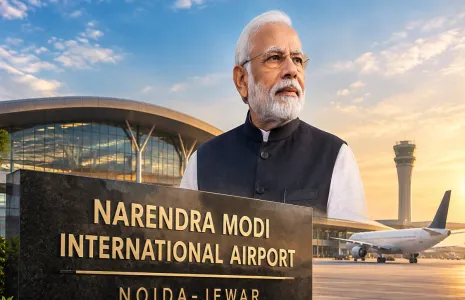
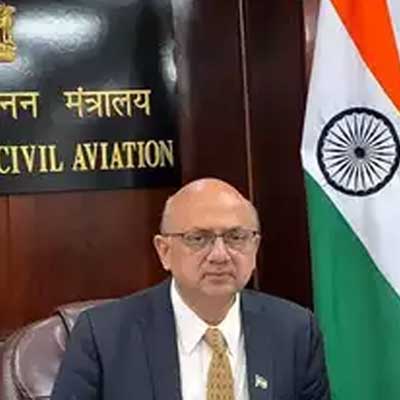
The development of the Noida International Airport and Navi Mumbai Airport is on schedule, according to Rajiv Bansal, Secretary of the Ministry of Civil Aviation, and both are anticipated to open by the end of the current year.

Bansal stated at the CAPA India Aviation Summit that the combined capacity of six metro airports is 500 million.

The six largest metro airports in India, including those in Delhi, Mumbai, Bangalore, Chennai, and Hyderabad, can currently handle 320 million passengers, according to Bansal.

The extension of Delhi's terminal one (T1) would be finished by August or September of this year, according to the civil aviation secretary.

The three terminals at Delhi Airport should be able to handle 100 million passengers annually, Bansal said, adding that he hopes terminal 1 would be enlarged.

According to him, the fourth runway would become operational in August, increasing aviation traffic movements accordingly. According to him, considering that there are 30 million Indians living abroad, the privatisation of Air India creates a fair playing field for other airlines and offers great potential for the expansion of global connections.

India is permitting FATA (Foreign Aircrew Temporary Authorization) pilots to fly 777s since there is a demand but a shortage of qualified pilots, the official added.

Building infrastructure of the highest calibre will be a problem given the enormous demand for both domestic and international travel, he continued.

He added that there is currently a need in India for 19-seater aircraft to connect Tier 3 and Tier 4 towns. He praised the UDAN programme and said it was unmatched.

He added that the investment plans of Air India Engineering Services Ltd. (AIESL) are already far forward.

The development of the Noida International Airport and Navi Mumbai Airport is on schedule, according to Rajiv Bansal, Secretary of the Ministry of Civil Aviation, and both are anticipated to open by the end of the current year. Bansal stated at the CAPA India Aviation Summit that the combined capacity of six metro airports is 500 million. The six largest metro airports in India, including those in Delhi, Mumbai, Bangalore, Chennai, and Hyderabad, can currently handle 320 million passengers, according to Bansal. The extension of Delhi's terminal one (T1) would be finished by August or September of this year, according to the civil aviation secretary. The three terminals at Delhi Airport should be able to handle 100 million passengers annually, Bansal said, adding that he hopes terminal 1 would be enlarged. According to him, the fourth runway would become operational in August, increasing aviation traffic movements accordingly. According to him, considering that there are 30 million Indians living abroad, the privatisation of Air India creates a fair playing field for other airlines and offers great potential for the expansion of global connections. India is permitting FATA (Foreign Aircrew Temporary Authorization) pilots to fly 777s since there is a demand but a shortage of qualified pilots, the official added. Building infrastructure of the highest calibre will be a problem given the enormous demand for both domestic and international travel, he continued. He added that there is currently a need in India for 19-seater aircraft to connect Tier 3 and Tier 4 towns. He praised the UDAN programme and said it was unmatched. He added that the investment plans of Air India Engineering Services Ltd. (AIESL) are already far forward.

Next Story
Infrastructure Urban

Implementation Status of Jal Jeevan Mission

Since August 2019 the Government has implemented Jal Jeevan Mission to provide assured potable water through household tap connections in rural India. At the start of the mission only 32.3 million (mn) rural households, representing 16.7 per cent, were reported to have tap water connections. States and union territories have reported that 125.8 mn additional rural households have since been provided with tap connections. As a result, of about 193.6 mn rural households roughly 158.2 mn, or 81.71 per cent, are reported to have tap water supply at home.\n\nThe State, district and village level st..

Next Story
Infrastructure Urban

Jal Jeevan Mission Reaches Eighty One Per Cent Rural Coverage

The Government reported substantial progress under the Jal Jeevan Mission, launched in August 2019 to provide tap water to every rural household. At launch only 32.3 million (mn) rural households had tap connections and states and Union territories reported provision of 125.8 mn additional households by March 2026. Consequently, out of about 193.6 mn rural households around 158.2 mn, or 81.71 per cent, are reported to have tap water at home. The Finance Minister announced extension of the mission until 2028 in the 2025-26 budget speech. The Swachh Bharat Mission Grameen, launched in October 20..

Next Story
Infrastructure Urban

Empowering Local Governance for Sustainable Rural Water Supply

The Ministry of Jal Shakti has aligned the Jal Jeevan Mission (JJM) with the 73rd Amendment to strengthen village level planning and community ownership of water supply. Gram Panchayats, village water and sanitation committees and Pani Samitis are to plan, implement, manage and maintain piped water systems, with gram sabha processes formalising handover and oversight. Implementation support agencies including non government organisations, community based organisations and self help groups have been empanelled to train local committees and promote women participation. Under JJM, the department ..

Advertisement

Subscribe to Our Newsletter

Get daily newsletters around different themes from Construction world.

STAY CONNECTED

Advertisement

Advertisement

Advertisement