Indian Railways ropes in RDSO to solve waterlogging problem
ROADS & HIGHWAYS

Indian Railways ropes in RDSO to solve waterlogging problem

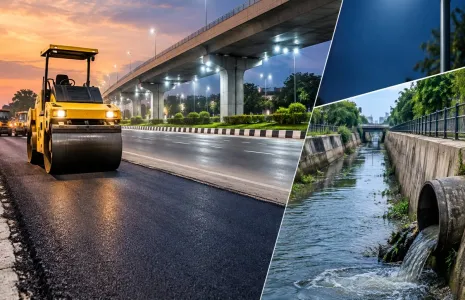
The Indian Railways has roped in the Research Design and Standards Organisation (RDSO) to solve the problem of waterlogging on the road under bridges (RUBs) or limited height subways (LHS).

Railway Minister Ashwini Vaishnaw told the media that the ministry is taking steps to solve the waterlogging issue.

He said that the RDSO, which operates under the Ministry of Railways, is studying the issue in detail.

Highlighting that waterlogging is a common phenomenon, mainly in remote areas, the minister also said that the Railways would invest in making more overbridges rather than roads under bridges.

After analysing the problem, the RDSO proposed several measures for the Railways that could assist solve the waterlogging problem in underground railway projects. The organisation highlighted that an adequate draining arrangement was required to solve the problem.

The RDSO also recommended several measures to solve the issue in existing underground structures. It said that water flow could be redirected to the nearest bridge or nallahs so that it doesn’t collect the under bridge. It also proposed covering approach roads and hump at the entry to RUBs with a shed.

The RDSO said that pumping arrangements should be made to expeditiously pump out the water in case excess water gets collected underbridge. It told the media that the provision of cross drains and sealing of joints should be made after evaluating the stability of the structure and the area.

As the waterlogging issue gets aggravated during the monsoon season, clearing of debris and silt removal is done at RUBs before the rains. In addition, monsoon patrolling is also done in identified sites to prevent waterlogging.

Earlier, it was reported that the Central Railway will carry out microtunneling in several areas across Mumbai to deal with the issue of waterlogging during monsoon.

Image Source

The Indian Railways has roped in the Research Design and Standards Organisation (RDSO) to solve the problem of waterlogging on the road under bridges (RUBs) or limited height subways (LHS). Railway Minister Ashwini Vaishnaw told the media that the ministry is taking steps to solve the waterlogging issue. He said that the RDSO, which operates under the Ministry of Railways, is studying the issue in detail. Highlighting that waterlogging is a common phenomenon, mainly in remote areas, the minister also said that the Railways would invest in making more overbridges rather than roads under bridges. After analysing the problem, the RDSO proposed several measures for the Railways that could assist solve the waterlogging problem in underground railway projects. The organisation highlighted that an adequate draining arrangement was required to solve the problem. The RDSO also recommended several measures to solve the issue in existing underground structures. It said that water flow could be redirected to the nearest bridge or nallahs so that it doesn’t collect the under bridge. It also proposed covering approach roads and hump at the entry to RUBs with a shed. The RDSO said that pumping arrangements should be made to expeditiously pump out the water in case excess water gets collected underbridge. It told the media that the provision of cross drains and sealing of joints should be made after evaluating the stability of the structure and the area. As the waterlogging issue gets aggravated during the monsoon season, clearing of debris and silt removal is done at RUBs before the rains. In addition, monsoon patrolling is also done in identified sites to prevent waterlogging. Earlier, it was reported that the Central Railway will carry out microtunneling in several areas across Mumbai to deal with the issue of waterlogging during monsoon. Image Source

Next Story
Infrastructure Urban

ABB to Invest Rs 6.25 Billion to Expand India Manufacturing

ABB recently announced plans to invest approximately Rs 6.25 billion ($75 million) in India during 2026 to expand its manufacturing footprint and research and development capabilities. The investment follows more than $35 million spent in 2025 and reflects the company’s continued focus on strengthening its ‘local-for-local’ strategy in the country.The investment will support ABB’s Electrification, Motion and Automation businesses and expand manufacturing capacity for infrastructure sectors such as renewable energy, metro rail, data centres and industrial applications. Approximately 300..

Next Story
Equipment

Six WOLFF Cranes Handle 60,000 m³ Concrete for German Hospital

Six WOLFF tower cranes are playing a key role in constructing a new hospital complex in Memmingen, Germany, supporting large-scale material handling for the project. The facility is being built on a 7.7-hectare site and will feature six floors, around 480 beds and a gross floor area exceeding 75,000 sq m.Building shell works began recently in February 2025. One WOLFF 6531.12 Cross crane supported early site preparation before being dismantled in autumn 2025, while five remaining cranes continue operations. Over an average deployment period of 16 months, the cranes are expected to move approxim..

Next Story
Equipment

REC Funds Rs 115.6 Million CSR Support for Bihar Eye Hospital

REC recently committed Rs 115.6 million under its Corporate Social Responsibility (CSR) programme for the procurement of clinical and non-clinical equipment at Sankara Eye Hospital in Saharsa, Bihar. The initiative aims to strengthen healthcare infrastructure and improve access to specialised eye care services in the region.A Memorandum of Agreement (MoA) was recently signed between Pradeep Fellows, Executive Director (CSR), REC Limited, and Wg Cdr V. Shankar (Retd), Trustee and Executive Director of Sankara Eye Hospital, at the REC office in the SCOPE Complex, New Delhi.The support is expecte..

Advertisement

Subscribe to Our Newsletter

Get daily newsletters around different themes from Construction world.

STAY CONNECTED

Advertisement

Advertisement

Advertisement