+
 JICA, MoRTH holds meeting on Highways’ capacity development project
ROADS & HIGHWAYS

JICA, MoRTH holds meeting on Highways’ capacity development project

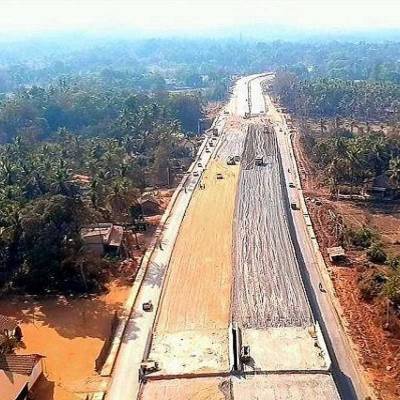
On 11 February, the Ministry of Road Transport and Highways (MoRTH) hosted an online meeting of the 9th Joint Coordination Committee (JCC) of the Japan International Cooperation Agency (JICA) supporting capacity development projects on Highways in Mountainous Regions.

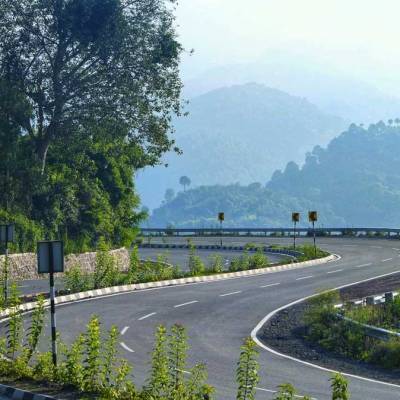
The Technical Cooperation (TC) Project began in April 2016 intending to improve institutional capacity in creating roadways in mountainous areas. This JCC was the last one held before the project's completion in March 2022.

Additional: KC Gupta As chairperson of the JCC meeting, Secretary, MoRTH (IAS) was present. In the presence of other dignitaries and officials from the Government of India MoRTH, National Highways and Infrastructure Development Corporation Ltd (NHIDCL), National Highway Authority of India (NHAI), Embassy of Japan, and JICA, SAITO Mitsunori, Chief Representative, JICA India, gave a short speech at the meeting.

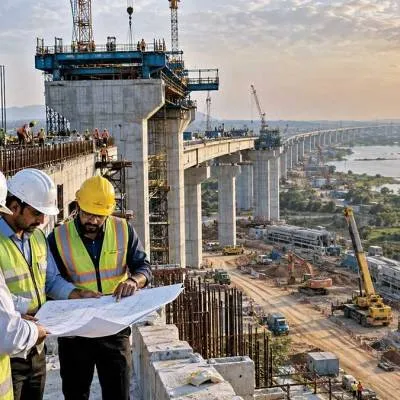
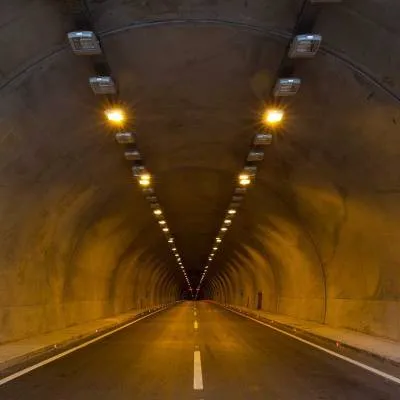
The meeting highlighted the accomplishments of each project activity as well as the project's overall success.The formulation of five technical guidelines in the areas of planning, tunnelling, slope protection, bridge construction, and operation and maintenance is one of the most significant accomplishments.These recommendations were authorised by MoRTH on January 31, 2022, and will be published shortly.

The forum also discussed the Model's effective implementation, including detailed project report (DPR) recommendations for NH54 in Assam and NH717 in West Bengal, as well as technology transfer to implement the NH10 pilot project in Sikkim.

Since 2007, JICA has supported India's road sector with a number of technical cooperation projects, including capacity development of sustainable expressways 2007-2011, capacity development for highway operation and maintenance 2013-2015, and the Capacity Development Project on Highways in Mountainous Regions 2016-2022. The current Technical Cooperation Project is primarily focused on road-building in hilly areas, and its output has aided in the formulation of a new technical cooperation programme that will begin in April 2022.

Image Source

Also read: MoRTH to cross Rs 1.5 lakh crore funding mark

On 11 February, the Ministry of Road Transport and Highways (MoRTH) hosted an online meeting of the 9th Joint Coordination Committee (JCC) of the Japan International Cooperation Agency (JICA) supporting capacity development projects on Highways in Mountainous Regions. The Technical Cooperation (TC) Project began in April 2016 intending to improve institutional capacity in creating roadways in mountainous areas. This JCC was the last one held before the project's completion in March 2022. Additional: KC Gupta As chairperson of the JCC meeting, Secretary, MoRTH (IAS) was present. In the presence of other dignitaries and officials from the Government of India MoRTH, National Highways and Infrastructure Development Corporation Ltd (NHIDCL), National Highway Authority of India (NHAI), Embassy of Japan, and JICA, SAITO Mitsunori, Chief Representative, JICA India, gave a short speech at the meeting. The meeting highlighted the accomplishments of each project activity as well as the project's overall success.The formulation of five technical guidelines in the areas of planning, tunnelling, slope protection, bridge construction, and operation and maintenance is one of the most significant accomplishments.These recommendations were authorised by MoRTH on January 31, 2022, and will be published shortly. The forum also discussed the Model's effective implementation, including detailed project report (DPR) recommendations for NH54 in Assam and NH717 in West Bengal, as well as technology transfer to implement the NH10 pilot project in Sikkim. Since 2007, JICA has supported India's road sector with a number of technical cooperation projects, including capacity development of sustainable expressways 2007-2011, capacity development for highway operation and maintenance 2013-2015, and the Capacity Development Project on Highways in Mountainous Regions 2016-2022. The current Technical Cooperation Project is primarily focused on road-building in hilly areas, and its output has aided in the formulation of a new technical cooperation programme that will begin in April 2022. Image Source Also read: MoRTH to cross Rs 1.5 lakh crore funding mark

Next Story
Infrastructure Urban

Implementation Status of Jal Jeevan Mission

Since August 2019 the Government has implemented Jal Jeevan Mission to provide assured potable water through household tap connections in rural India. At the start of the mission only 32.3 million (mn) rural households, representing 16.7 per cent, were reported to have tap water connections. States and union territories have reported that 125.8 mn additional rural households have since been provided with tap connections. As a result, of about 193.6 mn rural households roughly 158.2 mn, or 81.71 per cent, are reported to have tap water supply at home.\n\nThe State, district and village level st..

Next Story
Infrastructure Urban

Jal Jeevan Mission Reaches Eighty One Per Cent Rural Coverage

The Government reported substantial progress under the Jal Jeevan Mission, launched in August 2019 to provide tap water to every rural household. At launch only 32.3 million (mn) rural households had tap connections and states and Union territories reported provision of 125.8 mn additional households by March 2026. Consequently, out of about 193.6 mn rural households around 158.2 mn, or 81.71 per cent, are reported to have tap water at home. The Finance Minister announced extension of the mission until 2028 in the 2025-26 budget speech. The Swachh Bharat Mission Grameen, launched in October 20..

Next Story
Infrastructure Urban

Empowering Local Governance for Sustainable Rural Water Supply

The Ministry of Jal Shakti has aligned the Jal Jeevan Mission (JJM) with the 73rd Amendment to strengthen village level planning and community ownership of water supply. Gram Panchayats, village water and sanitation committees and Pani Samitis are to plan, implement, manage and maintain piped water systems, with gram sabha processes formalising handover and oversight. Implementation support agencies including non government organisations, community based organisations and self help groups have been empanelled to train local committees and promote women participation. Under JJM, the department ..

Advertisement

Subscribe to Our Newsletter

Get daily newsletters around different themes from Construction world.

STAY CONNECTED

Advertisement

Advertisement

Advertisement