2.5 km road flyover to be erected beneath Metro Line 6 in Mumbai Metro
ROADS & HIGHWAYS

2.5 km road flyover to be erected beneath Metro Line 6 in Mumbai Metro

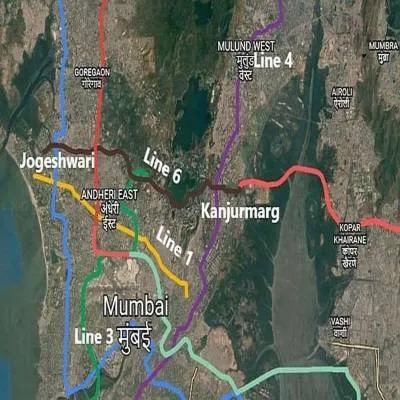
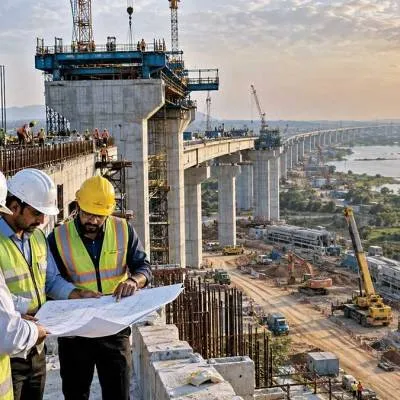
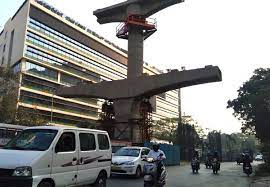
The Mumbai Metropolitan Region Development Authority (MMRDA) will construct a combined 2.58-kilometer-long road flyover at a shared pier in the road median below the elevated Metro Line 6 (Swami Samarth Nagar to Vikhroli) in order to provide more transportation options. The elevated Mumbai Metro 6 passes through Jogeshwari, WEH, and Powai in addition to linking four other metro lines, including Metro Line 2A (Dahisar to DN Nagar), Metro Line 3 Colaba Bandra SEEPZ, Metro Line 4 (Wadala - Kasarvadavali), and Metro Line 7 (Andheri (East) - Dahisar (East).

Moreover, it goes via the suburban train stations of Jogeshwar and Kanjurmarg.

Due to its connectivity with other Metro lines and train stations, the rail route will serve 7.69 lakh daily passengers by 2031. According to MMRDA authorities, the development of a Metro depot for this line on land adjacent to the Kanjurmarg salt pan might potentially guarantee its completion. In order to provide mass rapid transportation services to people within a short travel distance, the authority is building the Mumbai Metro network. According to MMRDA Commissioner SVR Srinivas, Metro Line 6 will provide the much-needed rail-based connectivity between the western and eastern suburbs and contribute to an integrated public transportation system for Mumbai residents. The project's overseer, MMRDA, states that 13 stations would be included in the Metro 6, with 66 percent of the construction already completed.

Civil work on the Line 6 metro station is 51.50 percent complete. The viaduct building rate for Metro line 6's 15.31 km-long metro route is 71%. The whole physical work on this line is 66% finished, according to the MMRDA. The MMRDA is constructing a 15.31-km Metro line that will connect Swami Samarth Nagar with Vikhroli (EEH), passing through Jogeshwari, WEH, and Powai. The JVLR, an elevated corridor connecting Mumbai's North-South and East-West sectors as well as the Western and Eastern Express Highways, will be used by the majority of the line. Through Metro line 6, all governmental, commercial, and geographically significant sectors will have access to train services.

The Mumbai Metropolitan Region Development Authority (MMRDA) will construct a combined 2.58-kilometer-long road flyover at a shared pier in the road median below the elevated Metro Line 6 (Swami Samarth Nagar to Vikhroli) in order to provide more transportation options. The elevated Mumbai Metro 6 passes through Jogeshwari, WEH, and Powai in addition to linking four other metro lines, including Metro Line 2A (Dahisar to DN Nagar), Metro Line 3 Colaba Bandra SEEPZ, Metro Line 4 (Wadala - Kasarvadavali), and Metro Line 7 (Andheri (East) - Dahisar (East). Moreover, it goes via the suburban train stations of Jogeshwar and Kanjurmarg. Due to its connectivity with other Metro lines and train stations, the rail route will serve 7.69 lakh daily passengers by 2031. According to MMRDA authorities, the development of a Metro depot for this line on land adjacent to the Kanjurmarg salt pan might potentially guarantee its completion. In order to provide mass rapid transportation services to people within a short travel distance, the authority is building the Mumbai Metro network. According to MMRDA Commissioner SVR Srinivas, Metro Line 6 will provide the much-needed rail-based connectivity between the western and eastern suburbs and contribute to an integrated public transportation system for Mumbai residents. The project's overseer, MMRDA, states that 13 stations would be included in the Metro 6, with 66 percent of the construction already completed. Civil work on the Line 6 metro station is 51.50 percent complete. The viaduct building rate for Metro line 6's 15.31 km-long metro route is 71%. The whole physical work on this line is 66% finished, according to the MMRDA. The MMRDA is constructing a 15.31-km Metro line that will connect Swami Samarth Nagar with Vikhroli (EEH), passing through Jogeshwari, WEH, and Powai. The JVLR, an elevated corridor connecting Mumbai's North-South and East-West sectors as well as the Western and Eastern Express Highways, will be used by the majority of the line. Through Metro line 6, all governmental, commercial, and geographically significant sectors will have access to train services.

Next Story
Infrastructure Transport

Large Format Store Planned At M G Road Metro Station

M G Road station in Bengaluru is set to host the city’s first large-format commercial and experience space, with planning led by Bangalore Metro Rail Corporation Limited. BMRCL has invited proposals to develop and operate a central business district destination at the Purple?Pink Line interchange. The plan positions the station as a commercial hub designed to serve a broad commuter base across the city. The proposal is part of a broader effort to activate transit nodes commercially. Tender documents set a minimum monthly rental of Rs 0.944 million (mn), inclusive of GST, for the large-format..

Next Story
Infrastructure Energy

Government Cancels Auction Of Eleven Critical Mineral Blocks

The government has cancelled the auction of 11 critical and strategic mineral blocks after receiving a poor investor response and failing to attract a sufficient number of qualified bidders. The decision represents a setback to plans to ramp up domestic exploration and production of critical minerals amid global supply chain disruptions and rising demand for materials used in clean energy and advanced technologies. The mines ministry issued an annulment notice setting out the reasons for the cancellations. The annulment notice indicated that the auction process for five mineral blocks was canc..

Next Story
Infrastructure Energy

Gujarat Pushes Biogas Growth With 193 Operational Units

Gujarat has operationalised 193 biogas plants across the state and is planning to add 60 more units as part of a broader push to scale up clean and sustainable energy solutions. The existing plants, established under various government-supported schemes, process organic waste including cattle dung and agricultural residue to produce biogas and a nutrient-rich slurry. The output is mainly used for cooking and other energy needs in rural and semi-urban communities, while also improving local waste management practices. The Gujarat Energy Development Agency (GEDA) is leading the initiative and is..

Advertisement

Subscribe to Our Newsletter

Get daily newsletters around different themes from Construction world.

STAY CONNECTED

Advertisement

Advertisement

Advertisement