Adani Tops Bids For Bengaluru Underground Tunnel Road
ROADS & HIGHWAYS

Adani Tops Bids For Bengaluru Underground Tunnel Road

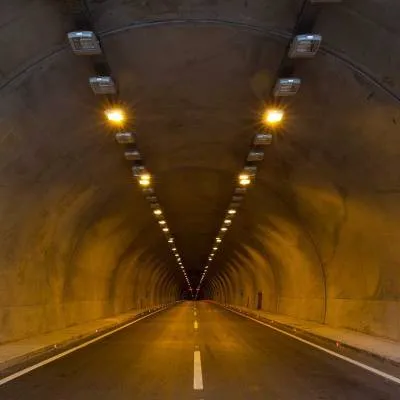
The Adani Group has emerged as the lowest financial bidder for both packages of Bengaluru’s proposed 16.75 km North–South underground tunnel road, according to reports.

Financial bids were opened by Bengaluru Smart Infrastructure Ltd (B-SMILE), the special purpose vehicle overseeing the project. Adani’s bids were significantly higher than the government’s initial estimates—around 24 per cent above projections for the first package and nearly 28 per cent higher for the second.

While the state government had estimated the total project cost at Rs 176.98 billion, Adani’s combined bid stands at approximately Rs 222.67 billion. The wide gap is expected to prompt the government to place the matter before the Karnataka Cabinet to determine the next course of action.

The tunnel road is proposed under the build-operate-transfer model, under which the government will fund 40 per cent of the project cost, with the remaining investment to be mobilised by the private concessionaire.

Four infrastructure companies had initially submitted bids for the project. However, only two—Adani Group and Hyderabad-based Vishwa Samudra Engineering Ltd—cleared the technical evaluation stage to reach the financial round. Dilip Buildcon was disqualified due to a tender condition barring firms linked to the collapse of major structures, while Rail Vikas Nigam Ltd exited after its joint venture partner failed to meet eligibility requirements. With Vishwa Samudra finishing second, Adani emerged as the lowest bidder.

The development marks a key milestone for the high-profile tunnel road, which has sparked intense political and civic debate. Several BJP leaders have opposed the project, particularly the proposed alignment that requires land from the historic Lalbagh Botanical Garden.

Urban mobility experts have also raised concerns that the underground corridor could overlap with and potentially undermine Metro Phase 3A, which runs close to the proposed tunnel route.

The tunnel road is a flagship initiative of the Congress-led Karnataka government and a key proposal of Deputy Chief Minister D K Shivakumar, who has argued that underground corridors are necessary to address Bengaluru’s immediate traffic congestion.

Critics, however, contend that car-centric infrastructure could divert resources away from mass public transport and induce higher traffic volumes over the long term.

The Adani Group has emerged as the lowest financial bidder for both packages of Bengaluru’s proposed 16.75 km North–South underground tunnel road, according to reports. Financial bids were opened by Bengaluru Smart Infrastructure Ltd (B-SMILE), the special purpose vehicle overseeing the project. Adani’s bids were significantly higher than the government’s initial estimates—around 24 per cent above projections for the first package and nearly 28 per cent higher for the second. While the state government had estimated the total project cost at Rs 176.98 billion, Adani’s combined bid stands at approximately Rs 222.67 billion. The wide gap is expected to prompt the government to place the matter before the Karnataka Cabinet to determine the next course of action. The tunnel road is proposed under the build-operate-transfer model, under which the government will fund 40 per cent of the project cost, with the remaining investment to be mobilised by the private concessionaire. Four infrastructure companies had initially submitted bids for the project. However, only two—Adani Group and Hyderabad-based Vishwa Samudra Engineering Ltd—cleared the technical evaluation stage to reach the financial round. Dilip Buildcon was disqualified due to a tender condition barring firms linked to the collapse of major structures, while Rail Vikas Nigam Ltd exited after its joint venture partner failed to meet eligibility requirements. With Vishwa Samudra finishing second, Adani emerged as the lowest bidder. The development marks a key milestone for the high-profile tunnel road, which has sparked intense political and civic debate. Several BJP leaders have opposed the project, particularly the proposed alignment that requires land from the historic Lalbagh Botanical Garden. Urban mobility experts have also raised concerns that the underground corridor could overlap with and potentially undermine Metro Phase 3A, which runs close to the proposed tunnel route. The tunnel road is a flagship initiative of the Congress-led Karnataka government and a key proposal of Deputy Chief Minister D K Shivakumar, who has argued that underground corridors are necessary to address Bengaluru’s immediate traffic congestion. Critics, however, contend that car-centric infrastructure could divert resources away from mass public transport and induce higher traffic volumes over the long term.

Next Story
Infrastructure Transport

RRTS emerges as key growth driver for real estate and mobility: Knight Frank

India’s Regional Rapid Transit System (RRTS) is emerging as a major catalyst for urban growth and investment, with strong demand from commuters and rising interest from real estate investors, according to a new report by Knight Frank India.Titled “Regional Rapid Transit System: Testing the Commuters’ Pulse”, the study highlights that nearly 66 per cent of surveyed respondents are willing to purchase property along RRTS corridors, while 80 per cent associate improved connectivity with enhanced economic opportunities. The findings underline the growing role of high-speed regional transit..

Next Story
Infrastructure Transport

Centre To Set Up Bureau Of Port Security

The government will constitute a dedicated Bureau of Port Security (BoPS) to oversee the security of vessels and port facilities across India, official sources said on Friday. The move is aimed at strengthening maritime security through a centralised and specialised institutional framework. Union Home Minister Amit Shah chaired a meeting on the constitution of BoPS, which was attended by Sarbananda Sonowal, Union Minister for Ports, Shipping and Waterways, and Ram Mohan Naidu, Minister of Civil Aviation. During the discussions, Mr Shah underlined the need for a robust and future-ready port se..

Next Story
Infrastructure Energy

Adani Eyes AI Data Centres And Nuclear Power

The Adani Group is planning an aggressive expansion of artificial intelligence data centres and the energy infrastructure required to support them, including the possible development of nuclear power plants, according to comments by Jeet Adani to Nikkei Asia. Jeet Adani, the youngest son of billionaire Gautam Adani, said data centres have emerged as a major growth engine for the group, with current expansion already exceeding targets earlier set for 2030. Demand for AI-led infrastructure continues to rise rapidly, he noted, adding that India is well positioned to host global AI data centres d..

Advertisement

Subscribe to Our Newsletter

Get daily newsletters around different themes from Construction world.

STAY CONNECTED

Advertisement

Advertisement

Advertisement

Advertisement

Open In App