Bharatmala road projects costs surge with input prices
ROADS & HIGHWAYS

Bharatmala road projects costs surge with input prices

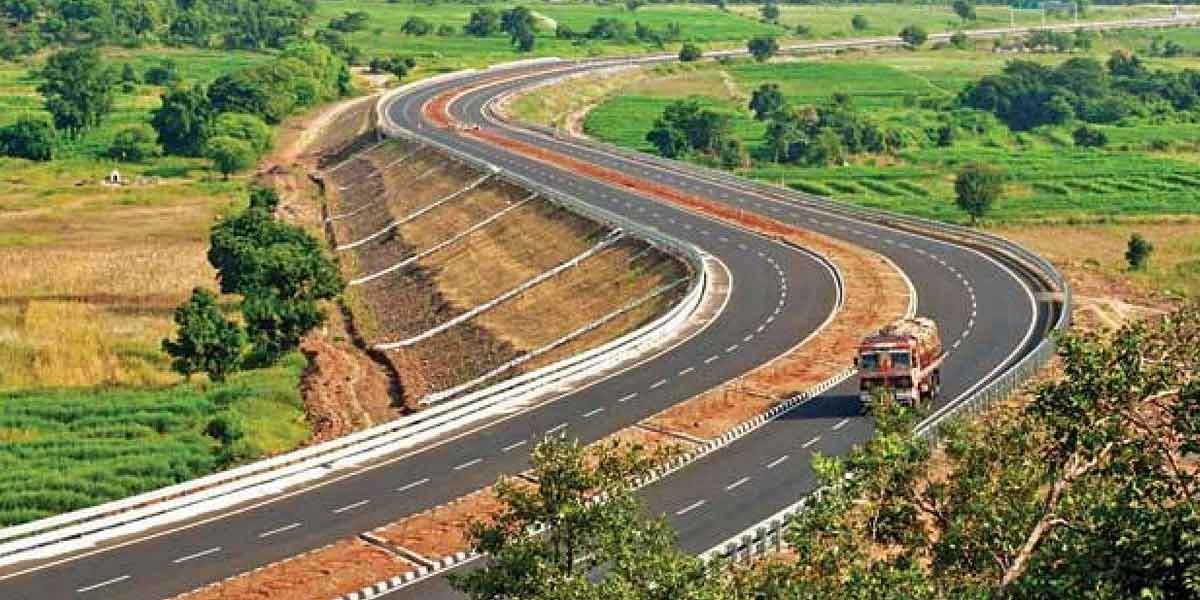
Icra reported that the cost of road projects under the Bharatmala Pariyojana (BMP) initiative has risen to Rs 10.64 trillion, exceeding the original estimate by more than double. The costs now average Rs 310.6 million per km, primarily attributed to an increase in input prices and land acquisition costs.

The approval of the Union cabinet is awaited for the revised expense plan for Bharatmala Phase-I. However, there has been a significant slowdown in the awarding of new projects, resulting in a 48% year-over-year (YoY) decrease in the volume of project awards. In the first seven months of FY24, only 2,595 km were granted compared to the 5,007 km awarded in the same period last year.

Icra estimates that awarding activity is expected to decline more than 30% YoY in FY24.

Ashish Modani, Vice President & Co-group Head, Corporate Ratings at Icra, stated, "The burden on the Ministry of Roads and Transport and Highways (MoRTH) in case of BOT (Toll) projects is much lower, given the substantial cost escalation in the BMP and consequent increase in funding requirement. The MoRTH has thus shifted its focus onto BOT (Toll) projects."

For engineering, procurement, and construction (EPC) and hybrid annuity model (HAM) projects, the average number of bidders was substantially higher at 15 and eight, respectively, compared to less than five for BOT projects. BOT projects demand greater initial equity and carry more market risk.

Icra reported that the cost of road projects under the Bharatmala Pariyojana (BMP) initiative has risen to Rs 10.64 trillion, exceeding the original estimate by more than double. The costs now average Rs 310.6 million per km, primarily attributed to an increase in input prices and land acquisition costs. The approval of the Union cabinet is awaited for the revised expense plan for Bharatmala Phase-I. However, there has been a significant slowdown in the awarding of new projects, resulting in a 48% year-over-year (YoY) decrease in the volume of project awards. In the first seven months of FY24, only 2,595 km were granted compared to the 5,007 km awarded in the same period last year. Icra estimates that awarding activity is expected to decline more than 30% YoY in FY24. Ashish Modani, Vice President & Co-group Head, Corporate Ratings at Icra, stated, The burden on the Ministry of Roads and Transport and Highways (MoRTH) in case of BOT (Toll) projects is much lower, given the substantial cost escalation in the BMP and consequent increase in funding requirement. The MoRTH has thus shifted its focus onto BOT (Toll) projects. For engineering, procurement, and construction (EPC) and hybrid annuity model (HAM) projects, the average number of bidders was substantially higher at 15 and eight, respectively, compared to less than five for BOT projects. BOT projects demand greater initial equity and carry more market risk.

Related Stories

Gold Stories
Next Story
Infrastructure Urban

KONE Opens India's First Digital Experience Centre in Pune

KONE, a global elevator and escalator manufacturer, has inaugurated its first Digital Experience Centre (DEC) in India, located in Pune. The facility aims to showcase how artificial intelligence (AI), connectivity and data-driven technologies can enhance customer experiences and improve building operations.The centre was inaugurated by Jussi Herlin, Executive Vice Chair, KONE Corporation; Philippe Delorme, President and CEO, KONE; and Nandan Nilekani, Co-founder and Chairman of the Board, Infosys.Designed as an interactive customer environment, the facility demonstrates digital solutions cover..

Next Story
Infrastructure Urban

CII GreenCo Launches Circularity Guidelines for Indian Industry

The Confederation of Indian Industry (CII) GreenCo Council has launched the CII GreenCo Circularity Guidelines – Pilot Version at the 17th CII GreenCo Waste & Resource Management Summit 2026 in Chennai. The initiative aims to strengthen resource efficiency, waste reduction and circular economy practices across Indian manufacturing and process industries.The guidelines introduce a structured framework with circularity indices covering raw materials, consumables, packaging and other resource inputs. These indicators will help industries assess existing practices, identify opportunities to ..

Next Story
Infrastructure Energy

Global Electronics Association Launches IPC-1783-CO2E Standard

The Global Electronics Association has introduced IPC-1783-CO2E, a new international standard aimed at improving consistency, transparency and comparability in product carbon footprint reporting across the electronics manufacturing industry.The standard, titled International Standard for Data Collection and Reporting of CO2 Equivalent (CO2e) Emissions for the Electronics Manufacturing Supply Chain, provides industry-specific guidance for collecting, estimating and reporting carbon emissions data.With increasing regulatory requirements and customer expectations, electronics manufacturers face c..

Advertisement

Subscribe to Our Newsletter

Get daily newsletters around different themes from Construction world.

STAY CONNECTED

Advertisement

SPECIAL OFFER
QR Code