Bhoma Blocks Banastarim Bridge And Highway Widening
ROADS & HIGHWAYS

Bhoma Blocks Banastarim Bridge And Highway Widening

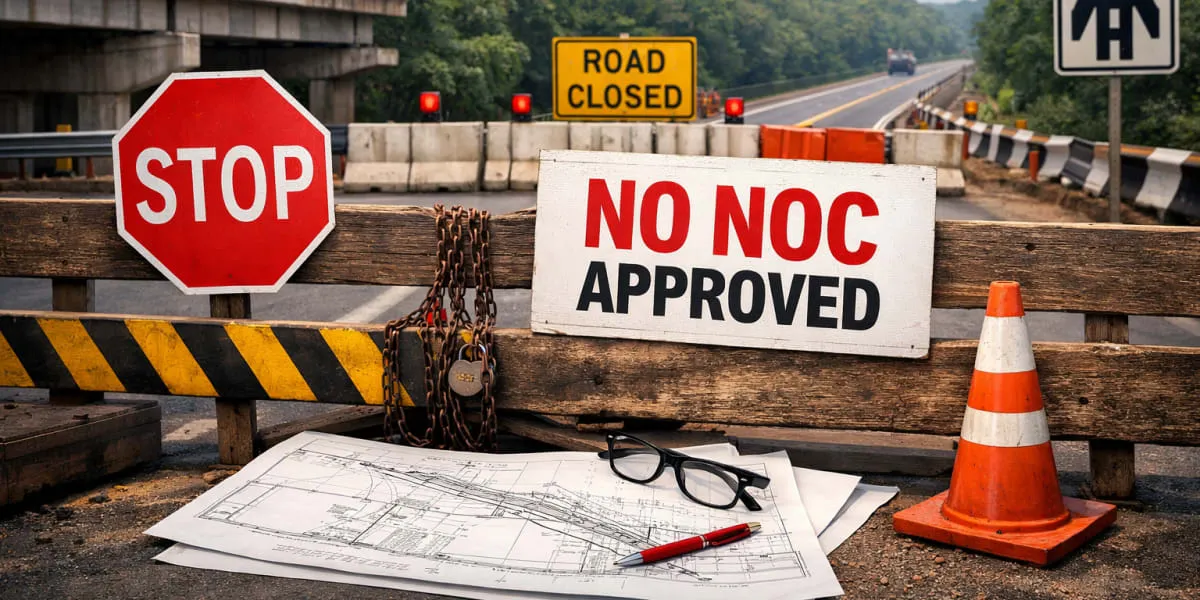
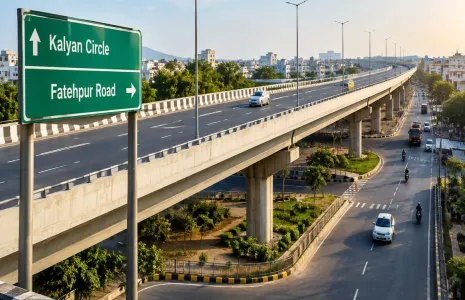
The Bhoma-Ad Colna Village Panchayat and agitating villagers have rejected and withheld the No Objection Certificate (NOC) for the proposed Banastarim Bridge and the four-lane National Highway NH-748 widening, halting work on the disputed stretch. The panchayat issued an ultimatum to the Goa government and said no structural permissions would be granted until the Public Works Department (PWD) publicly presented exact land acquisition blueprints for the Bhoma section. The position was announced during a joint briefing attended by sarpanch Abdul Khan, panchayat members and local leaders.

The sarpanch said the NOC was withheld because the PWD had combined the bridge application with the controversial four-laning of the Bhoma Old Goa stretch. He added that approval for the bridge would effectively clear the widening and that the panchayat had sent several memorandums to National Highway authorities without satisfactory responses. Officials had placed land acquisition markers on one side of the road while leaving the other side unmarked, which the panchayat found unacceptable.

A panchayat member said the village recognised the need for a new bridge but warned that unclear land boundaries threatened long-standing homes and temples. Villagers said they had been told the widening might use a tilted flyover or an elevated corridor to avoid ground damage, but no plan had been shared. The agitation leader said the community demanded a bypass outside the residential perimeter and questioned why a private contractor had been appointed and a Rs 15 billion (bn) sanction claimed without clear land acquisition plans.

The panchayat said its legal freeze on structural permissions would remain until transparent mapping and boundary presentations were held publicly in the village. It insisted any future approval must include clear written and visual plans showing which properties would be affected. The stance has brought the bridge and widening proposals to a halt on the disputed stretch and will persist until the Public Works Department engages with residents and fulfils the demand for public disclosure.

"Join industry leaders at RAHSTA Expo, India's premier platform for roads, highways and traffic infrastructure. Register now to explore innovations, network with experts and shape the future of mobility."

The Bhoma-Ad Colna Village Panchayat and agitating villagers have rejected and withheld the No Objection Certificate (NOC) for the proposed Banastarim Bridge and the four-lane National Highway NH-748 widening, halting work on the disputed stretch. The panchayat issued an ultimatum to the Goa government and said no structural permissions would be granted until the Public Works Department (PWD) publicly presented exact land acquisition blueprints for the Bhoma section. The position was announced during a joint briefing attended by sarpanch Abdul Khan, panchayat members and local leaders. The sarpanch said the NOC was withheld because the PWD had combined the bridge application with the controversial four-laning of the Bhoma Old Goa stretch. He added that approval for the bridge would effectively clear the widening and that the panchayat had sent several memorandums to National Highway authorities without satisfactory responses. Officials had placed land acquisition markers on one side of the road while leaving the other side unmarked, which the panchayat found unacceptable. A panchayat member said the village recognised the need for a new bridge but warned that unclear land boundaries threatened long-standing homes and temples. Villagers said they had been told the widening might use a tilted flyover or an elevated corridor to avoid ground damage, but no plan had been shared. The agitation leader said the community demanded a bypass outside the residential perimeter and questioned why a private contractor had been appointed and a Rs 15 billion (bn) sanction claimed without clear land acquisition plans. The panchayat said its legal freeze on structural permissions would remain until transparent mapping and boundary presentations were held publicly in the village. It insisted any future approval must include clear written and visual plans showing which properties would be affected. The stance has brought the bridge and widening proposals to a halt on the disputed stretch and will persist until the Public Works Department engages with residents and fulfils the demand for public disclosure.

Next Story
Infrastructure Energy

Hexa Climate Signs 100 MW Wind Solar PPA With CESC

Hexa Climate has signed a power purchase agreement with CESC Limited for the supply of 100 megawatt (MW) of Interstate Transmission System (ISTS) connected wind-solar hybrid power, at a tariff of Rs three point seven five per kWh fixed for 25 years. The contracted capacity is 100 MW while the installation will include 50 MW of solar and 100 MW of wind to enable hybrid generation from a site in Mandsaur, Madhya Pradesh. The tariff has been adopted by the West Bengal Electricity Regulatory Commission, providing regulatory assent for the long term arrangement. The agreement was secured through CE..

Next Story
Infrastructure Energy

JUWI Tops One GW Under Construction As Solar Portfolio Exceeds 900 MW

Renewable energy developer JUWI has reached a milestone of one gigawatt (GW) of renewable capacity under simultaneous construction across its global portfolio, reflecting expansion in solar and wind sectors. The firm said it is installing around 1.3 million (mn) solar modules across 12 photovoltaic (PV) projects and is constructing 46 wind turbines with a combined capacity of about 270 megawatt (MW). Overall, nearly one GW of additional capacity is expected to be commissioned in the coming months. Module installation has begun at the Trifylli solar park in northern Greece, part of the 156 MW C..

Next Story
Infrastructure Energy

MNRE Clarifies ALMM List-II Rules For Government Rooftop Solar

The Ministry of New and Renewable Energy issued a memorandum dated 6 July 2026 clarifying implementation of the Approved List of Models and Manufacturers (ALMM) List-II requirements for solar photovoltaic (PV) cells in rooftop solar projects on government buildings. The clarification restated that ALMM List-I covers solar PV modules while ALMM List-II applies to solar PV cells and that the framework seeks to promote the use of domestically manufactured equipment. The mandatory application of List-II had been scheduled from 1 June 2026, but industry representations prompted the ministry to spec..

Advertisement

Subscribe to Our Newsletter

Get daily newsletters around different themes from Construction world.

STAY CONNECTED

Advertisement

Advertisement

Advertisement