

Centre Plans Ring Roads To Ease Urban Traffic
ROADS & HIGHWAYS

Centre Plans Ring Roads To Ease Urban Traffic

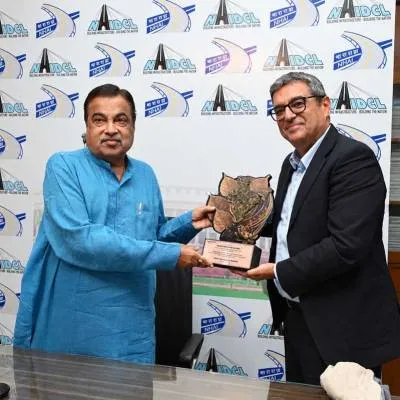
The Central Government is set to prioritise the construction of ring roads, bypasses, and elevated corridors to address urban congestion and improve connectivity across Indian cities. This was discussed at a consultation workshop organised by the Ministry of Road Transport and Highways (MoRTH) on Wednesday, led by Union Minister Nitin Gadkari, with participation from state and union territory representatives.
The session focused on draft policies that include the Urban Decongestion Policy, reforms in National Highway administration, and strategies for reusing inert waste from urban landfills in infrastructure works.
The Urban Decongestion Policy aims to alleviate traffic on National Highways passing through cities with populations exceeding one lakh by integrating access-controlled ring roads and bypasses with urban master plans. It proposes cost-sharing frameworks and innovative financing tools such as Value Capture Financing to accelerate implementation.
Another key proposal discussed was the reuse of inert landfill waste for building highway embankments. Officials noted that this method helps reduce reliance on natural soil, cuts construction costs, and supports urban solid waste management. Successful pilots like the UER-II in Delhi and the Ahmedabad–Dholera Expressway have demonstrated its viability. The Ministry has identified 15 major dump sites, which together account for around 600 million metric tonnes of the country’s legacy waste, and plans to sign MoUs with local municipalities for sourcing the material.
The State Road Development Policy was also deliberated upon, with the Centre proposing assistance to upgrade busy State Highways to four-lane corridors or more. The plan encourages Public-Private Partnerships (PPPs) to draw private capital and improve interstate and regional connectivity.
Senior officials from MoRTH presented the draft policies, joined by representatives from the Ministry of Housing and Urban Affairs and Municipal Corporation of Delhi. State governments shared region-specific suggestions and administrative insights, which will be factored into the final versions of the policies.
Ministry officials confirmed that constructive inputs were received and will be incorporated to ensure practical and regionally aligned implementation strategies.

The Central Government is set to prioritise the construction of ring roads, bypasses, and elevated corridors to address urban congestion and improve connectivity across Indian cities. This was discussed at a consultation workshop organised by the Ministry of Road Transport and Highways (MoRTH) on Wednesday, led by Union Minister Nitin Gadkari, with participation from state and union territory representatives.The session focused on draft policies that include the Urban Decongestion Policy, reforms in National Highway administration, and strategies for reusing inert waste from urban landfills in infrastructure works.The Urban Decongestion Policy aims to alleviate traffic on National Highways passing through cities with populations exceeding one lakh by integrating access-controlled ring roads and bypasses with urban master plans. It proposes cost-sharing frameworks and innovative financing tools such as Value Capture Financing to accelerate implementation.Another key proposal discussed was the reuse of inert landfill waste for building highway embankments. Officials noted that this method helps reduce reliance on natural soil, cuts construction costs, and supports urban solid waste management. Successful pilots like the UER-II in Delhi and the Ahmedabad–Dholera Expressway have demonstrated its viability. The Ministry has identified 15 major dump sites, which together account for around 600 million metric tonnes of the country’s legacy waste, and plans to sign MoUs with local municipalities for sourcing the material.The State Road Development Policy was also deliberated upon, with the Centre proposing assistance to upgrade busy State Highways to four-lane corridors or more. The plan encourages Public-Private Partnerships (PPPs) to draw private capital and improve interstate and regional connectivity.Senior officials from MoRTH presented the draft policies, joined by representatives from the Ministry of Housing and Urban Affairs and Municipal Corporation of Delhi. State governments shared region-specific suggestions and administrative insights, which will be factored into the final versions of the policies.Ministry officials confirmed that constructive inputs were received and will be incorporated to ensure practical and regionally aligned implementation strategies.

Next Story
Real Estate

Integrated Waterproofing Strategies

Waterproofing buildings used to be an annual pre-monsoon affair but the evolution of real-estate development has changed that approach. In new developments, developers are weaving waterproofing solutions into both the design and construction phases, an approach that Nikhil Madan, Managing Director, Mahima Group, says, “is all about ensuring lasting durability [of the building] and keeping lifecycle risks including water seepage and extensive maintenance to a minimum.”Watertight by designAluminium formwork systems aren’t commonly thought of as a waterproofing tool but at the Mahima Group,..

Next Story
Infrastructure Urban

GROHE Showcases Water-Led Design At Milan

GROHE unveiled its GROHE SPA Aqua Sanctuary at Milan Design Week 2026, transforming Piccolo Teatro Studio Melato into an immersive showcase of water, design and wellbeing. Built on the philosophy of ‘Wellbeing Through Water’, the installation reimagined bathrooms as holistic spaces for relaxation, rejuvenation and self-care.The Aqua Sanctuary was presented through three interconnected sanctums. The first showcased the 3D-printed GROHE SPA AquaTree shower and faucet, highlighting bespoke innovation and biophilic design. The second featured the Atrio Private Collection and GROHE SPA x Buster..

Next Story
Infrastructure Transport

Rahee Group Expands Rail Manufacturing Capacity

Rahee Group has outlined a multi-year investment roadmap to expand its operational footprint and strengthen manufacturing capabilities for India’s growing railway and urban transit sector. The Group is expanding in Odisha with a new Track Component Casting Unit, for which the groundbreaking ceremony was held on 8 April 2026 in the presence of Odisha Chief Minister Mohan Charan Majhi.The Group’s flagship EPC arm, Rahee Infratech Ltd, continues to focus on complex rail infrastructure projects, including track systems, bridges, viaducts and ballastless infrastructure. Its wholly owned subsidi..

Advertisement

Subscribe to Our Newsletter

Get daily newsletters around different themes from Construction world.

STAY CONNECTED

Advertisement

Advertisement

Advertisement