Chennai’s Port-Maduravoyal expressway to cost over Rs 5,000 cr
ROADS & HIGHWAYS

Chennai’s Port-Maduravoyal expressway to cost over Rs 5,000 cr

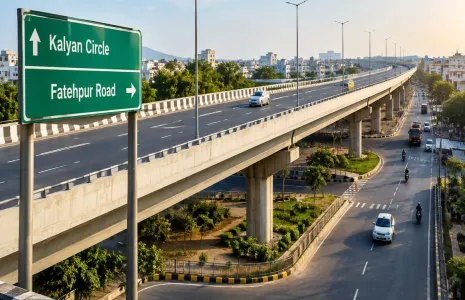
The double-decker expressway at Chennai Port-Maduravoyal will have more access points with an increased estimate. The National Highways Authority of India revised the project cost from Rs 3,100 crore to Rs 5,000 crore.

According to the sources, instead of the previous design of three entries and three exits, it will now have seven entries and six exits. The six-lane flyover can cost between Rs 5,000 crore to Rs 5,500 crore.

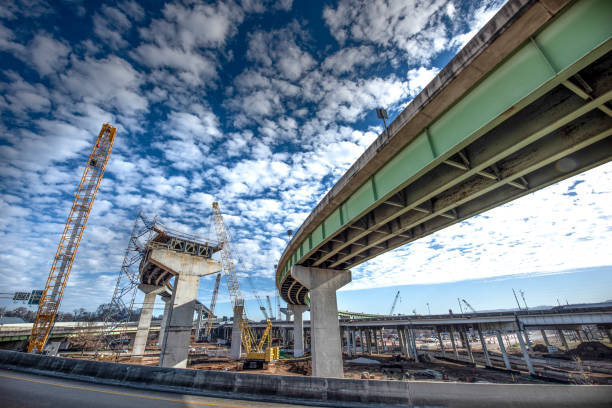
Out of its 20.6 km stretch, 14 km will be two tiers from Napier bridge to Koyambedu. The lowest of the tier is for local traffic, and the upper for the vehicles travelling directly to Chennai Port.

As per NHAI's official, it has started preparing a detailed project report (DPR) on the alignment of the project and trying to get the Coastal Regulatory Zone (CRZ) clearance from the environmental department.

At NHAI's request, the Tamil Nadu government has approved reimbursing the royalty for the raw materials, including earth and gravel, for road projects.

NHAI would sign a Memorandum of Understanding (MoU) with the Tamil Nadu state government to commence the project, an official said. NHAI has also agreed to the proposals and suggestions given by the state government.

The government wants a connecting link to the expressway at Chintadripet, Montieth road, Binny road, Spurtank road, and near the K3 police station. NHAI has agreed to it in principle and has redirected it to the technical department to study the feasibility.

As per the original plan of the project, six ramps were planned to be built at Kamarajar Salai, Sivananda Salai, College road, Spurtank road, and Arumbakkam.

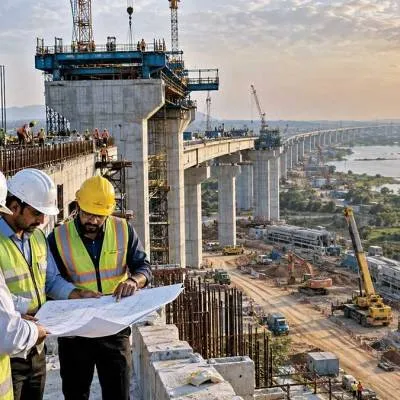
According to the officials, since the state government agreed on it in principle to expedite the project, NHAI would begin the construction work by 2022, and the bids will be invited by September end.

The technical department is also studying the stability of the pillars along with the alignment of the project.

Image Source


Also read: Chennai to add three more flyovers at cost of Rs 335 cr

The double-decker expressway at Chennai Port-Maduravoyal will have more access points with an increased estimate. The National Highways Authority of India revised the project cost from Rs 3,100 crore to Rs 5,000 crore. According to the sources, instead of the previous design of three entries and three exits, it will now have seven entries and six exits. The six-lane flyover can cost between Rs 5,000 crore to Rs 5,500 crore. Out of its 20.6 km stretch, 14 km will be two tiers from Napier bridge to Koyambedu. The lowest of the tier is for local traffic, and the upper for the vehicles travelling directly to Chennai Port. As per NHAI's official, it has started preparing a detailed project report (DPR) on the alignment of the project and trying to get the Coastal Regulatory Zone (CRZ) clearance from the environmental department. At NHAI's request, the Tamil Nadu government has approved reimbursing the royalty for the raw materials, including earth and gravel, for road projects. NHAI would sign a Memorandum of Understanding (MoU) with the Tamil Nadu state government to commence the project, an official said. NHAI has also agreed to the proposals and suggestions given by the state government. The government wants a connecting link to the expressway at Chintadripet, Montieth road, Binny road, Spurtank road, and near the K3 police station. NHAI has agreed to it in principle and has redirected it to the technical department to study the feasibility. As per the original plan of the project, six ramps were planned to be built at Kamarajar Salai, Sivananda Salai, College road, Spurtank road, and Arumbakkam. According to the officials, since the state government agreed on it in principle to expedite the project, NHAI would begin the construction work by 2022, and the bids will be invited by September end. The technical department is also studying the stability of the pillars along with the alignment of the project. Image Source Also read: Chennai to add three more flyovers at cost of Rs 335 cr

Next Story
Infrastructure Energy

Moro Hub and PwC Middle East Partner to Accelerate Smart City Solutions

Moro Hub, a subsidiary of Digital DEWA, the digital arm of Dubai Electricity and Water Authority (DEWA), has announced a strategic collaboration with PwC Middle East to advance Smart City, Integrated Command Centre (ICC), Critical Infrastructure Monitoring and Internet of Things (IoT) initiatives across the region. The partnership brings together Moro Hub’s digital infrastructure and IoT capabilities with PwC’s global expertise in digital trust, smart city strategy and cybersecurity to support the UAE’s vision for intelligent and sustainable cities.“Our collaboration with PwC Middle Ea..

Next Story
Equipment

ABB India Unveils ACS380-E Drive for High-Performance Automation

ABB India has launched the ACS380-E drive, a next-generation machinery drive designed for automation-centric machine building, adding to its all-compatible drive portfolio. The solution simplifies machine integration and is future-proofed for industrial automation with advanced connectivity, faster commissioning and built-in cybersecurity capabilities.The ACS380-E features integrated dual Ethernet ports for plug-and-play communication with all major industrial automation networks, eliminating the need for separate modules and reducing installation complexity. The drive also supports fast USB-C..

Next Story
Building Material

Cement Makers Positive on H2 Demand Outlook

The leading cement producers have posted high single-digit volume growth and better sales realisation in the July–September quarter, setting a positive tone for the second half of FY26. Companies are upbeat on demand prospects, supported by a strong housing sector and continued government spending on major infrastructure projects. UltraTech, Ambuja Cement, Shree Cement, Dalmia Bharat and Nuvoco Vistas recorded revenue growth of up to 18 per cent in the September quarter. The rise was driven by firm realisations, softer input costs and an increased share of premium products. With coal price..

Advertisement

Subscribe to Our Newsletter

Get daily newsletters around different themes from Construction world.

STAY CONNECTED

Advertisement

Advertisement

Advertisement

Advertisement

Get CW App