Chilla Elevated Road in Delhi Receives Rs 801 Cr Budget Clearance
ROADS & HIGHWAYS

Chilla Elevated Road in Delhi Receives Rs 801 Cr Budget Clearance

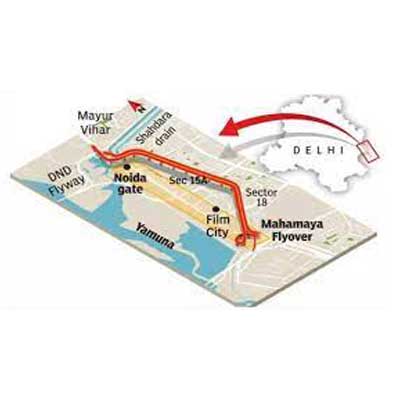
The delayed Chilla Elevated Road is expected to see movement, which is good news for Delhi-Noida travelers, since a budget has finally been assigned to the project, which has been stuck since 2021 due to a lack of funding. The 5.9-kilometer corridor, which connects Mayur Vihar to the Greater Noida Expressway, is intended to dramatically reduce traffic congestion on the Delhi-Noida link route.

The elevated road will aid lakhs of travelers between Noida and Delhi who currently face traffic jams and chokepoints. It will link Mayur Vihar's Chilla to Noida's Mahamaya Flyover, where the Greater Noida Expressway begins. This will transform the route from Delhi to Pari Chowk into a nonstop, high-speed corridor.

The project has been authorized by the UP government's expenditure finance committee (EFC), and the proposal will now be referred to the state cabinet for approval. Following approval from the cabinet, a new tender will be published to locate a firm to complete the project.

Officials stated the Noida Authority and the Public Works Department (PWD) would split the project funds equally.

The Uttar Pradesh State Bridge Corporation Ltd (UPSBC), the institution in charge of building the elevated road till now, will now hire a private business to finish the job. According to officials, this was the first time in recent memory that a construction agency hired another contractor for the task allocated to it.

The budget for the Chilla elevated road project has been altered multiple times in recent years, adding to the project's delay.

The project was anticipated to cost Rs 6.05 billion in 2019. After three years, the bridge corporation raised its budget to Rs 10.76 billion in 2022. Nevertheless, the Noida Authority rejected the idea, prompting the corporation to reduce the cost to Rs 9.12 billion.

When the Authority was still dissatisfied, a private expert examined the estimate, which was cut to Rs 8.1 billion. The ultimate cost was agreed upon by IIT-Bombay, which agreed on Rs 8.1 billion.

In September 2022, EFC requested a file on the amount Noida Authority and PWD required to spend on the project from the bridge corporation. After reviewing the report, the budget was approved.

See also:
Revised Chilla elevated road budget sent to IIT-Roorkee for review
3,000 km roads; 9 bridges to be constructed in Odisha in 2023-24

The delayed Chilla Elevated Road is expected to see movement, which is good news for Delhi-Noida travelers, since a budget has finally been assigned to the project, which has been stuck since 2021 due to a lack of funding. The 5.9-kilometer corridor, which connects Mayur Vihar to the Greater Noida Expressway, is intended to dramatically reduce traffic congestion on the Delhi-Noida link route. The elevated road will aid lakhs of travelers between Noida and Delhi who currently face traffic jams and chokepoints. It will link Mayur Vihar's Chilla to Noida's Mahamaya Flyover, where the Greater Noida Expressway begins. This will transform the route from Delhi to Pari Chowk into a nonstop, high-speed corridor. The project has been authorized by the UP government's expenditure finance committee (EFC), and the proposal will now be referred to the state cabinet for approval. Following approval from the cabinet, a new tender will be published to locate a firm to complete the project. Officials stated the Noida Authority and the Public Works Department (PWD) would split the project funds equally. The Uttar Pradesh State Bridge Corporation Ltd (UPSBC), the institution in charge of building the elevated road till now, will now hire a private business to finish the job. According to officials, this was the first time in recent memory that a construction agency hired another contractor for the task allocated to it. The budget for the Chilla elevated road project has been altered multiple times in recent years, adding to the project's delay. The project was anticipated to cost Rs 6.05 billion in 2019. After three years, the bridge corporation raised its budget to Rs 10.76 billion in 2022. Nevertheless, the Noida Authority rejected the idea, prompting the corporation to reduce the cost to Rs 9.12 billion. When the Authority was still dissatisfied, a private expert examined the estimate, which was cut to Rs 8.1 billion. The ultimate cost was agreed upon by IIT-Bombay, which agreed on Rs 8.1 billion. In September 2022, EFC requested a file on the amount Noida Authority and PWD required to spend on the project from the bridge corporation. After reviewing the report, the budget was approved. See also: Revised Chilla elevated road budget sent to IIT-Roorkee for review 3,000 km roads; 9 bridges to be constructed in Odisha in 2023-24

Related Stories

Gold Stories

Next Story
Infrastructure Urban

KONE Opens India's First Digital Experience Centre in Pune

KONE, a global elevator and escalator manufacturer, has inaugurated its first Digital Experience Centre (DEC) in India, located in Pune. The facility aims to showcase how artificial intelligence (AI), connectivity and data-driven technologies can enhance customer experiences and improve building operations.The centre was inaugurated by Jussi Herlin, Executive Vice Chair, KONE Corporation; Philippe Delorme, President and CEO, KONE; and Nandan Nilekani, Co-founder and Chairman of the Board, Infosys.Designed as an interactive customer environment, the facility demonstrates digital solutions cover..

Next Story
Infrastructure Urban

CII GreenCo Launches Circularity Guidelines for Indian Industry

The Confederation of Indian Industry (CII) GreenCo Council has launched the CII GreenCo Circularity Guidelines – Pilot Version at the 17th CII GreenCo Waste & Resource Management Summit 2026 in Chennai. The initiative aims to strengthen resource efficiency, waste reduction and circular economy practices across Indian manufacturing and process industries.The guidelines introduce a structured framework with circularity indices covering raw materials, consumables, packaging and other resource inputs. These indicators will help industries assess existing practices, identify opportunities to ..

Next Story
Infrastructure Energy

Global Electronics Association Launches IPC-1783-CO2E Standard

The Global Electronics Association has introduced IPC-1783-CO2E, a new international standard aimed at improving consistency, transparency and comparability in product carbon footprint reporting across the electronics manufacturing industry.The standard, titled International Standard for Data Collection and Reporting of CO2 Equivalent (CO2e) Emissions for the Electronics Manufacturing Supply Chain, provides industry-specific guidance for collecting, estimating and reporting carbon emissions data.With increasing regulatory requirements and customer expectations, electronics manufacturers face c..

Advertisement

Subscribe to Our Newsletter

Get daily newsletters around different themes from Construction world.

STAY CONNECTED

Advertisement

SPECIAL OFFER
QR Code