+
Commercial vehicle industry volumes to see 7-10 pc growth
ROADS & HIGHWAYS

Commercial vehicle industry volumes to see 7-10 pc growth

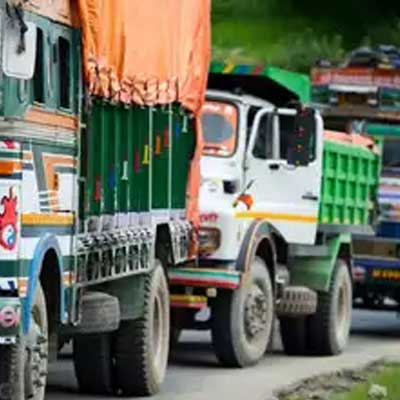
According to rating agency Icra, the commercial vehicle market volume is anticipated to increase by 7 to 10% in the upcoming fiscal year. The expansion of e-commerce, back-to-school and office seasons, replacement demand, government infrastructure spending, and back-to-work scenarios would all contribute to the volume growth, it was underlined.

However, it added, the growth will slow from 24-26% in the current fiscal year.

Icra stated that the macroeconomic environment has improved, replacement demand has increased by 16% year over year, and the underlying industries such as steel, cement, mining, automobiles, and e-commerce have shown strong traction. These growth trends were evident in the third quarter of the current fiscal, according to wholesale dispatches.

It was highlighted that freight rates were still holding steady and that this, along with good freight availability, was sustaining fleet operator viability.

Medium and heavy commercial vehicles (M&HCV), light commercial vehicles (LCV), and buses all had broad-based growth patterns in the third quarter and the nine months that concluded on December 31, 2022, according to Icra.

Icra Assistant Vice President & Sector Head - Corporate Ratings Sruthi Thomas stated that "sales in the domestic CV industry continue to be propelled by multiple tailwinds including replacement of ageing vehicles, pick-up in mining, infrastructure, and construction activities, improvement in the overall macroeconomic environment, and healthy fleet utilisation levels resulting in improved fleet operator viability.

The increased capex spending of Rs 10 trillion in the Union Budget for 2023–24, which is further proof of the government's continuous emphasis on infrastructure development, bodes well for sustainable growth, particularly in the heavy truck category over the short term, she noted.

Icra anticipates that the CV OEMs' financial performance will also improve, driven by lower operating costs and a reduction in commodity prices. As a result, the combined operating profit margin of CV OEMs is anticipated to increase to 6% in FY2023 and further in the following fiscal year.

According to rating agency Icra, the commercial vehicle market volume is anticipated to increase by 7 to 10% in the upcoming fiscal year. The expansion of e-commerce, back-to-school and office seasons, replacement demand, government infrastructure spending, and back-to-work scenarios would all contribute to the volume growth, it was underlined. However, it added, the growth will slow from 24-26% in the current fiscal year. Icra stated that the macroeconomic environment has improved, replacement demand has increased by 16% year over year, and the underlying industries such as steel, cement, mining, automobiles, and e-commerce have shown strong traction. These growth trends were evident in the third quarter of the current fiscal, according to wholesale dispatches. It was highlighted that freight rates were still holding steady and that this, along with good freight availability, was sustaining fleet operator viability. Medium and heavy commercial vehicles (M&HCV), light commercial vehicles (LCV), and buses all had broad-based growth patterns in the third quarter and the nine months that concluded on December 31, 2022, according to Icra. Icra Assistant Vice President & Sector Head - Corporate Ratings Sruthi Thomas stated that sales in the domestic CV industry continue to be propelled by multiple tailwinds including replacement of ageing vehicles, pick-up in mining, infrastructure, and construction activities, improvement in the overall macroeconomic environment, and healthy fleet utilisation levels resulting in improved fleet operator viability. The increased capex spending of Rs 10 trillion in the Union Budget for 2023–24, which is further proof of the government's continuous emphasis on infrastructure development, bodes well for sustainable growth, particularly in the heavy truck category over the short term, she noted. Icra anticipates that the CV OEMs' financial performance will also improve, driven by lower operating costs and a reduction in commodity prices. As a result, the combined operating profit margin of CV OEMs is anticipated to increase to 6% in FY2023 and further in the following fiscal year.

Next Story
Infrastructure Urban

Implementation Status of Jal Jeevan Mission

Since August 2019 the Government has implemented Jal Jeevan Mission to provide assured potable water through household tap connections in rural India. At the start of the mission only 32.3 million (mn) rural households, representing 16.7 per cent, were reported to have tap water connections. States and union territories have reported that 125.8 mn additional rural households have since been provided with tap connections. As a result, of about 193.6 mn rural households roughly 158.2 mn, or 81.71 per cent, are reported to have tap water supply at home.\n\nThe State, district and village level st..

Next Story
Infrastructure Urban

Jal Jeevan Mission Reaches Eighty One Per Cent Rural Coverage

The Government reported substantial progress under the Jal Jeevan Mission, launched in August 2019 to provide tap water to every rural household. At launch only 32.3 million (mn) rural households had tap connections and states and Union territories reported provision of 125.8 mn additional households by March 2026. Consequently, out of about 193.6 mn rural households around 158.2 mn, or 81.71 per cent, are reported to have tap water at home. The Finance Minister announced extension of the mission until 2028 in the 2025-26 budget speech. The Swachh Bharat Mission Grameen, launched in October 20..

Next Story
Infrastructure Urban

Empowering Local Governance for Sustainable Rural Water Supply

The Ministry of Jal Shakti has aligned the Jal Jeevan Mission (JJM) with the 73rd Amendment to strengthen village level planning and community ownership of water supply. Gram Panchayats, village water and sanitation committees and Pani Samitis are to plan, implement, manage and maintain piped water systems, with gram sabha processes formalising handover and oversight. Implementation support agencies including non government organisations, community based organisations and self help groups have been empanelled to train local committees and promote women participation. Under JJM, the department ..

Advertisement

Subscribe to Our Newsletter

Get daily newsletters around different themes from Construction world.

STAY CONNECTED

Advertisement

Advertisement

Advertisement