Congress MLA questions toll tax practices, alleges govt contractors
ROADS & HIGHWAYS

Congress MLA questions toll tax practices, alleges govt contractors

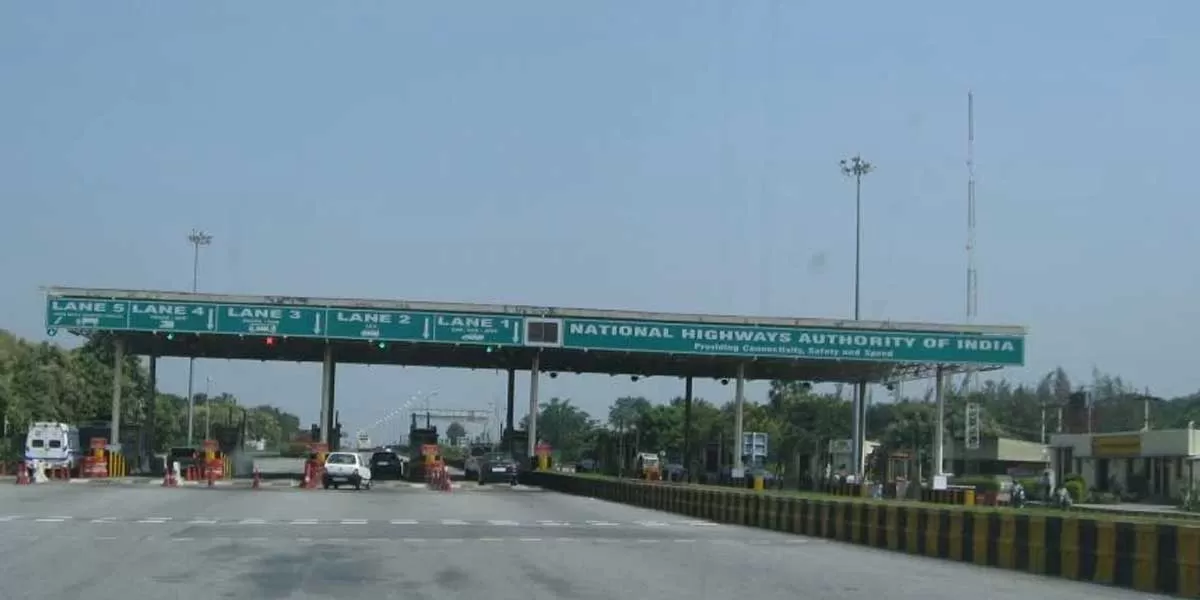
During the Question Hour, Pankaj Upadhyay, a first-time Congress MLA from Jaura assembly, queried Minister for PWD Rakesh Singh about the government's priorities—whether it is serving the people or favouring contractors. Upadhyay specifically raised concerns about toll-tax collections on three highways, where the tolls exceeded the road construction costs by three to four times.

Upadhyay scrutinised toll tax data from three plazas, highlighting instances such as Dewas, where the toll was initially Rs 4.26 billion but had already garnered Rs 13.42 billion. Similarly, the Jabra Naya Villa toll, initially set at Rs 4.25 billion, had accumulated Rs 20.69 billion. Expressing his skepticism, Upadhyay questioned the government's commitment to the people, especially when toll taxes are not only persistently collected but also increased annually by 10% to 15%.

Seeking clarification, Upadhyay inquired about the total amount collected and the duration of ongoing toll tax collections. He emphasised that the government should be dedicated to reducing costs and inflation for the public.

Minister Singh responded, acknowledging the complexities of contracts signed in 2005 for 15 years and varying Public-Private Partnership (PPP) modes. He explained the financial responsibilities of contractors, including the maintenance of roads for the stipulated period and repaying loans with interest.

Another Congress MLA, Dinesh Gurjar, pointed out discrepancies in toll tax practices, highlighting instances where tolls were increased every year and imposed on roads used by poor farmers and labourers in Morena constituency. Gurjar accused the toll stations of engaging in robbery.

Minister Singh addressed these concerns, noting that the toll station locations were determined before municipal corporation limits were established. He assured that the National Highways Authority of India (NHAI) had been informed, a feasibility report was underway, and decisions would be made based on the findings to address the issues raised by the honourable members.

During the Question Hour, Pankaj Upadhyay, a first-time Congress MLA from Jaura assembly, queried Minister for PWD Rakesh Singh about the government's priorities—whether it is serving the people or favouring contractors. Upadhyay specifically raised concerns about toll-tax collections on three highways, where the tolls exceeded the road construction costs by three to four times.Upadhyay scrutinised toll tax data from three plazas, highlighting instances such as Dewas, where the toll was initially Rs 4.26 billion but had already garnered Rs 13.42 billion. Similarly, the Jabra Naya Villa toll, initially set at Rs 4.25 billion, had accumulated Rs 20.69 billion. Expressing his skepticism, Upadhyay questioned the government's commitment to the people, especially when toll taxes are not only persistently collected but also increased annually by 10% to 15%.Seeking clarification, Upadhyay inquired about the total amount collected and the duration of ongoing toll tax collections. He emphasised that the government should be dedicated to reducing costs and inflation for the public.Minister Singh responded, acknowledging the complexities of contracts signed in 2005 for 15 years and varying Public-Private Partnership (PPP) modes. He explained the financial responsibilities of contractors, including the maintenance of roads for the stipulated period and repaying loans with interest.Another Congress MLA, Dinesh Gurjar, pointed out discrepancies in toll tax practices, highlighting instances where tolls were increased every year and imposed on roads used by poor farmers and labourers in Morena constituency. Gurjar accused the toll stations of engaging in robbery.Minister Singh addressed these concerns, noting that the toll station locations were determined before municipal corporation limits were established. He assured that the National Highways Authority of India (NHAI) had been informed, a feasibility report was underway, and decisions would be made based on the findings to address the issues raised by the honourable members.

Next Story
Infrastructure Transport

Tunnelling Begins for Thane, Borivali twin tunnel project

Tunnelling work has commenced for the 11.84-km Thane–Borivali Twin Tunnel, set to be India’s longest urban road tunnel, marking a key milestone in Mumbai’s infrastructure development.As per a post shared by Mumbai Metropolitan Region Development Authority on social media platform X, the tunnel boring machine (TBM) ‘Nayak’—the country’s largest single-shield hard rock TBM for an urban tunnel—was launched by Devendra Fadnavis on Tuesday. The event was attended by Eknath Shinde and Sunetra Pawar, among other dignitaries. A second TBM, ‘Arjuna’, is expected to be launched so..

Next Story
Infrastructure Transport

Large Format Store Planned At M G Road Metro Station

M G Road station in Bengaluru is set to host the city’s first large-format commercial and experience space, with planning led by Bangalore Metro Rail Corporation Limited. BMRCL has invited proposals to develop and operate a central business district destination at the Purple?Pink Line interchange. The plan positions the station as a commercial hub designed to serve a broad commuter base across the city. The proposal is part of a broader effort to activate transit nodes commercially. Tender documents set a minimum monthly rental of Rs 0.944 million (mn), inclusive of GST, for the large-format..

Next Story
Infrastructure Energy

Government Cancels Auction Of Eleven Critical Mineral Blocks

The government has cancelled the auction of 11 critical and strategic mineral blocks after receiving a poor investor response and failing to attract a sufficient number of qualified bidders. The decision represents a setback to plans to ramp up domestic exploration and production of critical minerals amid global supply chain disruptions and rising demand for materials used in clean energy and advanced technologies. The mines ministry issued an annulment notice setting out the reasons for the cancellations. The annulment notice indicated that the auction process for five mineral blocks was canc..

Advertisement

Subscribe to Our Newsletter

Get daily newsletters around different themes from Construction world.

STAY CONNECTED

Advertisement

Advertisement

Advertisement