Delhi Grants Road Tax Relief For EVs Priced Up To Rs Three Million
ROADS & HIGHWAYS

Delhi Grants Road Tax Relief For EVs Priced Up To Rs Three Million

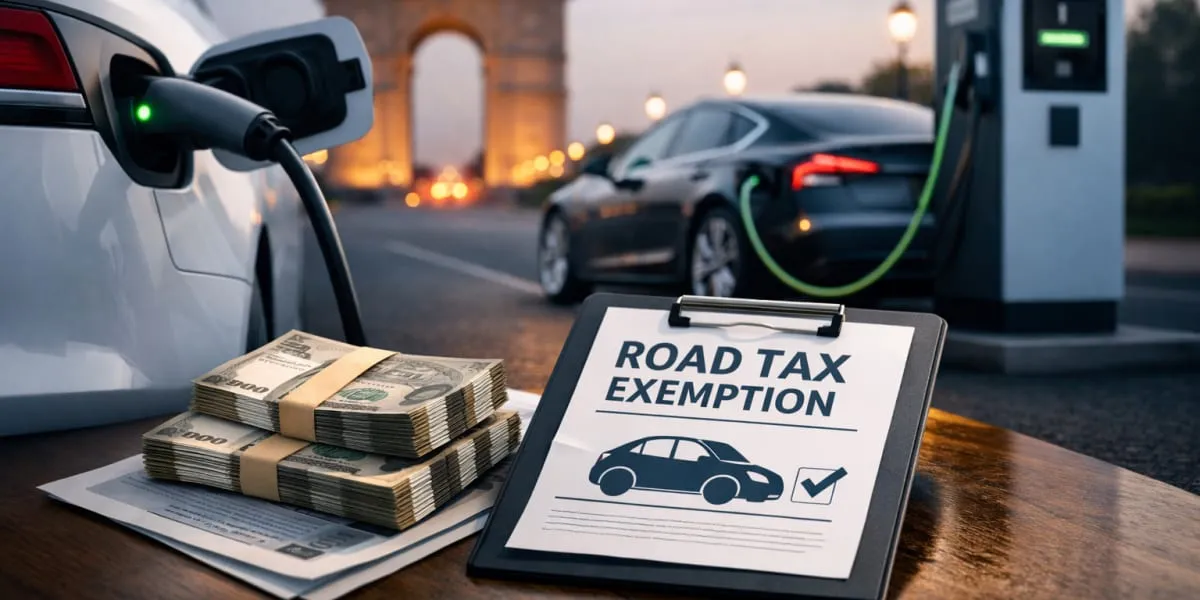
The Delhi government approved a new electric vehicle policy under which all electric cars with an ex-showroom price of up to Rs three million (mn) registered in the national capital will be exempt from 100 per cent road tax and registration fees. The measure aims to accelerate adoption of battery electric vehicles and reduce urban emissions. The scheme covers multiple vehicle categories and sets timebound incentives.

Buyers of electric two-wheelers will receive a purchase subsidy of Rs 30,000 in the first year, Rs 20,000 in the second and Rs 10,000 in the third. Electric three-wheelers will get incentives of Rs 50,000, Rs 40,000 and Rs 30,000 across the three years. Owners of N1 electric trucks, defined as goods carriers with a gross vehicle weight not exceeding three point five tonnes (t), may be eligible for up to Rs 0.1 million (mn) and those who scrap BS-IV or older four-wheelers and shift to electric models will receive Rs 0.1 million (mn) as a scrapping incentive. Officials said hybrids will not receive subsidies.

Registration rules include timelines for phasing in electric vehicles. Only electric auto-rickshaws will be registered in Delhi from January one, 2027, and new petrol and CNG two-wheelers will be phased out so that only electric two-wheelers may be registered from April one, 2028. The policy envisages expansion of charging infrastructure and vehicle scrapping facilities to support the transition. Officials framed the approach as part of a wider push to tackle vehicular pollution.

The chief minister indicated that around Rs 150 billion (bn) will be invested under the policy over the next four years to promote electric mobility and reduce pollution, and that the policy will take effect from July one. She characterised the move as a major step towards making Delhi a pollution-free city by March thirty one, 2030. Implementation will be monitored through expansion of charging points and establishment of scrapping centres across the city.

The Delhi government approved a new electric vehicle policy under which all electric cars with an ex-showroom price of up to Rs three million (mn) registered in the national capital will be exempt from 100 per cent road tax and registration fees. The measure aims to accelerate adoption of battery electric vehicles and reduce urban emissions. The scheme covers multiple vehicle categories and sets timebound incentives. Buyers of electric two-wheelers will receive a purchase subsidy of Rs 30,000 in the first year, Rs 20,000 in the second and Rs 10,000 in the third. Electric three-wheelers will get incentives of Rs 50,000, Rs 40,000 and Rs 30,000 across the three years. Owners of N1 electric trucks, defined as goods carriers with a gross vehicle weight not exceeding three point five tonnes (t), may be eligible for up to Rs 0.1 million (mn) and those who scrap BS-IV or older four-wheelers and shift to electric models will receive Rs 0.1 million (mn) as a scrapping incentive. Officials said hybrids will not receive subsidies. Registration rules include timelines for phasing in electric vehicles. Only electric auto-rickshaws will be registered in Delhi from January one, 2027, and new petrol and CNG two-wheelers will be phased out so that only electric two-wheelers may be registered from April one, 2028. The policy envisages expansion of charging infrastructure and vehicle scrapping facilities to support the transition. Officials framed the approach as part of a wider push to tackle vehicular pollution. The chief minister indicated that around Rs 150 billion (bn) will be invested under the policy over the next four years to promote electric mobility and reduce pollution, and that the policy will take effect from July one. She characterised the move as a major step towards making Delhi a pollution-free city by March thirty one, 2030. Implementation will be monitored through expansion of charging points and establishment of scrapping centres across the city.

Related Stories

Gold Stories

Next Story
Infrastructure Urban

KONE Opens India's First Digital Experience Centre in Pune

KONE, a global elevator and escalator manufacturer, has inaugurated its first Digital Experience Centre (DEC) in India, located in Pune. The facility aims to showcase how artificial intelligence (AI), connectivity and data-driven technologies can enhance customer experiences and improve building operations.The centre was inaugurated by Jussi Herlin, Executive Vice Chair, KONE Corporation; Philippe Delorme, President and CEO, KONE; and Nandan Nilekani, Co-founder and Chairman of the Board, Infosys.Designed as an interactive customer environment, the facility demonstrates digital solutions cover..

Next Story
Infrastructure Urban

CII GreenCo Launches Circularity Guidelines for Indian Industry

The Confederation of Indian Industry (CII) GreenCo Council has launched the CII GreenCo Circularity Guidelines – Pilot Version at the 17th CII GreenCo Waste & Resource Management Summit 2026 in Chennai. The initiative aims to strengthen resource efficiency, waste reduction and circular economy practices across Indian manufacturing and process industries.The guidelines introduce a structured framework with circularity indices covering raw materials, consumables, packaging and other resource inputs. These indicators will help industries assess existing practices, identify opportunities to ..

Next Story
Infrastructure Energy

Global Electronics Association Launches IPC-1783-CO2E Standard

The Global Electronics Association has introduced IPC-1783-CO2E, a new international standard aimed at improving consistency, transparency and comparability in product carbon footprint reporting across the electronics manufacturing industry.The standard, titled International Standard for Data Collection and Reporting of CO2 Equivalent (CO2e) Emissions for the Electronics Manufacturing Supply Chain, provides industry-specific guidance for collecting, estimating and reporting carbon emissions data.With increasing regulatory requirements and customer expectations, electronics manufacturers face c..

Advertisement

Subscribe to Our Newsletter

Get daily newsletters around different themes from Construction world.

STAY CONNECTED

Advertisement

SPECIAL OFFER
QR Code