+
Ethanol And EVs Must Coexist In India Clean Mobility Transition
OIL & GAS

Ethanol And EVs Must Coexist In India Clean Mobility Transition

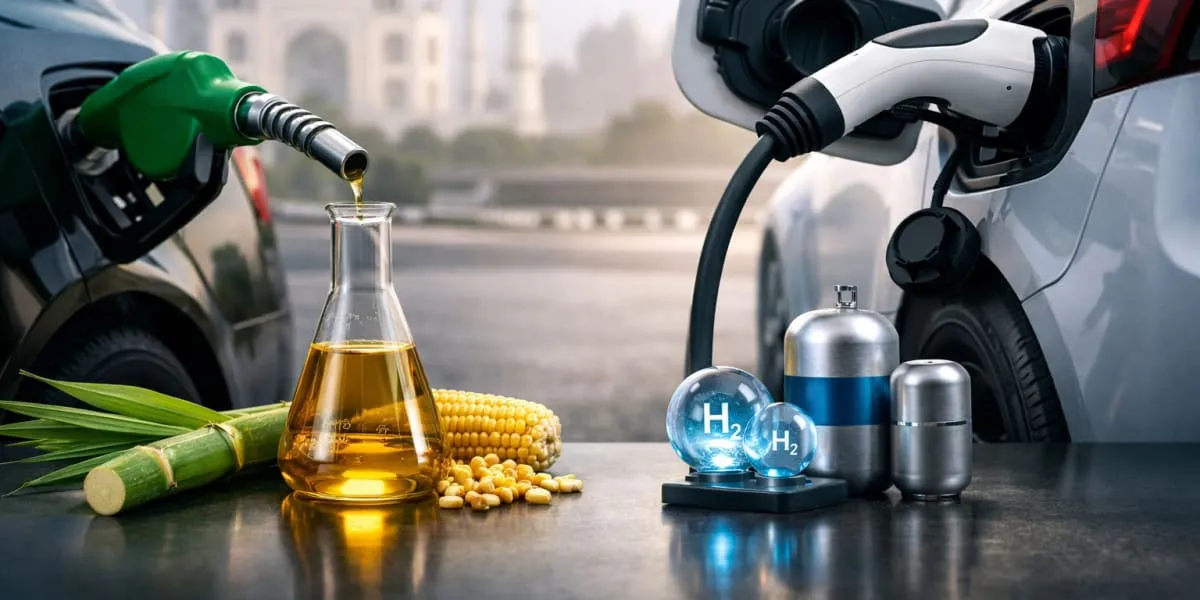
The Indian Federation of Green Energy said ethanol and electric vehicles should be treated as complementary rather than competing technologies in the country's transition to cleaner mobility, noting that nearly 300 million (mn) internal combustion engine (ICE) vehicles remain on Indian roads. The industry group urged a diversified energy strategy that includes ethanol, electric vehicles, hybrids, compressed natural gas and hydrogen to address energy security and emissions. It argued that relying on a single solution would be impractical given the existing vehicle fleet and infrastructure constraints.

IFGE regional director Dilip Patil in Pune said the debate should not be framed as ethanol versus electric vehicles and that E20 provides an immediate pathway to reduce crude oil dependence while other technologies scale. He indicated that hybrids and other low-emission options will play an increasing role as charging infrastructure and vehicle offerings expand. The group described the policy approach as complementary, balancing near-term fuel substitution with longer term electrification.

On fuel efficiency, studies by the Automotive Research Association of India, Indian Oil and the Society of Indian Automobile Manufacturers indicated a two to six per cent reduction in fuel efficiency for E20 compared with E10. The industry assessment did not point to widespread engine damage and noted that newer vehicles increasingly use ethanol compatible materials. The body acknowledged that the principal concerns relate to older vehicles and to the need for targeted compatibility measures during the transition.

The federation said India achieved nationwide E20 deployment by April 2025 and is expanding higher ethanol blends, flex fuel vehicles and second generation ethanol production. The Ministry of Petroleum and Natural Gas figures show that the ethanol blending programme has yielded foreign exchange savings of more than Rs 1.97 trillion (tn) and substituted nearly 31.6 mn tonnes (t) of crude oil since Ethanol Supply Year 2014-15. The government is continuing to promote ethanol blending to reduce import dependence and increase use of domestically produced fuels.

The Indian Federation of Green Energy said ethanol and electric vehicles should be treated as complementary rather than competing technologies in the country's transition to cleaner mobility, noting that nearly 300 million (mn) internal combustion engine (ICE) vehicles remain on Indian roads. The industry group urged a diversified energy strategy that includes ethanol, electric vehicles, hybrids, compressed natural gas and hydrogen to address energy security and emissions. It argued that relying on a single solution would be impractical given the existing vehicle fleet and infrastructure constraints. IFGE regional director Dilip Patil in Pune said the debate should not be framed as ethanol versus electric vehicles and that E20 provides an immediate pathway to reduce crude oil dependence while other technologies scale. He indicated that hybrids and other low-emission options will play an increasing role as charging infrastructure and vehicle offerings expand. The group described the policy approach as complementary, balancing near-term fuel substitution with longer term electrification. On fuel efficiency, studies by the Automotive Research Association of India, Indian Oil and the Society of Indian Automobile Manufacturers indicated a two to six per cent reduction in fuel efficiency for E20 compared with E10. The industry assessment did not point to widespread engine damage and noted that newer vehicles increasingly use ethanol compatible materials. The body acknowledged that the principal concerns relate to older vehicles and to the need for targeted compatibility measures during the transition. The federation said India achieved nationwide E20 deployment by April 2025 and is expanding higher ethanol blends, flex fuel vehicles and second generation ethanol production. The Ministry of Petroleum and Natural Gas figures show that the ethanol blending programme has yielded foreign exchange savings of more than Rs 1.97 trillion (tn) and substituted nearly 31.6 mn tonnes (t) of crude oil since Ethanol Supply Year 2014-15. The government is continuing to promote ethanol blending to reduce import dependence and increase use of domestically produced fuels.

Related Stories

Gold Stories

Next Story
Infrastructure Urban

Infrastructure Opportunity Outlook by IMPACCT.Info

India’s infrastructure pipeline is witnessing dynamic activity across stages — from immediate bidding to future planning. IMPACCT segments these into three categories: Immediate, 3–6 Month, and Future Opportunities, enabling businesses to identify, prepare, and participate in high-value tenders and projects across sectors.To read full article Click Here ..

Next Story
Real Estate

Glass, Reframed!

Glass façades, quintessential aesthetic building envelopes globally, have been widely adopted in India as well. But when the focus is high-performance building systems that deliver energy efficiency, comfort and architectural identity, glass isn’t the only preference. Combination solutions, involving glass and some other material, improve façade outcomes. Some combinations come at comparable prices, some at a higher price. Here is a selection of performance-oriented solutions...To read the full story Click Here ..

Next Story
Infrastructure Urban

Beyond Building Faster

India’s cities are expanding at an unprecedented pace, bringing new infrastructure and development opportunities while also intensifying challenges around mobility, public spaces, liveability and supporting infrastructure. The question, therefore, is not simply whether India can build faster, but whether it can build cities that work better.At a CW webinar, Are We Designing Better Cities – or Just Building Faster?, moderator Ar. Samir Shaikh, Founding Principal, AR&UD Studio, brought together perspectives from design, development, master planning and technology...To read the full artic..

Advertisement

Subscribe to Our Newsletter

Get daily newsletters around different themes from Construction world.

STAY CONNECTED

Advertisement

SPECIAL OFFER
QR Code