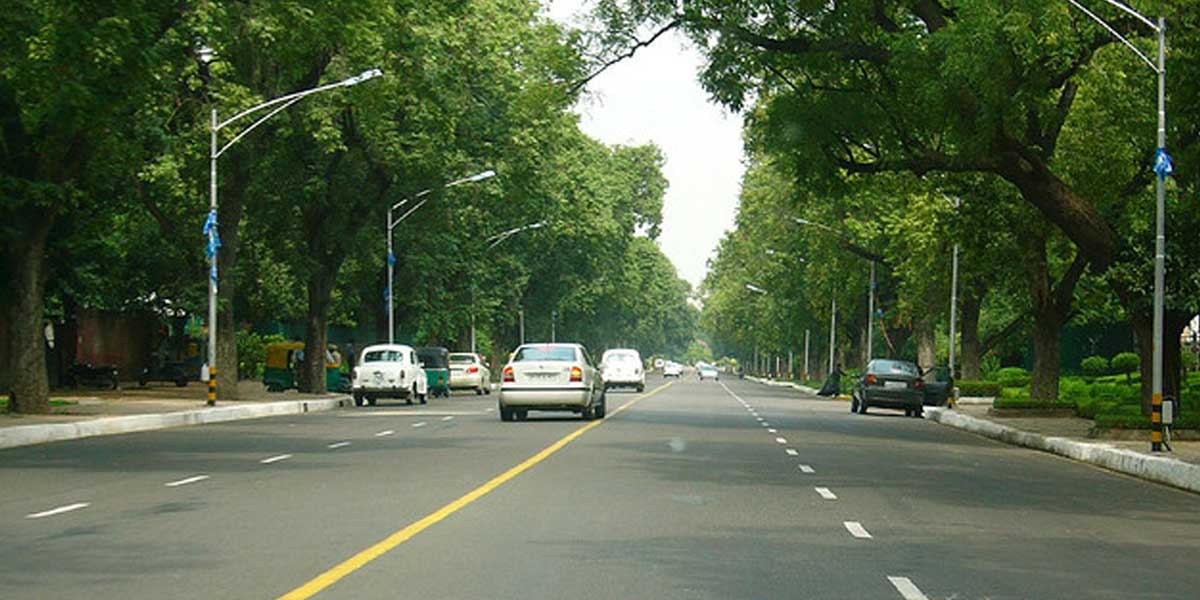
DEO grants PMC permission to cut 266 trees to widen roads at highway
ROADS & HIGHWAYS

DEO grants PMC permission to cut 266 trees to widen roads at highway

For the 2.2 kilometre stretch of the Pune-Mumbai highway, the Civic Body has been granted permission by the Defence Estates Office (DEO) Pune, to remove 266 fully grown trees in order to complete the long-awaited road widening project. The Khadki Cantonment Board (KCB) has jurisdiction over the area between the Khadki railway station and the Central Hatchery.

A few weeks ago, the Pune Municipal Corporation (PMC) began construction on a drainage and storm water line along this length. It approved Rs 850 million to build a 42 m wide, cement-concrete road with BRTS lanes on either side. Dinkar Gojare, Executive Engineer at PMC, said, “Out of the 266, about 100 trees will be replanted on defence plots, which are to be identified by the defence authorities. Additionally, we will plant 1,300 trees on defence land.”

“The Local Military Authority (LMA) will decide defence land plots for tree planting,” a senior DEO official told. The area of land also has banyan and peepal trees in addition to local trees. According to DEO officials, the LMA and representatives from the PMC’s landscaping department will pick the trees to be replanted.

Currently, the inadequate roadway on the highway segment causes regular traffic jams. Due to difficulties with property acquisition, the PMC was previously unable to complete the road widening project. In order to assist the widening work, the district administration exchanged the highway portion for 10.8 acres of equal-value land at Dunkirk Lines in Yerawada in December of last year. We want to complete the work in the following two years, Gojare stated.

However, residents and activists from the Khadki, Bopodi, and PCMC neighbourhoods encouraged PMC to finish this project as quickly as possible because of the long-standing traffic problems in the area. A KCB resident remarked, “Due to metro construction over the past few months, the traffic congestion in the KCB limit has gotten progressively worse. For the people of the cantonment, the situation will now get worse due to the road widening project. We anticipate the PMC to finish the assignment by the due date.” Another KCB resident and activist stated that “The cantonment has developed a distinctive character throughout the years thanks to its open spaces, lush vegetation, and peaceful atmosphere. The local authorities must maintain this previous identity in addition to undertaking development efforts.”

For the 2.2 kilometre stretch of the Pune-Mumbai highway, the Civic Body has been granted permission by the Defence Estates Office (DEO) Pune, to remove 266 fully grown trees in order to complete the long-awaited road widening project. The Khadki Cantonment Board (KCB) has jurisdiction over the area between the Khadki railway station and the Central Hatchery. A few weeks ago, the Pune Municipal Corporation (PMC) began construction on a drainage and storm water line along this length. It approved Rs 850 million to build a 42 m wide, cement-concrete road with BRTS lanes on either side. Dinkar Gojare, Executive Engineer at PMC, said, “Out of the 266, about 100 trees will be replanted on defence plots, which are to be identified by the defence authorities. Additionally, we will plant 1,300 trees on defence land.” “The Local Military Authority (LMA) will decide defence land plots for tree planting,” a senior DEO official told. The area of land also has banyan and peepal trees in addition to local trees. According to DEO officials, the LMA and representatives from the PMC’s landscaping department will pick the trees to be replanted. Currently, the inadequate roadway on the highway segment causes regular traffic jams. Due to difficulties with property acquisition, the PMC was previously unable to complete the road widening project. In order to assist the widening work, the district administration exchanged the highway portion for 10.8 acres of equal-value land at Dunkirk Lines in Yerawada in December of last year. We want to complete the work in the following two years, Gojare stated. However, residents and activists from the Khadki, Bopodi, and PCMC neighbourhoods encouraged PMC to finish this project as quickly as possible because of the long-standing traffic problems in the area. A KCB resident remarked, “Due to metro construction over the past few months, the traffic congestion in the KCB limit has gotten progressively worse. For the people of the cantonment, the situation will now get worse due to the road widening project. We anticipate the PMC to finish the assignment by the due date.” Another KCB resident and activist stated that “The cantonment has developed a distinctive character throughout the years thanks to its open spaces, lush vegetation, and peaceful atmosphere. The local authorities must maintain this previous identity in addition to undertaking development efforts.”

Next Story
Infrastructure Urban

Implementation Status of Jal Jeevan Mission

Since August 2019 the Government has implemented Jal Jeevan Mission to provide assured potable water through household tap connections in rural India. At the start of the mission only 32.3 million (mn) rural households, representing 16.7 per cent, were reported to have tap water connections. States and union territories have reported that 125.8 mn additional rural households have since been provided with tap connections. As a result, of about 193.6 mn rural households roughly 158.2 mn, or 81.71 per cent, are reported to have tap water supply at home.\n\nThe State, district and village level st..

Next Story
Infrastructure Urban

Jal Jeevan Mission Reaches Eighty One Per Cent Rural Coverage

The Government reported substantial progress under the Jal Jeevan Mission, launched in August 2019 to provide tap water to every rural household. At launch only 32.3 million (mn) rural households had tap connections and states and Union territories reported provision of 125.8 mn additional households by March 2026. Consequently, out of about 193.6 mn rural households around 158.2 mn, or 81.71 per cent, are reported to have tap water at home. The Finance Minister announced extension of the mission until 2028 in the 2025-26 budget speech. The Swachh Bharat Mission Grameen, launched in October 20..

Next Story
Infrastructure Urban

Empowering Local Governance for Sustainable Rural Water Supply

The Ministry of Jal Shakti has aligned the Jal Jeevan Mission (JJM) with the 73rd Amendment to strengthen village level planning and community ownership of water supply. Gram Panchayats, village water and sanitation committees and Pani Samitis are to plan, implement, manage and maintain piped water systems, with gram sabha processes formalising handover and oversight. Implementation support agencies including non government organisations, community based organisations and self help groups have been empanelled to train local committees and promote women participation. Under JJM, the department ..

Advertisement

Subscribe to Our Newsletter

Get daily newsletters around different themes from Construction world.

STAY CONNECTED

Advertisement

Advertisement

Advertisement