Dhami Inaugurates Dhangarhi Bridge Boosting Kumaon Garhwal Link
ROADS & HIGHWAYS

Dhami Inaugurates Dhangarhi Bridge Boosting Kumaon Garhwal Link

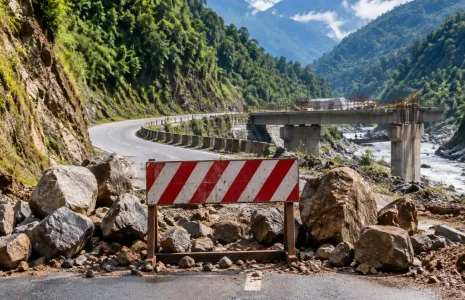
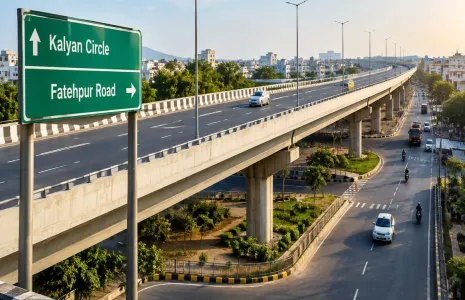
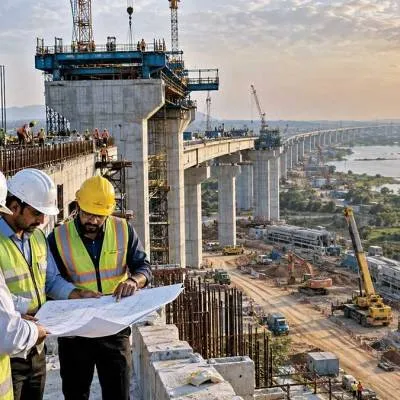
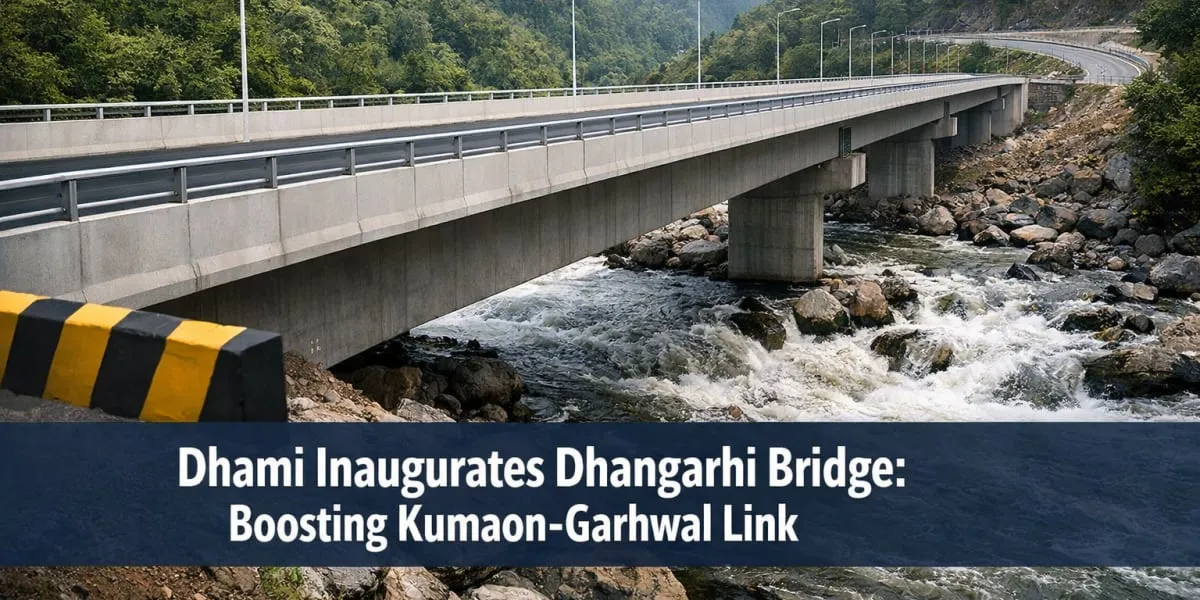
Uttarakhand Chief Minister Pushkar Singh Dhami inaugurated a 220.90-metre-long pre-stressed girder bridge over the Dhangarhi Nala in Nainital district on Sunday, presenting the structure as a lasting answer to monsoon-related disruption on National Highway-309 and an improvement to connectivity between the Kumaon and Garhwal divisions. The structure is intended to secure a vital north-south link that serves residents, tourists and emergency services.

Constructed at a cost of Rs 296.5 million (mn), the bridge is expected to make travel safer and more convenient while supporting tourism, trade and the local economy. Union Minister of State for Road Transport and Highways Ajay Tamta indicated the project would strengthen access to education and healthcare services across the region.

Dhami noted the route had been frequently disrupted during the monsoon as rising water levels in the Dhangarhi Nala impeded traffic, causing difficulties for the general public and emergency responders, and he presented the new bridge as a permanent solution. He also linked smoother traffic flow through the forest area to improved prospects for wildlife conservation and environmental balance.

The chief minister framed the investment as part of a wider programme of development following the completion of five years in office, with work under way on modern roads and bridges, expansion of the railway network and new ropeways. He set out that developments in health, education, tourism and border areas remained priorities for the state government.

Nearby, the 175.60-metre-long Panaud Bridge was reported to be nearing completion at an approximate cost of Rs 184.3 million (mn) and is expected to be opened to the public shortly. Officials portrayed both structures as important for regional growth and said they would give fresh impetus to trade, agriculture, tourism and pilgrimage routes, including benefit to those undertaking the Char Dham Yatra and visitors to Jim Corbett National Park, with the overall aim of easing travel on a key route.

"Join industry leaders at RAHSTA Expo, India's premier platform for roads, highways and traffic infrastructure. Register now to explore innovations, network with experts and shape the future of mobility."

Uttarakhand Chief Minister Pushkar Singh Dhami inaugurated a 220.90-metre-long pre-stressed girder bridge over the Dhangarhi Nala in Nainital district on Sunday, presenting the structure as a lasting answer to monsoon-related disruption on National Highway-309 and an improvement to connectivity between the Kumaon and Garhwal divisions. The structure is intended to secure a vital north-south link that serves residents, tourists and emergency services. Constructed at a cost of Rs 296.5 million (mn), the bridge is expected to make travel safer and more convenient while supporting tourism, trade and the local economy. Union Minister of State for Road Transport and Highways Ajay Tamta indicated the project would strengthen access to education and healthcare services across the region. Dhami noted the route had been frequently disrupted during the monsoon as rising water levels in the Dhangarhi Nala impeded traffic, causing difficulties for the general public and emergency responders, and he presented the new bridge as a permanent solution. He also linked smoother traffic flow through the forest area to improved prospects for wildlife conservation and environmental balance. The chief minister framed the investment as part of a wider programme of development following the completion of five years in office, with work under way on modern roads and bridges, expansion of the railway network and new ropeways. He set out that developments in health, education, tourism and border areas remained priorities for the state government. Nearby, the 175.60-metre-long Panaud Bridge was reported to be nearing completion at an approximate cost of Rs 184.3 million (mn) and is expected to be opened to the public shortly. Officials portrayed both structures as important for regional growth and said they would give fresh impetus to trade, agriculture, tourism and pilgrimage routes, including benefit to those undertaking the Char Dham Yatra and visitors to Jim Corbett National Park, with the overall aim of easing travel on a key route.

Next Story
Infrastructure Energy

Hexa Climate Signs 100 MW Wind Solar PPA With CESC

Hexa Climate has signed a power purchase agreement with CESC Limited for the supply of 100 megawatt (MW) of Interstate Transmission System (ISTS) connected wind-solar hybrid power, at a tariff of Rs three point seven five per kWh fixed for 25 years. The contracted capacity is 100 MW while the installation will include 50 MW of solar and 100 MW of wind to enable hybrid generation from a site in Mandsaur, Madhya Pradesh. The tariff has been adopted by the West Bengal Electricity Regulatory Commission, providing regulatory assent for the long term arrangement. The agreement was secured through CE..

Next Story
Infrastructure Energy

JUWI Tops One GW Under Construction As Solar Portfolio Exceeds 900 MW

Renewable energy developer JUWI has reached a milestone of one gigawatt (GW) of renewable capacity under simultaneous construction across its global portfolio, reflecting expansion in solar and wind sectors. The firm said it is installing around 1.3 million (mn) solar modules across 12 photovoltaic (PV) projects and is constructing 46 wind turbines with a combined capacity of about 270 megawatt (MW). Overall, nearly one GW of additional capacity is expected to be commissioned in the coming months. Module installation has begun at the Trifylli solar park in northern Greece, part of the 156 MW C..

Next Story
Infrastructure Energy

MNRE Clarifies ALMM List-II Rules For Government Rooftop Solar

The Ministry of New and Renewable Energy issued a memorandum dated 6 July 2026 clarifying implementation of the Approved List of Models and Manufacturers (ALMM) List-II requirements for solar photovoltaic (PV) cells in rooftop solar projects on government buildings. The clarification restated that ALMM List-I covers solar PV modules while ALMM List-II applies to solar PV cells and that the framework seeks to promote the use of domestically manufactured equipment. The mandatory application of List-II had been scheduled from 1 June 2026, but industry representations prompted the ministry to spec..

Advertisement

Subscribe to Our Newsletter

Get daily newsletters around different themes from Construction world.

STAY CONNECTED

Advertisement

Advertisement

Advertisement