+
ECoR Hits Milestone: Completes 2 km Tunnel on Khurda-Balangir Line
ROADS & HIGHWAYS

ECoR Hits Milestone: Completes 2 km Tunnel on Khurda-Balangir Line

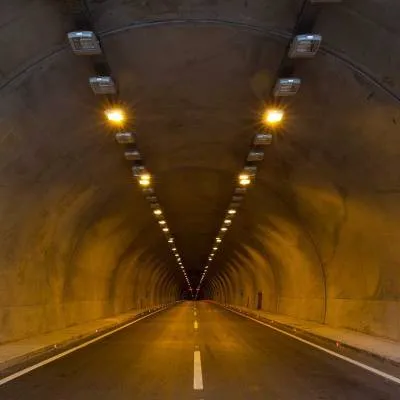
In a significant advancement in the Khurda Road-Balangir Rail Line Project, the East Coast Railway (ECoR) recently achieved a major milestone by completing the breakthrough of a 1,975-meter-long tunnel (Tunnel No. 7) between Purunakatak and Charichhak. This accomplishment represents a crucial step in the on-going efforts to enhance rail connectivity in the region.

The Ministry of Railways has placed a strong emphasis on the timely completion of key infrastructure projects in Odisha, acknowledging their vital role in the state's development. The Khurda Road-Balangir Rail Line is one such project, designed to improve connectivity and stimulate economic growth in the area.

Railways Minister Ashwini Vaishnaw has been closely overseeing the progress of various railway projects throughout Odisha. His leadership and directives to coordinate efforts across different agencies have been essential in advancing this long-pending project towards completion.

The breakthrough of the 1,975-metre tunnel was accomplished by the skilled engineering team of the ECoR Construction Wing, who conducted the final detonation in Boudh District. This achievement underscores the dedication and technical expertise of the team involved.

Out of the total 301 kilometres planned for the Khurda Road-Balangir project, 183 kilometres of the rail line have already been commissioned. The project is being executed from both ends, Khurda Road and Balangir, to accelerate its completion. To date, 106 kilometers from Khurda Road to Daspalla and 77 kilometres from Balangir to Jharmunda have been commissioned. Additionally, the 16.27-kilometer stretch from Jharmunda to Boudh has also been completed. The next segment, from Boudh to Purunakatak, covering approximately 27 kilometres, is expected to be completed in the coming months.

The successful completion of such large-scale railway projects depends on various factors, including timely land acquisition, forest clearance, utility relocation, obtaining statutory clearances, and addressing the geological and topographical challenges of the area. Despite these obstacles, significant progress has been made.

Upon completion, the Khurda Road-Balangir Rail Line will considerably reduce the distance between Bhubaneswar and Balangir. Additionally, this project is expected to be a significant catalyst for the socio-economic development of the region.

In a significant advancement in the Khurda Road-Balangir Rail Line Project, the East Coast Railway (ECoR) recently achieved a major milestone by completing the breakthrough of a 1,975-meter-long tunnel (Tunnel No. 7) between Purunakatak and Charichhak. This accomplishment represents a crucial step in the on-going efforts to enhance rail connectivity in the region. The Ministry of Railways has placed a strong emphasis on the timely completion of key infrastructure projects in Odisha, acknowledging their vital role in the state's development. The Khurda Road-Balangir Rail Line is one such project, designed to improve connectivity and stimulate economic growth in the area. Railways Minister Ashwini Vaishnaw has been closely overseeing the progress of various railway projects throughout Odisha. His leadership and directives to coordinate efforts across different agencies have been essential in advancing this long-pending project towards completion. The breakthrough of the 1,975-metre tunnel was accomplished by the skilled engineering team of the ECoR Construction Wing, who conducted the final detonation in Boudh District. This achievement underscores the dedication and technical expertise of the team involved. Out of the total 301 kilometres planned for the Khurda Road-Balangir project, 183 kilometres of the rail line have already been commissioned. The project is being executed from both ends, Khurda Road and Balangir, to accelerate its completion. To date, 106 kilometers from Khurda Road to Daspalla and 77 kilometres from Balangir to Jharmunda have been commissioned. Additionally, the 16.27-kilometer stretch from Jharmunda to Boudh has also been completed. The next segment, from Boudh to Purunakatak, covering approximately 27 kilometres, is expected to be completed in the coming months. The successful completion of such large-scale railway projects depends on various factors, including timely land acquisition, forest clearance, utility relocation, obtaining statutory clearances, and addressing the geological and topographical challenges of the area. Despite these obstacles, significant progress has been made. Upon completion, the Khurda Road-Balangir Rail Line will considerably reduce the distance between Bhubaneswar and Balangir. Additionally, this project is expected to be a significant catalyst for the socio-economic development of the region.

Related Stories

Gold Stories

Next Story
Infrastructure Urban

Infrastructure Opportunity Outlook by IMPACCT.Info

India’s infrastructure pipeline is witnessing dynamic activity across stages — from immediate bidding to future planning. IMPACCT segments these into three categories: Immediate, 3–6 Month, and Future Opportunities, enabling businesses to identify, prepare, and participate in high-value tenders and projects across sectors.To read full article Click Here ..

Next Story
Real Estate

Glass, Reframed!

Glass façades, quintessential aesthetic building envelopes globally, have been widely adopted in India as well. But when the focus is high-performance building systems that deliver energy efficiency, comfort and architectural identity, glass isn’t the only preference. Combination solutions, involving glass and some other material, improve façade outcomes. Some combinations come at comparable prices, some at a higher price. Here is a selection of performance-oriented solutions...To read the full story Click Here ..

Next Story
Infrastructure Urban

Beyond Building Faster

India’s cities are expanding at an unprecedented pace, bringing new infrastructure and development opportunities while also intensifying challenges around mobility, public spaces, liveability and supporting infrastructure. The question, therefore, is not simply whether India can build faster, but whether it can build cities that work better.At a CW webinar, Are We Designing Better Cities – or Just Building Faster?, moderator Ar. Samir Shaikh, Founding Principal, AR&UD Studio, brought together perspectives from design, development, master planning and technology...To read the full artic..

Advertisement

Subscribe to Our Newsletter

Get daily newsletters around different themes from Construction world.

STAY CONNECTED

Advertisement

SPECIAL OFFER
QR Code