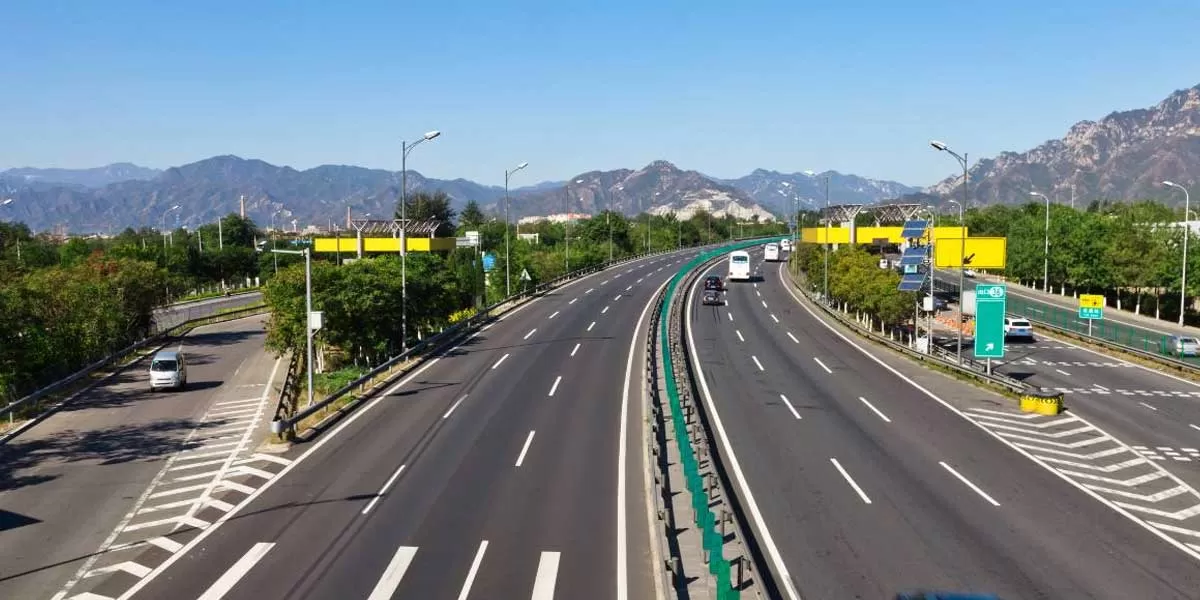




Elevated funding to accelerate road projects
ROADS & HIGHWAYS

Elevated funding to accelerate road projects

The experts have stated that the 2.7% increase in the budgetary allocation for road transport and highways, though relatively small, is based on a high existing allocation. They have mentioned that this increase will be dedicated to ongoing projects, while fresh developments are anticipated to come from the private sector, as envisioned by the government.

In the interim budget presented, Finance Minister Nirmala Sitharaman allocated Rs 2.78 trillion for roads, transport, and highways. This is in comparison to the Rs 2.70 trillion allocated in FY24, which was later revised to Rs 2.76 trillion.

Vinayak Chatterjee, the founder of The Infravision Foundation, commented that the increment in the allocation for the road sector, though modest, aligns with the overall trend of increased allocation for infrastructure. He mentioned that with the National Highways Authority of India (NHAI) facing constraints in raising further debt, the final budget is expected to substantially increase outlays, leveraging economic growth through robust infrastructure development.

Jagannarayan Padmanabhan, Senior Director at CRISIL Market Intelligence and Analytics, added that the marginal increase in the budgetary allocation for the road sector is on a high existing base, and a significant portion of it is committed to existing projects.

He further stated, "Looking ahead, the government's emphasis will be on initiating new projects in the build-operate-transfer (BOT) and public-private-partnership (PPP) mode to attract private sector investments." Additionally, he highlighted that asset monetization will continue to play a crucial role for the government in raising capital.

The experts have stated that the 2.7% increase in the budgetary allocation for road transport and highways, though relatively small, is based on a high existing allocation. They have mentioned that this increase will be dedicated to ongoing projects, while fresh developments are anticipated to come from the private sector, as envisioned by the government. In the interim budget presented, Finance Minister Nirmala Sitharaman allocated Rs 2.78 trillion for roads, transport, and highways. This is in comparison to the Rs 2.70 trillion allocated in FY24, which was later revised to Rs 2.76 trillion. Vinayak Chatterjee, the founder of The Infravision Foundation, commented that the increment in the allocation for the road sector, though modest, aligns with the overall trend of increased allocation for infrastructure. He mentioned that with the National Highways Authority of India (NHAI) facing constraints in raising further debt, the final budget is expected to substantially increase outlays, leveraging economic growth through robust infrastructure development. Jagannarayan Padmanabhan, Senior Director at CRISIL Market Intelligence and Analytics, added that the marginal increase in the budgetary allocation for the road sector is on a high existing base, and a significant portion of it is committed to existing projects. He further stated, Looking ahead, the government's emphasis will be on initiating new projects in the build-operate-transfer (BOT) and public-private-partnership (PPP) mode to attract private sector investments. Additionally, he highlighted that asset monetization will continue to play a crucial role for the government in raising capital.

Related Stories

Gold Stories
Next Story
Infrastructure Urban

KONE Opens India's First Digital Experience Centre in Pune

KONE, a global elevator and escalator manufacturer, has inaugurated its first Digital Experience Centre (DEC) in India, located in Pune. The facility aims to showcase how artificial intelligence (AI), connectivity and data-driven technologies can enhance customer experiences and improve building operations.The centre was inaugurated by Jussi Herlin, Executive Vice Chair, KONE Corporation; Philippe Delorme, President and CEO, KONE; and Nandan Nilekani, Co-founder and Chairman of the Board, Infosys.Designed as an interactive customer environment, the facility demonstrates digital solutions cover..

Next Story
Infrastructure Urban

CII GreenCo Launches Circularity Guidelines for Indian Industry

The Confederation of Indian Industry (CII) GreenCo Council has launched the CII GreenCo Circularity Guidelines – Pilot Version at the 17th CII GreenCo Waste & Resource Management Summit 2026 in Chennai. The initiative aims to strengthen resource efficiency, waste reduction and circular economy practices across Indian manufacturing and process industries.The guidelines introduce a structured framework with circularity indices covering raw materials, consumables, packaging and other resource inputs. These indicators will help industries assess existing practices, identify opportunities to ..

Next Story
Infrastructure Energy

Global Electronics Association Launches IPC-1783-CO2E Standard

The Global Electronics Association has introduced IPC-1783-CO2E, a new international standard aimed at improving consistency, transparency and comparability in product carbon footprint reporting across the electronics manufacturing industry.The standard, titled International Standard for Data Collection and Reporting of CO2 Equivalent (CO2e) Emissions for the Electronics Manufacturing Supply Chain, provides industry-specific guidance for collecting, estimating and reporting carbon emissions data.With increasing regulatory requirements and customer expectations, electronics manufacturers face c..

Advertisement

Subscribe to Our Newsletter

Get daily newsletters around different themes from Construction world.

STAY CONNECTED

Advertisement

SPECIAL OFFER
QR Code