+
Eligibility criteria to develop highway projects simplified by Centre
ROADS & HIGHWAYS

Eligibility criteria to develop highway projects simplified by Centre

Businesses that have built linear infrastructure including airport runways, railway tracks, container yards, metro rail and ports are eligible to compete on capital-intensive highway projects. This was made feasible after the centre loosened the requirements for eligibility that bidders for highway projects under the public private partnership (PPP) mode. However, the decision from the Ministry of Road Transport and Highways also stated that in order to build motorways under the Build, Operate, Transfer (BOT), and Hybrid Annuity Model (HAM) modes, bidders must have a credit rating of BBB and above. This new need has been added to the PPP project eligibility requirements.

Highways are vital infrastructure, thus the centre wants to make sure that only businesses with a track record of large-scale project completion are permitted to submit bids. This precaution is taken in order to prevent projects from being hampered by fly-by-night contractors who lack the necessary skills to complete them and who may submit unrealistic bids. Bidders must be able to meet the technical and financial requirements of the eligibility criteria. The bidder must have a minimum net worth requirement and have experience working on projects in the associated core and highways sectors. Also, businesses must guarantee that they have executed at least one similar project worth 20% of the total project cost.

It has been determined that the core sector for HAM mode, where the centre bears a portion of the cost, will include projects with the names Rural Infrastructure Development Fund (RIDF), Pradhan Mantri Gram Sadak Yojana (PMGSY) roads, link roads, city roads, rural roads, sector or municipality roads, real estate projects that demonstrate road development, and building of bridges or culverts, among others. Also, it has been decided that maintenance projects would not be evaluated under the HAM project eligibility requirements.

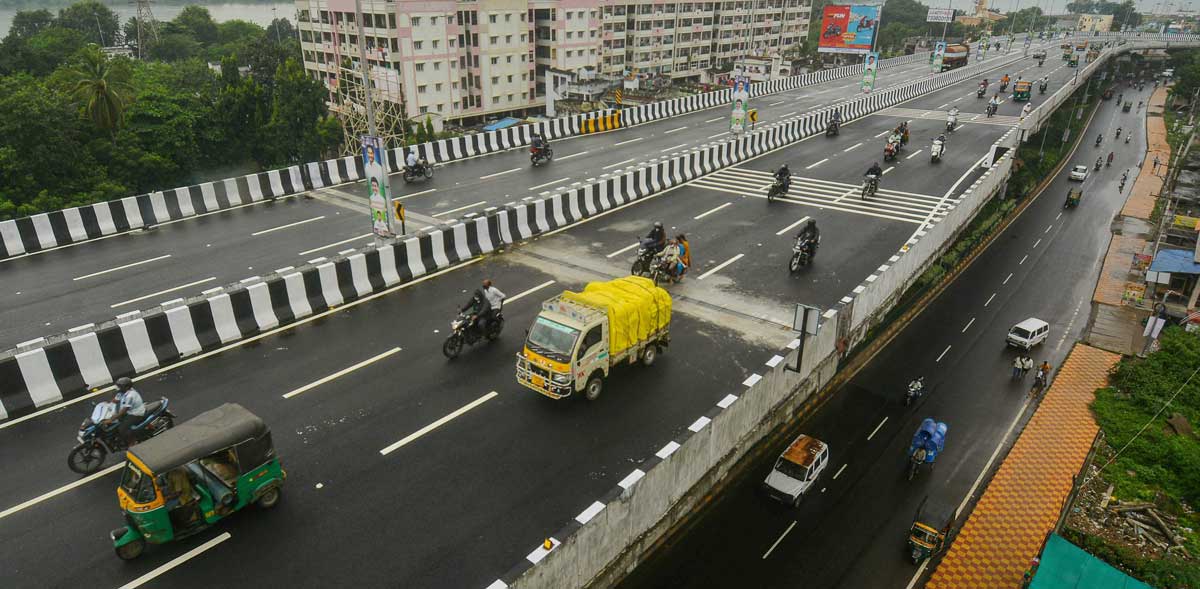
New requirements have been added for standalone specialised projects under BOT, which calls for a greater outlay of cash by the private concessionaire. The bidder must have finished at least one major Bridge, Road Over Bridge (RoB), or Flyover project in the ten financial years prior to the bid due date if the cost of a specialised project is more than Rs 10 billion. Also, it has been established that the finished bridge must have a span that is at least 50% longer than the longest span of the project's proposed structure.

Businesses that have built linear infrastructure including airport runways, railway tracks, container yards, metro rail and ports are eligible to compete on capital-intensive highway projects. This was made feasible after the centre loosened the requirements for eligibility that bidders for highway projects under the public private partnership (PPP) mode. However, the decision from the Ministry of Road Transport and Highways also stated that in order to build motorways under the Build, Operate, Transfer (BOT), and Hybrid Annuity Model (HAM) modes, bidders must have a credit rating of BBB and above. This new need has been added to the PPP project eligibility requirements. Highways are vital infrastructure, thus the centre wants to make sure that only businesses with a track record of large-scale project completion are permitted to submit bids. This precaution is taken in order to prevent projects from being hampered by fly-by-night contractors who lack the necessary skills to complete them and who may submit unrealistic bids. Bidders must be able to meet the technical and financial requirements of the eligibility criteria. The bidder must have a minimum net worth requirement and have experience working on projects in the associated core and highways sectors. Also, businesses must guarantee that they have executed at least one similar project worth 20% of the total project cost. It has been determined that the core sector for HAM mode, where the centre bears a portion of the cost, will include projects with the names Rural Infrastructure Development Fund (RIDF), Pradhan Mantri Gram Sadak Yojana (PMGSY) roads, link roads, city roads, rural roads, sector or municipality roads, real estate projects that demonstrate road development, and building of bridges or culverts, among others. Also, it has been decided that maintenance projects would not be evaluated under the HAM project eligibility requirements. New requirements have been added for standalone specialised projects under BOT, which calls for a greater outlay of cash by the private concessionaire. The bidder must have finished at least one major Bridge, Road Over Bridge (RoB), or Flyover project in the ten financial years prior to the bid due date if the cost of a specialised project is more than Rs 10 billion. Also, it has been established that the finished bridge must have a span that is at least 50% longer than the longest span of the project's proposed structure.

Next Story
Infrastructure Urban

ABB to Invest Rs 6.25 Billion to Expand India Manufacturing

ABB recently announced plans to invest approximately Rs 6.25 billion ($75 million) in India during 2026 to expand its manufacturing footprint and research and development capabilities. The investment follows more than $35 million spent in 2025 and reflects the company’s continued focus on strengthening its ‘local-for-local’ strategy in the country.The investment will support ABB’s Electrification, Motion and Automation businesses and expand manufacturing capacity for infrastructure sectors such as renewable energy, metro rail, data centres and industrial applications. Approximately 300..

Next Story
Equipment

Six WOLFF Cranes Handle 60,000 m³ Concrete for German Hospital

Six WOLFF tower cranes are playing a key role in constructing a new hospital complex in Memmingen, Germany, supporting large-scale material handling for the project. The facility is being built on a 7.7-hectare site and will feature six floors, around 480 beds and a gross floor area exceeding 75,000 sq m.Building shell works began recently in February 2025. One WOLFF 6531.12 Cross crane supported early site preparation before being dismantled in autumn 2025, while five remaining cranes continue operations. Over an average deployment period of 16 months, the cranes are expected to move approxim..

Next Story
Equipment

REC Funds Rs 115.6 Million CSR Support for Bihar Eye Hospital

REC recently committed Rs 115.6 million under its Corporate Social Responsibility (CSR) programme for the procurement of clinical and non-clinical equipment at Sankara Eye Hospital in Saharsa, Bihar. The initiative aims to strengthen healthcare infrastructure and improve access to specialised eye care services in the region.A Memorandum of Agreement (MoA) was recently signed between Pradeep Fellows, Executive Director (CSR), REC Limited, and Wg Cdr V. Shankar (Retd), Trustee and Executive Director of Sankara Eye Hospital, at the REC office in the SCOPE Complex, New Delhi.The support is expecte..

Advertisement

Subscribe to Our Newsletter

Get daily newsletters around different themes from Construction world.

STAY CONNECTED

Advertisement

Advertisement

Advertisement