Environment Ministry Clears Stage I Nod for Coastal Road Phase II
ROADS & HIGHWAYS

Environment Ministry Clears Stage I Nod for Coastal Road Phase II

The Union Ministry of Environment, Forest and Climate Change (MoEFCC) has granted Stage-1 (in-principle) approval for the diversion of mangrove forest land for the second phase of the Mumbai Coastal Road Project. This clearance marks a significant step forward for the Brihanmumbai Municipal Corporation (BMC), which is now preparing to approach the High Court for further approvals necessary to begin construction. The second phase of the project will span from Versova to Bhayandar.

The project is expected to permanently impact approximately 8.24 hectare of mangrove forest land, with around 9,000 mangrove trees to be cut and more than 36,000 to be affected. As compensation, over 1.37 lakh mangrove trees are planned to be planted in line with Maharashtra Coastal Zone Management Authority norms. The Mumbai Mangrove Cell (MMC) will implement a mangrove restoration initiative, including afforestation over 31 hectare in Bhayandar Gaon. Additionally, the BMC has planned a mangrove nursery and will transfer an equivalent area of non-forest land for forest development.

The BMC has already obtained environmental clearances and No Objection Certificates (NOCs) from both central and state authorities. Coastal Regulation Zone (CRZ) permissions were acquired in November 2024. With Stage-1 clearance now in place, the next step is to secure permission from the High Court, after which construction can begin. Stage-2 forest clearance will follow later in the process.

On June 27, the Chief Minister’s Office directed the BMC to complete land acquisition for Phase 2 within 15 days. The project involves the reclamation of 165 hectares between Versova and Bhayandar and is intended to cut travel time between the two areas from 90–120 minutes to just 20 minutes.

A recent review meeting was held by the Additional Municipal Commissioner (Projects) to assess the project's progress with officials from the bridge department.

Estimated at Rs 200 billion, the project has been divided into six construction packages:
  • Package A: 4.5 km from Versova to Bangur Nagar (Goregaon)
  • Package B: 1.66 km from Bangur Nagar to Mindspace (Malad)
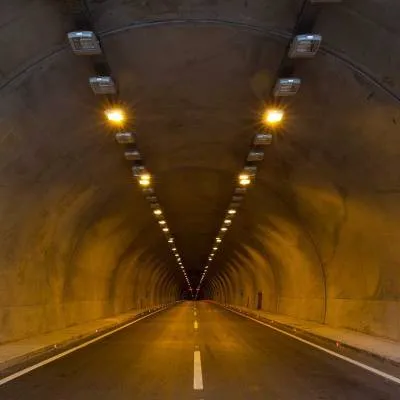
  • Packages C & D: 3.9 km of twin tunnels connecting Mindspace to Charkop (Kandivali)
  • Package E: 3.78 km from Charkop to Gorai
  • Package F: 3.69 km from Gorai to Dahisar
From Dahisar, an additional 5.6 km elevated corridor will extend the coastal road to Bhayandar in the Mumbai Metropolitan Region.


News source: Indian Express

The Union Ministry of Environment, Forest and Climate Change (MoEFCC) has granted Stage-1 (in-principle) approval for the diversion of mangrove forest land for the second phase of the Mumbai Coastal Road Project. This clearance marks a significant step forward for the Brihanmumbai Municipal Corporation (BMC), which is now preparing to approach the High Court for further approvals necessary to begin construction. The second phase of the project will span from Versova to Bhayandar.The project is expected to permanently impact approximately 8.24 hectare of mangrove forest land, with around 9,000 mangrove trees to be cut and more than 36,000 to be affected. As compensation, over 1.37 lakh mangrove trees are planned to be planted in line with Maharashtra Coastal Zone Management Authority norms. The Mumbai Mangrove Cell (MMC) will implement a mangrove restoration initiative, including afforestation over 31 hectare in Bhayandar Gaon. Additionally, the BMC has planned a mangrove nursery and will transfer an equivalent area of non-forest land for forest development.The BMC has already obtained environmental clearances and No Objection Certificates (NOCs) from both central and state authorities. Coastal Regulation Zone (CRZ) permissions were acquired in November 2024. With Stage-1 clearance now in place, the next step is to secure permission from the High Court, after which construction can begin. Stage-2 forest clearance will follow later in the process.On June 27, the Chief Minister’s Office directed the BMC to complete land acquisition for Phase 2 within 15 days. The project involves the reclamation of 165 hectares between Versova and Bhayandar and is intended to cut travel time between the two areas from 90–120 minutes to just 20 minutes.A recent review meeting was held by the Additional Municipal Commissioner (Projects) to assess the project's progress with officials from the bridge department.Estimated at Rs 200 billion, the project has been divided into six construction packages:Package A: 4.5 km from Versova to Bangur Nagar (Goregaon)Package B: 1.66 km from Bangur Nagar to Mindspace (Malad)Packages C & D: 3.9 km of twin tunnels connecting Mindspace to Charkop (Kandivali)Package E: 3.78 km from Charkop to GoraiPackage F: 3.69 km from Gorai to DahisarFrom Dahisar, an additional 5.6 km elevated corridor will extend the coastal road to Bhayandar in the Mumbai Metropolitan Region.News source: Indian Express

Next Story
Infrastructure Transport

India Becomes First to Produce Bio-Bitumen for Roads

India has become the first country in the world to commercially produce bio-bitumen for use in road construction, according to Road, Transport and Highways Minister Nitin Gadkari. Bitumen, a black and viscous hydrocarbon derived from crude oil, is a key binding material in road building, and the bio-based alternative is expected to significantly improve the sector’s environmental footprint.Addressing the CSIR Technology Transfer Ceremony in New Delhi, Mr Gadkari congratulated Council of Scientific and Industrial Research on achieving the milestone, noting that the initiative would help curb ..

Next Story
Infrastructure Urban

HILT Policy Seen Boosting Telangana Revenue Sharply

The Hyderabad Industrial Land Transformation (HILT) Policy is expected to generate around Rs 1.08 billion in revenue for the Telangana state exchequer, according to Deputy Chief Minister Bhatti Vikramarka Mallu. Speaking in the Telangana Legislative Assembly, he said the policy would be implemented within a six-month timeframe in a transparent manner, with uniform rules applicable to all stakeholders. Mr Vikramarka noted that without the HILT Policy, the state would have earned only about Rs 1.2 million per acre. Under the new framework, however, revenue is projected to rise sharply to Rs 70 ..

Next Story
Infrastructure Urban

India Post, MoRD Tie Up to Boost Rural Inclusion

The Department of Posts and the Ministry of Rural Development have signed a Memorandum of Understanding to accelerate rural transformation and expand financial, digital and logistics services for Self-Help Groups (SHGs) and rural households across India. The agreement was signed in the presence of Union Minister of Communications and Development of North Eastern Region Jyotiraditya M. Scindia and Union Minister of Rural Development and Agriculture and Farmers’ Welfare Shivraj Singh Chouhan. The collaboration aligns with the government’s “Dak Sewa, Jan Sewa” vision and seeks to repositi..

Advertisement

Subscribe to Our Newsletter

Get daily newsletters around different themes from Construction world.

STAY CONNECTED

Advertisement

Advertisement

Advertisement

Advertisement

Open In App