+
India unveils record-breaking border infrastructure projects
ROADS & HIGHWAYS

India unveils record-breaking border infrastructure projects

India has inaugurated a record 125 border-infrastructure projects aimed at strengthening connectivity and mobility along some of the country’s most challenging frontier regions. The developments include new tunnels, bridges and upgraded road networks designed to ensure year-round access to forward locations, particularly along the Line of Actual Control.

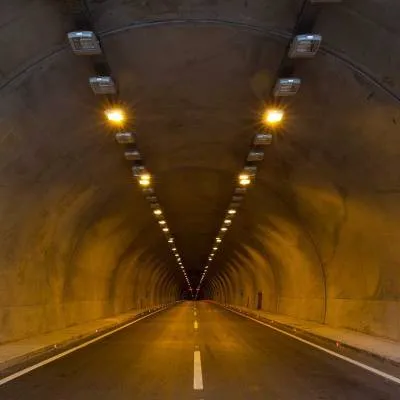
A key highlight is a new high-altitude tunnel, described as an engineering achievement constructed in extremely demanding terrain. The tunnel is expected to provide reliable, all-weather connectivity to critical posts and significantly enhance strategic movement in the region.

The latest phase of construction is expected to improve both defence logistics and civilian access in remote Himalayan areas. Faster movement of troops and supplies, improved resilience during harsh winters and reduced isolation for border communities are among the anticipated benefits.

Officials noted that these projects also hold long-term socio-economic importance. By improving access to remote settlements, the upgraded infrastructure is likely to support tourism, trade and improved service delivery while reinforcing India’s strategic posture along sensitive border zones.

India has inaugurated a record 125 border-infrastructure projects aimed at strengthening connectivity and mobility along some of the country’s most challenging frontier regions. The developments include new tunnels, bridges and upgraded road networks designed to ensure year-round access to forward locations, particularly along the Line of Actual Control. A key highlight is a new high-altitude tunnel, described as an engineering achievement constructed in extremely demanding terrain. The tunnel is expected to provide reliable, all-weather connectivity to critical posts and significantly enhance strategic movement in the region. The latest phase of construction is expected to improve both defence logistics and civilian access in remote Himalayan areas. Faster movement of troops and supplies, improved resilience during harsh winters and reduced isolation for border communities are among the anticipated benefits. Officials noted that these projects also hold long-term socio-economic importance. By improving access to remote settlements, the upgraded infrastructure is likely to support tourism, trade and improved service delivery while reinforcing India’s strategic posture along sensitive border zones.

Next Story
Infrastructure Transport

Second Mountain Tunnel Breakthrough in Palghar Advances High Speed Rail

The Mumbai-Ahmedabad high speed rail (MAHSR) project reached a milestone with the breakthrough of a mountain tunnel in Palghar, Maharashtra. Mountain tunnel MT-six measures 454 metres long and 14.4 metres wide and will accommodate up and down tracks. The breakthrough follows MT-five near Saphale on second January 2026 and the MT-six excavation was completed from both ends using the New Austrian Tunnelling Method. The ministry reported that the tunnelling was completed within 12 months. The New Austrian Tunnelling Method is favoured for its flexibility in complex geology and irregular tunnel s..

Next Story
Infrastructure Transport

Modi Government Pushes Atmanirbhar Container Drive With BCSL MoU

The Union Government advanced a plan to create an integrated, domestically anchored container ecosystem with the signing of a Memorandum of Understanding to establish the Bharat Container Shipping Line (BCSL). The MoU was signed by key agencies including the Shipping Corporation of India and Container Corporation of India alongside major port authorities and Sagarmala Finance Corporation Limited under the Ministry of Ports, Shipping and Waterways, in the presence of senior ministers. The initiative aligns with the Container Manufacturing Assistance Scheme announced in the Union Budget 2026–2..

Next Story
Infrastructure Urban

Ministry Reports Gains In Mobility For Marginalised Communities

The Ministry of Social Justice and Empowerment is implementing skill development, education and rehabilitation schemes to promote socio-economic mobility and sustainable livelihoods for marginalised and disadvantaged communities across the country. Programmes target Scheduled Castes, Other Backward Classes, Economically Weaker Sections, De-notified Tribes and Safai Karamcharis through specialised implementing corporations and empanelled training institutes. Pradhan Mantri Dakshata Aur Kushalta Sampann Hitgrahi Yojana, or PM-DAKSH, provided skill training and placement support through the Nati..

Advertisement

Subscribe to Our Newsletter

Get daily newsletters around different themes from Construction world.

STAY CONNECTED

Advertisement

Advertisement

Advertisement

Open In App