Japan Funded Highways Position Meghalaya As Gateway To Bangladesh Trade
ROADS & HIGHWAYS

Japan Funded Highways Position Meghalaya As Gateway To Bangladesh Trade

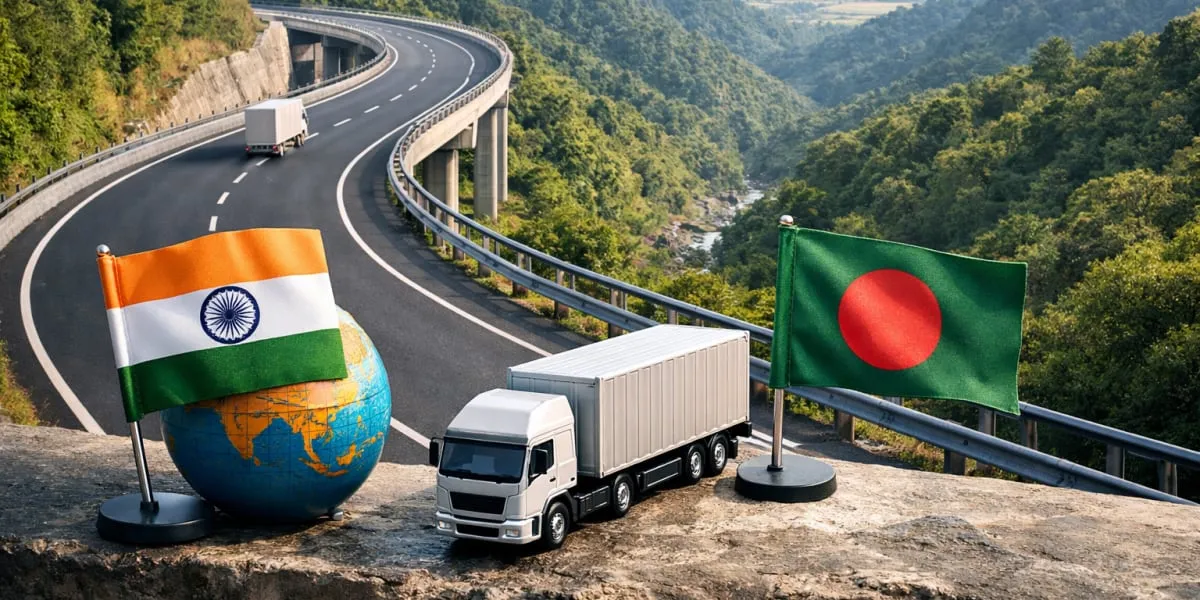
Three Japan International Cooperation Agency (JICA) funded highway projects worth Rs 15.92 billion (bn) were launched in Shillong, marking a push to position Meghalaya as a gateway for trade with Bangladesh. The schemes, part of six National Highway projects inaugurated by the Union Road Transport and Highways Minister on January 15, aim to strengthen cross border connectivity across Meghalaya, Assam and West Bengal. The investments form part of India’s Act East Policy and signal deeper international involvement in Northeast infrastructure.

A central element is the Shillong–Dawki corridor on National Highway 106/206, which links the state with Bangladesh via the Tamabil border and includes a four lane stretch from Rilbong Junction to Pomlum. The upgrade is intended to ease congestion, improve road safety and speed the movement of goods and passengers to the international border. Officials said access to Dawki, a major trade and tourism gateway, will be significantly enhanced, supporting local commerce.

The other JICA supported works cover nearly 63 km of National Highway 127B between the Dhubri–Phulbari bridge approach and Goeragre via Selsella in the Garo Hills. The NH 127B corridor ties into the under construction Dhubri–Phulbari bridge across the Brahmaputra, another JICA assisted project expected to reduce travel time between Assam and Meghalaya and to improve access to routes towards Bangladesh. JICA noted the projects are intended to lower vehicle operating costs, improve market access and raise trade volumes.

Authorities said the works form part of the Northeast Road Network Connectivity Improvement Programme, through which Japan has become a significant regional partner. The investment is projected to support job creation, business opportunities and improved livelihoods for local communities and to strengthen Meghalaya’s strategic role in regional trade networks. Observers added that better roads could help transform the state into a critical economic corridor linking Northeast India with neighbouring countries.

"Join industry leaders at RAHSTA Expo, India's premier platform for roads, highways and traffic infrastructure. Register now to explore innovations, network with experts and shape the future of mobility."

Three Japan International Cooperation Agency (JICA) funded highway projects worth Rs 15.92 billion (bn) were launched in Shillong, marking a push to position Meghalaya as a gateway for trade with Bangladesh. The schemes, part of six National Highway projects inaugurated by the Union Road Transport and Highways Minister on January 15, aim to strengthen cross border connectivity across Meghalaya, Assam and West Bengal. The investments form part of India’s Act East Policy and signal deeper international involvement in Northeast infrastructure. A central element is the Shillong–Dawki corridor on National Highway 106/206, which links the state with Bangladesh via the Tamabil border and includes a four lane stretch from Rilbong Junction to Pomlum. The upgrade is intended to ease congestion, improve road safety and speed the movement of goods and passengers to the international border. Officials said access to Dawki, a major trade and tourism gateway, will be significantly enhanced, supporting local commerce. The other JICA supported works cover nearly 63 km of National Highway 127B between the Dhubri–Phulbari bridge approach and Goeragre via Selsella in the Garo Hills. The NH 127B corridor ties into the under construction Dhubri–Phulbari bridge across the Brahmaputra, another JICA assisted project expected to reduce travel time between Assam and Meghalaya and to improve access to routes towards Bangladesh. JICA noted the projects are intended to lower vehicle operating costs, improve market access and raise trade volumes. Authorities said the works form part of the Northeast Road Network Connectivity Improvement Programme, through which Japan has become a significant regional partner. The investment is projected to support job creation, business opportunities and improved livelihoods for local communities and to strengthen Meghalaya’s strategic role in regional trade networks. Observers added that better roads could help transform the state into a critical economic corridor linking Northeast India with neighbouring countries.

Next Story
Real Estate

VeARC leases 27,000 sq ft office space in Bengaluru

VeARC India has leased approximately 27,000 sq ft of office space at The Executive Centre's (TEC) Helios Business Park on Outer Ring Road (ORR), Bengaluru, to support the expansion of its Global Capability Centre (GCC) operations.The new workspace accommodates more than 450 workstations and is intended to support the company's growing workforce in India. VeARC India serves as the Global Capability Centre for Long Arc Capital.Located on Bengaluru's Outer Ring Road, the office provides access to one of the city's key technology and business corridors. The expansion comes amid continued growth in..

Next Story
Real Estate

Bharat Shah Family Buys Four Luxury Apartments In Worli For Rs1.8 bn

The family of veteran investor Bharat Shah has acquired four ultra-luxury apartments on the higher floors of Kalpataru One in Worli, South Mumbai, for Rs1.8 billion (bn). The purchases were registered on 6 July 2026 and were executed through Preeti Bharat Shah and Kinnari Bharat Shah, who bought the flats from Kalpataru Properties Limited. Property registration documents reviewed by Zapkey show the total consideration at Rs1.7941 billion. The transactions recorded a per square foot RERA carpet price of Rs0.101 million (mn), with each apartment valued at about Rs448.5 million. The four residenc..

Next Story
Infrastructure Urban

NITI Aayog Consultation On Critical Mineral Supply Chains

NITI Aayog convened a stakeholder consultation in New Delhi on Wednesday to assess requirements for critical minerals across strategic sectors, bringing together experts from government, research institutions, academia and industry. The meeting aimed to estimate current and future demand, identify supply chain vulnerabilities and discuss measures to strengthen domestic capabilities in exploration, processing and recycling. The exercise formed part of broader efforts to secure mineral value chains essential for economic growth, technological advancement and national security.\n\nDiscussions con..

Advertisement

Subscribe to Our Newsletter

Get daily newsletters around different themes from Construction world.

STAY CONNECTED

Advertisement

Advertisement

Advertisement